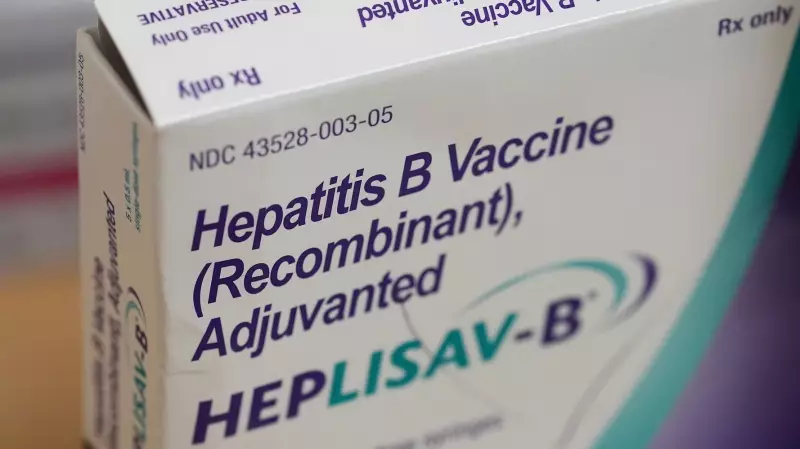
A federal vaccine advisory committee, recently reconstituted by Health and Human Services Secretary Robert F. Kennedy Jr., has taken a controversial step that could reshape childhood immunization policy in the United States.
A Historic Recommendation Reversed
On Friday, the Advisory Committee on Immunization Practices (ACIP) voted to recommend halting a long-standing public health guideline. Since 1991, federal recommendations have called for every infant to receive their first dose of the hepatitis B vaccine on their first day of life. The new language, however, suggests giving that initial dose only to newborns whose mothers are infected with hepatitis B, delaying it for all other infants.
Public health and medical experts have long championed the birth-dose protocol as a critical shield against liver infections and liver cancer. Hepatitis B is a serious liver infection that can become a chronic, lifelong disease leading to cirrhosis, liver failure, and cancer. The risk is particularly acute for the very young. Studies indicate about 90% of infants infected at birth develop chronic infections, with roughly a quarter of those dying from chronic liver disease later in life.

A Committee Transformed Under New Leadership
The vote follows a significant overhaul of the committee's membership. Secretary Kennedy, a noted vaccine skeptic, fired everyone on the 11-member ACIP panel this summer and handpicked new members, including fellow skeptics. This committee is responsible for recommending vaccine guidance to the Centers for Disease Control and Prevention (CDC).
The panel originally planned a vote on the hepatitis B shot in September but postponed it after some members requested more data on potential risks. This request came despite the vaccine having been studied for decades with extensive evidence supporting its safety and efficacy.
Potential Consequences of a Delayed Dose
While the ACIP vote is only a recommendation, its implications alarm public health officials. A model from the Center for Disease Analysis Foundation projects that delaying the first dose at birth would result in 99,000 preventable hepatitis B infections. There is currently no cure for the infection.
Beyond the direct health risk, experts warn the biggest immediate consequence will be fear and confusion for new parents left wondering whether to vaccinate their newborns. In response, the American Academy of Pediatrics has stated it will continue to recommend the original hepatitis B vaccine schedule, regardless of the ACIP vote.
This decision marks the latest shift in childhood immunization policy under the current administration, raising significant concerns among medical professionals about the future of preventive public health measures.