Chronic illness is a concern for many Americans, especially those who struggle with arthritis, fibromyalgia, lupus or gout. Help can be found from the medical specialty of rheumatology, which works to reduce inflammation, chronic pain and joint or organ damage. Many rheumatologists take a holistic approach that includes medical and lifestyle solutions, so they have clear ideas about the role diet can play in their patients' health.
While eating anti-inflammatory foods can help with some symptoms, experts we spoke with noted that there's no single "magic" food to cure these diseases. "One thing I really want people to hear is that in 99.9% of cases, nothing you ate or didn't eat caused your autoimmune disease," said Dr. Amanda Moyer, who practices adult and pediatric rheumatology at OU Health at the University of Oklahoma. "Likewise, there is no one special food that will cure it."
"Diet is powerful, but it is not a magic on-off switch for autoimmunity," Moyer said. "That doesn't mean food doesn't matter, because it impacts how you feel day-to-day, how your medications work, your weight, your heart health and long-term risks of complications. But I don't want patients carrying unnecessary guilt or being blamed for a disease process they did not create with their lunch."

Here are some of the top foods these experts frequently recommend to patients.
Olive Oil
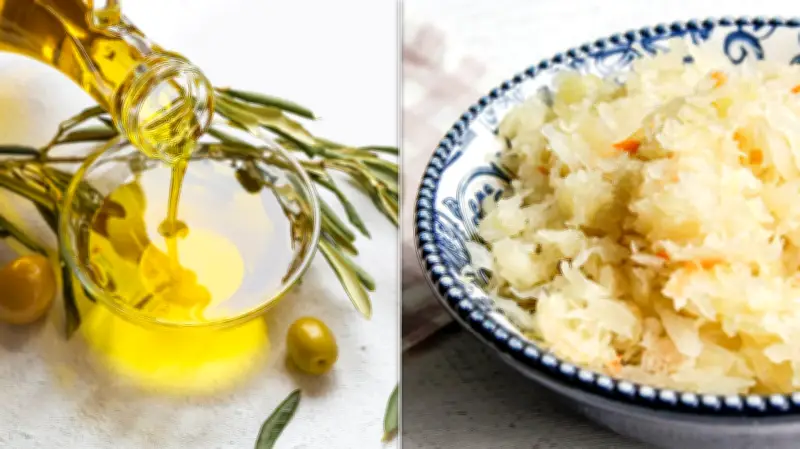
Olive oil has anti-inflammatory effects similar to ibuprofen. Dr. Kam Shojania is head of the rheumatology division at Vancouver General Hospital in Canada. He tells his patients to think of extra-virgin olive oil as a practical anti-inflammatory staple to drizzle on food. "People are shocked to learn olive oil contains oleocanthal, a natural compound that data has suggested can lower inflammatory markers and protect blood vessels," he said. "Oleocanthal has anti-inflammatory effects similar to ibuprofen. There's also emerging research on its immune effects, including in inflammatory arthritis and lupus."
Fatty Fish
Fatty fish has proven results for autoimmune disease. "The omega-3 fatty acids EPA and DHA have the strongest evidence of any single food intervention in rheumatology," said Dr. Devon Charlton, a fellow in the American College of Rheumatology and director of rheumatology at the University of Pittsburgh Medical Center. "I recommend eating fatty fish like salmon, mackerel, sardines and anchovies two times per week." He cited a randomized, placebo-controlled trial of nearly 26,000 participants that concluded those who consumed 1 gram per day of EPA and DHA showed a 15% to 18% reduction in confirmed and probable autoimmune disease. "It was an effect that grew stronger with longer duration of supplementation and persisted for two years after participants stopped taking it," he said.
Fiber-Rich Foods
Fibermaxxing can actually help fight inflammation. Dr. Micah Yu is quadruple board-certified in rheumatology, internal medicine, integrative medicine and lifestyle medicine. He encourages his patients to increase their fiber intake whenever possible. "Fiber helps lower inflammation, and can help reduce joint inflammation," he said. "In addition, those who eat more fiber have been shown to have a lower weight, which can help with disease symptoms." Yu encourages his patients to seek out fiber from natural sources like beans, fruits, vegetables and other whole foods, not supplements.

Fermented Foods
Fermented foods support gut-based immune strength. If you check in Dr. Yoon Qiu's refrigerator, you'd probably find a bag of cabbage and a few jars of fermented foods. The rheumatologist and assistant professor of medicine at Emory Healthcare is a big fan of cabbage, since this member of the brassica family contains sulforaphane, which is anti-inflammatory. Even better, Qiu said, "It lasts a long time in the fridge." Even longer lasting, and possibly even more beneficial, can be fermented foods like kimchi or sauerkraut, which are both made with cabbage. "I recommend eating fermented foods to support the gut biome," Qiu said. Since as much as 80% of your immune system lives in and around your gut, the gut microbiome is key for regulating immune responses. Research has shown that a diet high in fermented foods increased microbiome diversity and decreased markers of inflammation, including several directly involved in autoimmune flares. Fermented diets outperformed high-fiber diets for inflammation reduction.
Nuts
Nuts can calm inflammation. "If I had to pick one thing to put on every rheumatology patient's grocery list, it would be a big bag of lightly seasoned nuts, like almonds," Moyer said. "They're easy to snack on, provide protein, fiber and healthy fats, and they fit beautifully into the kind of eating pattern that helps calm inflammation," she said. "On a practical level, I like sustainable, not punitive, changes. I snack on nuts myself, especially almonds, and I'll often grab a new flavor when I go to the store, as long as they aren't sodium bombs."
What You Eat Is Just One Part of Your Health Story
Charlton often reminds his patients that food is an adjunctive, not primary, therapy. "If you're on methotrexate, warfarin or other medications, discuss any significant dietary additions with your rheumatologist," he said. "Patients who stop disease-modifying antirheumatic drugs (DMARDs) or biologic medications in favor of dietary interventions risk irreversible joint damage, organ involvement or even death."
"No one should be trading methotrexate (a drug that treats severe psoriasis and rheumatoid arthritis) for olive oil shots," Shojania agreed. "The sweet spot is evidence-based medication plus a Mediterranean-leaning eating pattern, ideally designed with a registered dietitian so it fits your culture, budget and real life."
Finally, Moyer said it's important to keep the big picture in mind: "My parting advice is to relax, focus on whole foods, mostly plants, with lean proteins and healthy fats, and to be cautious about expensive supplements. And when you do have that scoop of ice cream or piece of birthday cake, enjoy it. Then go back to your overall pattern, which is what really counts."