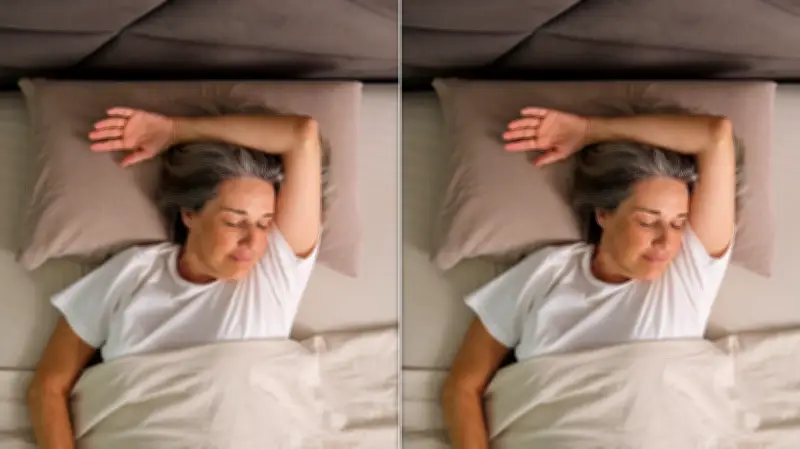
A new study published in the journal Nature reveals that the amount of sleep you get significantly impacts how well you age. Researchers analyzing biological clocks across the human body have identified a "Goldilocks" sleep duration that is slightly less than the often-recommended eight hours.
Optimal Sleep Range Found
The study suggests that sleeping between 6.4 and 7.8 hours per day is the "sweet spot" for minimizing biological aging. Getting fewer than six hours of sleep may accelerate aging in the brain, lungs, heart, and immune system, while more than eight hours can speed up aging in nearly every organ.
Health Risks of Improper Sleep
Both insufficient and excessive sleep were linked to physical health conditions such as obesity, type 2 diabetes, hypertension, coronary artery disease, and gastritis. Additionally, these sleep patterns were significantly associated with depression and anxiety disorders.

Lead researcher Junhao Wen, an assistant professor of radiology at Columbia University Vagelos College of Physicians and Surgeons, stated in a press release that the study supports the idea that sleep is crucial for maintaining organ health within a coordinated brain-body network, including metabolic balance and a healthy immune system.
Organ-Specific Aging Clocks
Wen and his team developed advanced statistical models called "aging clocks" to determine sleep durations associated with accelerated aging. Unlike most aging clocks that estimate biological aging across the entire body, these organ-specific clocks provide more personalized insights. "In the liver, for example, we have an aging clock built with protein data, an aging clock of metabolic data, and an aging clock of imaging data," Wen explained.
Different organs within the same person may age at different rates, according to Wen. However, sleep duration alone does not directly cause faster or slower aging; rather, too much or too little sleep may be markers of poorer overall health.
Why Too Much Sleep Can Be Harmful
Dr. Chelsie Rohrscheib, a neuroscientist and researcher at Wesper, noted that chronically long sleep time is often a byproduct of underlying diseases such as sleep apnea, inflammatory conditions, cancer, neurodegenerative disorders, or poor mental health. Long sleepers may have markers of inflammation associated with cardiovascular disease and cancer. Additionally, long sleeping increases sedentary behavior, reducing daily physical activity.
Gender Differences in Sleep Needs
The study also found that women may need slightly more sleep than men, typically about 10 to 20 additional minutes per night. This difference may be due to hormonal fluctuations during the menstrual cycle, pregnancy, and menopause, as well as greater emotional and cognitive demands that increase the need for sleep to support brain functions like memory consolidation and emotional regulation.
Rethinking the Eight-Hour Rule
Dr. Chris Winter, a neurologist and host of the podcast "Sleep Unplugged," highlighted the study's finding that the optimal sleep range is slightly below eight hours. "I would love to dislodge from the public's collective mentality about sleep that 'eight hours' of sleep is ideal for everyone," he said. Winter recommends aiming for a consistent seven hours on average, though individual needs vary based on age, lifestyle, and genetics.
Study Limitations
The study's data came from the U.K. Biobank, which is heavily weighted toward people of white European ancestry. Wen noted that more research involving Asian and African descent populations is needed.