Aly Worsham spent over a year in debilitating pain, enduring three unnecessary surgeries before she took matters into her own hands. In April 2024, she had a total hysterectomy and unilateral oophorectomy after discovering she had adenomyosis—a condition where the uterine lining grows into the uterine wall—by teaching herself to read her own MRI scans. Her story exposes a pattern of medical dismissal that women face, with statistics showing women wait 30 minutes longer than men for pain relief in emergency rooms and are more likely to be given sedatives or told their symptoms are anxiety.
From Gallbladder Surgery to Self-Taught Radiology
Worsham's ordeal began in late 2022 with persistent abdominal pain. In April 2023, she had her gallbladder removed, but the pain worsened. A follow-up scan revealed a complication requiring a small bowel resection, followed by an internal bleed and a week-long hospitalization. Yet, the original pain remained. By November 2023, she was back in the ER with excruciating pain, suspected to have a small bowel intussusception. She insisted on an MRI, which came back clean, but she was discharged without answers.
Her gynecologist performed exploratory surgery and found her uterus fused to her abdominal wall. After repair, the pain persisted. When Worsham asked her gynecologist to review hospital scans, the doctor replied, “I’m not a radiologist.” Worsham saw four different doctors, all of whom refused to look at her imaging. Desperate, she downloaded a free DICOM viewer and taught herself to read the scans at 1 a.m.

Finding the Tumor and Adenomyosis
She identified what she believed was the problem and brought it to her primary care provider, who listened and agreed. A gynecological oncologist confirmed adenomyosis, and in April 2024, her hysterectomy revealed pelvic congestion syndrome, two rogue surgical staples from a previous surgery, and one ovary that was 50% cysts. Pathology confirmed adenomyosis. “I’d spent over a year being made to feel dramatic, and here was a pathology report basically saying Yup, this was real the entire time,” Worsham wrote.
Later in 2024, a neurologist ordered a brain MRI for her epilepsy but told her the scan was clean. Months of headaches, dizziness, and fatigue later, Worsham obtained the radiology report and read that she had a 1.4-centimeter tumor on her pituitary gland—which the doctor had not mentioned. When asked why, the doctor said it wasn’t what he was looking for. “It was a tumor. In my head. That I found by reading my own report,” she said.
Sepsis and Meningitis After Surgery
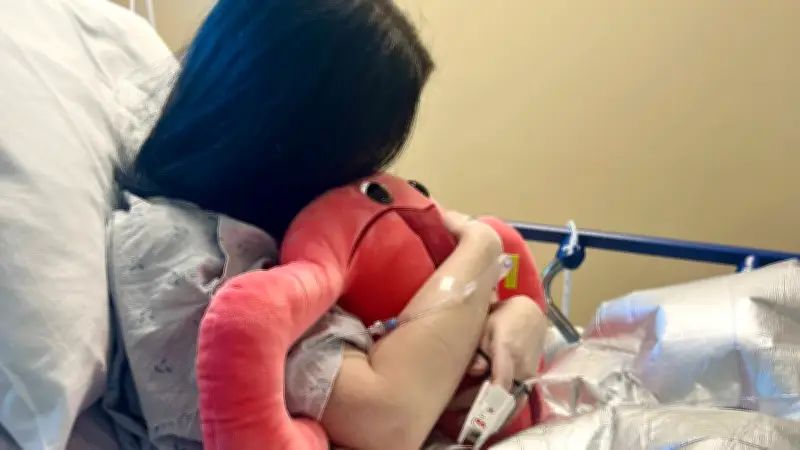
After the tumor was removed in September 2025, Worsham developed a severe headache, fever, and neck stiffness. The first ER sent her home, and her surgeon dismissed her symptoms. But when her fever hit 103.4°F, she returned to the hospital and was diagnosed with meningitis and sepsis. She spent two weeks in the hospital, endured five lumbar puncture attempts, and required eight weeks of IV antibiotics via a PICC line. “If I hadn’t gone back to the hospital when I did, I likely would have died,” she said.
Systemic Failures in Women’s Healthcare
Worsham emphasizes that her experience is not unique. Research shows women with chest pain are twice as likely as men to receive a mental health diagnosis instead of a cardiac one. Conditions like endometriosis and adenomyosis take an average of 7–10 years to diagnose. In a survey of over 4,300 women with endometriosis, 78% were told by a doctor they were making a fuss. Adenomyosis, once considered rare, may affect 1 in 5 women. “We were never rare. We were just unexamined,” she said.
The National Institutes of Health did not require sex as a biological variable in funded studies until 2016, meaning much of modern medicine was built on male subjects. “So when a woman walks into an appointment having already Googled her symptoms, already read her own chart, already arrived with a theory ... and gets labeled ‘difficult’ or ‘anxious’ or ‘a lot’? She is not any of those things. She is doing unpaid self-taught medical work because the system made it her job,” Worsham wrote.

A Call to Action
Worsham urges women to trust their bodies and advocate fiercely: “Get the second opinion. Get the third. Ask for your own records and actually read them. Push back, and when they make you feel crazy for pushing ... push anyway.” She acknowledges her privilege in having a supportive husband, family, employer, and a primary care doctor who listened. “Plenty of women have every single one of those things stacked against them and never make it to the validating pathology report. That should make all of us furious.”