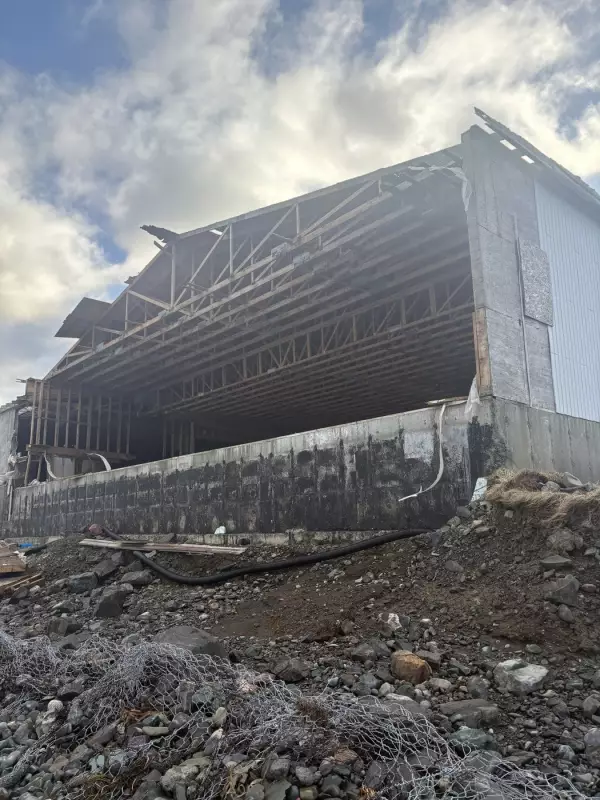
A powerful storm has sparked fears of a significant environmental incident on the coast of Newfoundland after it severely damaged a long-abandoned industrial site. High winds tore an exterior wall off a derelict fish sauce plant in the town of St. Mary's, leaving more than one hundred large vats of putrid, fermented fish sauce exposed to the elements and perilously close to the ocean.
Structural Failure at Abandoned Facility
The incident occurred on January 17, 2026, as severe weather battered the region. The force of the wind was enough to rip away a substantial section of the building's structure at the old processing plant. This breach has revealed a grim scene: over 100 large containers, used for fermenting fish sauce, are now open to the environment. The contents of these vats, which have been sitting unattended for years, are described as rancid and are actively oozing from their containers.
Local authorities, including the mayor, were quickly alerted to the situation. The visual evidence, captured in photographs, shows the scale of the structural damage and the precarious state of the industrial vats within the crumbling facility.

Immediate Environmental Concerns for the Ocean
The primary concern for officials is the proximity of this mess to the Atlantic Ocean. With the containment wall gone, there is a direct and immediate risk that the fermented fish waste could spill or leach into the marine environment. Such an event could have damaging consequences for local water quality, marine life, and the ecosystem of the surrounding area.
The mayor of the community has publicly stated that the ocean is at risk due to this structural failure. The situation presents a clear environmental hazard that requires urgent assessment and intervention to prevent contamination. The combination of organic waste, high salinity from the fish sauce process, and potential other chemicals from the decaying plant creates a complex pollutant.
Call for Action and Next Steps
This event highlights the lingering dangers posed by derelict industrial sites in coastal communities. The plant in St. Mary's had been out of operation for some time, yet it continued to hold a substantial volume of biological waste. The storm has now turned this abandoned property into an active threat.
Local and provincial environmental officials are expected to be involved in evaluating the site and formulating a cleanup plan. The priority will be to safely contain the oozing vats and prevent any discharge into the ocean. This incident will likely prompt discussions about responsibility for the remediation of such abandoned sites and the need for more proactive monitoring and securing of these properties before disasters occur.
The community of St. Mary's, Newfoundland and Labrador, now faces the task of dealing with the foul aftermath of the storm, hoping to avert an environmental mishap on their doorstep.