Every day, Windsor police encounter people openly smoking drugs in the downtown core, the city’s addiction crisis on full display. But instead of arresting those involved with open drug use on city streets — a strategy even Canada’s Criminal Code deters — the force recently increased its visibility and ramped up partnerships with local social service providers.
High-visibility initiative focuses on outreach
With public frustration over visible drug use growing, officers have shifted their approach, moving to outreach, treatment partnerships and targeted enforcement in an effort to balance public safety with compassion.
“We will never arrest ourselves out of this situation. It will never happen,” Chief Jason Crowley said in an interview with the Star. “By arresting someone and sending them to court, and possibly to jail, it certainly doesn’t get at the root cause of addiction.”

Earlier this month, officers were joined by community partners for what the force called a “high visibility initiative” downtown. Police, social workers, health-care professionals, outreach workers, chaplains, and other supporters spoke outdoors with people experiencing mental health, substance use, and housing challenges. The goal was to connect people with wellness and support services.
“We really focused on bringing people to the street, instead of just flooding the downtown with cops for a day or two,” Crowley said. “It was really successful — (we did) anything we could to provide a service.”
New approach to public drug use
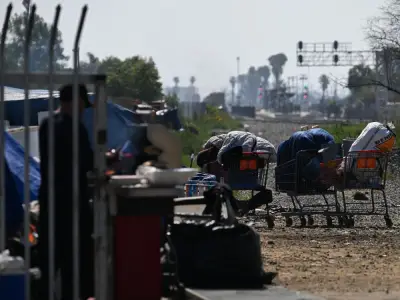
It’s the kind of initiative Windsor police are dedicating more resources to in response to open, public drug use, an issue in downtown Windsor and urban cores across Canada. At most hours of the day, visitors to a stretch of Ouellette Avenue that contains a high-traffic homeless shelter can expect to see people lighting glass pipes and smoking illicit substances. Others sit and lie on the ground, their semi-conscious bodies crumpled next to drug paraphernalia.
And although drug possession is illegal, Windsor police don’t regularly detain people who consume those substances on city sidewalks.
“Police are here constantly,” said Daniel, one of several people sitting on a patch of dirt near the Downtown Mission this week. The 41-year-old, who declined to share his last name, told the Star he uses fentanyl and hasn’t had a home for roughly two years. “The police, they haven’t been rude or anything. They just tell us, you can’t be using here — but we’re stuck without any real place to go.”
Legal constraints and public backlash
News of the response — or non-response — from Windsor police to visible drug consumption caused a stir in April, when then-acting Deputy Police Chief Kenneth Cribley publicly stated officers had no authority to arrest people openly using drugs. During a meeting of city council, he said the courts that oversee drug prosecutions “have all but decriminalized simple possession use,” and police only arrest for “egregious behaviour,” such as drug use in or near a school yard.
Speaking with the Star this month, Crowley said the deputy chief was referring to provincial legislation during his appearance before city council. Ontario’s Restricting Consumption of Illegal Substances Act, which became law in 2025, restricts open drug use — but, under that law, drug use itself is not an arrestable offence. Instead, it gives police the authority to tell people to stop using drugs in public and to move along. Anyone who refuses can be asked to identify themselves.
“That was what we were acting upon, because the idea of criminalizing addiction is not what we’re trying to do,” Crowley said.
Police have the authority to arrest for personal possession under the federal Controlled Drugs and Substances Act. However, that legislation says that “problematic” drug use “should be addressed primarily as a health and social issue,” and that criminal sanctions for personal use possession “can increase the stigma associated with drug use and are not consistent with established public health evidence.”

“Interventions should address the root causes of problematic substance use, including by encouraging measures such as education, treatment, aftercare, rehabilitation, and social reintegration,” the federal law reads. “Judicial resources are more appropriately used in relation to offences that pose a risk to public safety.”
The Criminal Code, Crowley said, tells law enforcement they can give out warnings or refer people to addiction treatment programs or services — “things we’ve always been doing.”
Mayor Drew Dilkens, who chairs the Windsor Police Services Board, told the Star residents regularly ask him how he can “allow” visible drug use in the community.
“This type of behaviour is not considered illegal. It’s a world I’m not used to living in, one I’m trying to understand more, and one that I feel we shouldn’t accept as the new norm,” Dilkens said. “I feel for police, because I understand the pressures that they have, and the constraints that they have.”
Partnerships with health providers
In a novel response to social issues, Windsor police have partnered with Windsor Regional Hospital to pair officers with nurses. Together, they deliver proactive care to people struggling with substance use and mental health challenges.
The force also partners with Hotel-Dieu Grace Healthcare to pair crisis intervention-trained officers with similarly trained mental health social workers. Those teams respond to calls involving people with symptoms of mental illness, substance use, and behavioural disorders, and people in acute crisis.
“We’ve been working with them for years now,” doing as the Criminal Code directs, treating addiction as a health and social issue, and “laying charges in the worst-case scenario,” Crowley said.
The root causes of open drug use, which include housing instability and mental health challenges, are “way beyond the police scope,” he said. “It’s a matter of finding that balance between what’s criminal, what’s not, and what is the role of police in these situations.”
Housing and treatment gaps
Housing is one part of the solution, he said, but it’s not enough. Those who use substances in public need better access to addiction treatment.
“These are drugs that are changing the biology of people’s minds and their brains. They’re changing people,” the chief said. “Treatment goes hand-in-hand with housing and mental health assistance. It’s a much bigger problem than anyone here is equipped to deal with, or anyone in the city is equipped to deal with, but we are doing what we can.”
Deputy Chief Cribley’s controversial statement before city council in April was part of a conversation about Strengthen the Core, a city council-approved plan to revitalize downtown Windsor. Approved in 2024, the plan included $1,384,000 in additional annual spending to expand the police presence downtown and dedicate more officers to the neighbourhood.
The goal was to make people feel safer in the core, where police officials have previously said the public’s perception of crime is not supported by crime statistics.
Crowley said the force balances its role in Strengthen the Core with legislation, and with policing social issues. Regarding public drug use, he said, “We heard the community loud and clear.” The force looked at what it could do to “curb” behaviour, “while still trying to stay within the margins of not criminalizing open drug use and addiction.”
“Enforcement with compassion. This is what we’re still trying to do.”
Increased police visibility
A few months before Cribley’s city council appearance prompted backlash from residents who want police to arrest people using drugs in public, the force began changing shift times for officers working downtown to increase police visibility. Since Cribley’s comments, the force has increased officer presence even more.
“You’re going to see more cops during the late morning, early afternoon, and early evening, as opposed to the middle of the night,” Crowley said. “We still have them out there (at night), but just not as many. It goes back to putting cops where crime is, putting cops where they’re needed — it’s all data we’re looking at.”
Crime data, he said, shows that Windsor’s downtown is safe. “But people don’t feel safe. This is part of the issue,” he said.
Scope of the addiction crisis
Roughly three-quarters of the calls Windsor police receive about open drug use come from the same area of the city: Ouellette Avenue from Wyandotte Street to Erie Street — which contains the Downtown Mission — and a few surrounding blocks.
“The cops I notice walking around are a lot more lenient and nice,” said Jeff, 34, who sat on the ground by a city sidewalk near the shelter. He had smoked fentanyl moments before speaking with the Star. “They tell me to go out of the way, where people can’t see you. I’m not sure where they want us to go.”
Between January 1 and the end of May, Windsor police had recorded 407 reports of open drug use, Crowley said. However, addiction in Windsor and Essex County is a far greater issue. According to 2025 data collected by the Windsor-Essex County Health Unit, roughly 2,300 people in the region received opioid therapy — medications that activate opioid receptors in the brain and nervous system, prevent withdrawal, and reduce cravings.
For some, the problem is fatal. Drugs were the suspected cause of 24 local deaths in the first three months of this year, the health unit reported. In 2025, there were 106 suspected drug-related deaths in Windsor-Essex.
Opioids are also putting pressure on the local hospital system. As of early June, opioid overdoses have prompted 275 visits to Windsor-Essex emergency departments this year, according to the health unit. That’s an increase of roughly 237 per cent over the same period in 2025.
Health Canada describes the toxic drug crisis as “one of the most serious public health crises Canada has ever faced, tragically impacting those who use substances, their families, and communities across the country.” Between October 2024 and September 2025, the agency recorded 5,724 deaths from opioid toxicity across the country, an average of 16 deaths per day, and 21,594 emergency department visits related to opioid poisoning, an average of 59 per day.
Hope and calls for involuntary care
Crowley said people who use drugs in public are fairly receptive to support from Windsor officers, particularly when police hit the streets with community partners.
“These are people with addictions to illegal substances, so it may be short-lived, and it may take some time, but I think continued engagement with the community does help. The bigger picture is what everyone struggles with, and what the endgame is, because right now, it’s very difficult to see that there is an ending. We are trying whatever we can, and we think we’re starting to move the needle here.”
For Mayor Dilkens, the answer is some form of involuntary care for those unable to seek help, such as a woman he could see from his fifth-floor city hall office writhing around on a nearby walkway and clawing at her own legs. Otherwise, he said, “I don’t see this situation getting better, and it makes me feel bad, because I’m a hopeful guy. I’m not saying we should go around and take everyone with an addiction off the street — but I think we can all agree there are certain circumstances where people need help, and it’s inhumane in some cases not to help.”