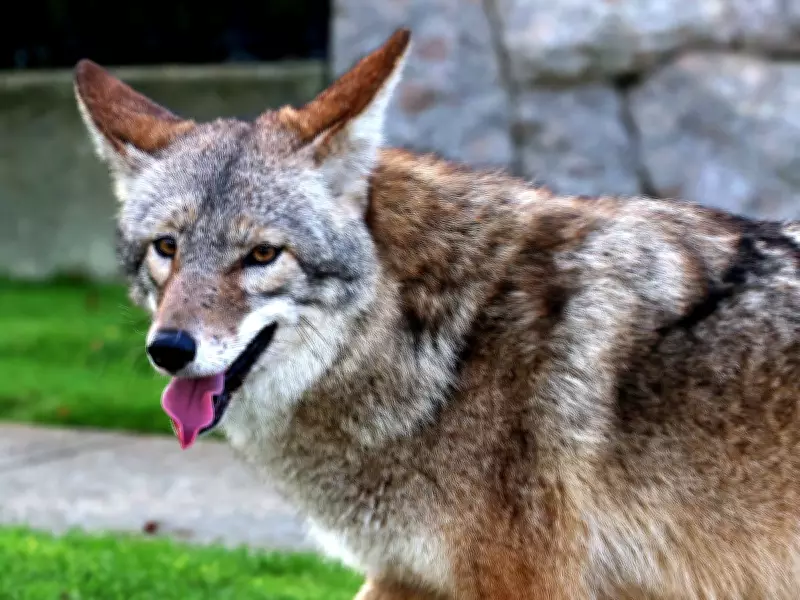
It is springtime in the greater Toronto area, which means it is coyote hunting season. To be clear, it is the coyotes that are doing the hunting, not humans. On Sunday evening, a young girl was bitten in the head by a coyote in a parkette in the middle of a residential area in Markham. Her injuries were not serious, but it was the second time in a week that someone had been bitten by a coyote in the neighbourhood. The previous victim, a 16-year-old girl, was taken to hospital with minor injuries.
This feels, as a resident of Markham, a little alarming. And perhaps an indication that the general attitude from authorities over the last few years toward coyotes, which has been to welcome them as though they were furry citizens with all the rights that entails, has been too charitable.
Pandemic Shift in Coyote Behavior
This seems like one of those things where the normal bounds of society were broken during the pandemic and have remained broken. Coyotes moved into residential areas in greater numbers in Markham — and Toronto, Vancouver, and many other cities — thanks in part to the greater availability of food waste in parks and have since frequently mingled with the citizenry.

I have heard them howling in a nearby ravine at night, but have also seen them wandering down the street and cruising through front yards like an even-less-domesticated Littlest Hobo.
Residents Frustrated by Official Response
Occasionally there are stories of frightening coyote contact with humans or their pets, and inevitably the response to residents who raise concerns about such things is something along the lines of: Coyotes live here, too. Deal with it. It is said that these areas are their natural habitat, and so people just need to do what they can to give the animals a wide berth.
To which I often find myself wondering: did humanity give up its place at the top of the food chain? Was there a vote? (I would have voted no, using a pencil and my opposable thumbs.)
The Sign That Symbolizes the Problem
This attitude reached its apex, or perhaps its nadir depending on your perspective, a few years ago in my neighbourhood when city staff posted a large sign in a park that declared “Quiet please, Coyote family living in the area.” It felt like a bit much, given all the howling.
“Please respect their space,” the sign said, and warned residents against feeding wildlife (fair enough), approaching the coyotes (probably wise) and taking photos (wait, what?). I kid you not: there was even a crossed-out camera on the sign, in case the message was unclear. The coyotes’ privacy must be protected, and it is not like we could ask them to sign a waiver to grant permission for photographs.
A Complex Problem with No Easy Solutions
I will grant that this is not an easy problem to solve. Markham does have a lot of interconnected park and ravine land, and coyotes are bound to make their way close to homes at times. The east end of the city, where the recent attacks occurred, also borders farmland and the Rouge National Urban Park, which is exactly the kind of place in which coyotes should be hanging out.
But the hands-off approach has consequences. Two attacks in a week suggest that the city may need to reconsider its strategy. While coexistence is a noble goal, it must be balanced with public safety. Perhaps it is time for Markham to take a more active role in managing its coyote population, whether through education, hazing, or removal of problem animals.