Two Individuals Safely Rescued Following Helicopter Crash in British Columbia
In a tense emergency operation, two people have been successfully rescued after their helicopter crashed in the rugged mountains near Nelson, British Columbia. The incident, which occurred on February 14, 2026, prompted an immediate response from search and rescue teams, highlighting the challenges of aviation in remote Canadian wilderness.
Swift Response in Difficult Terrain
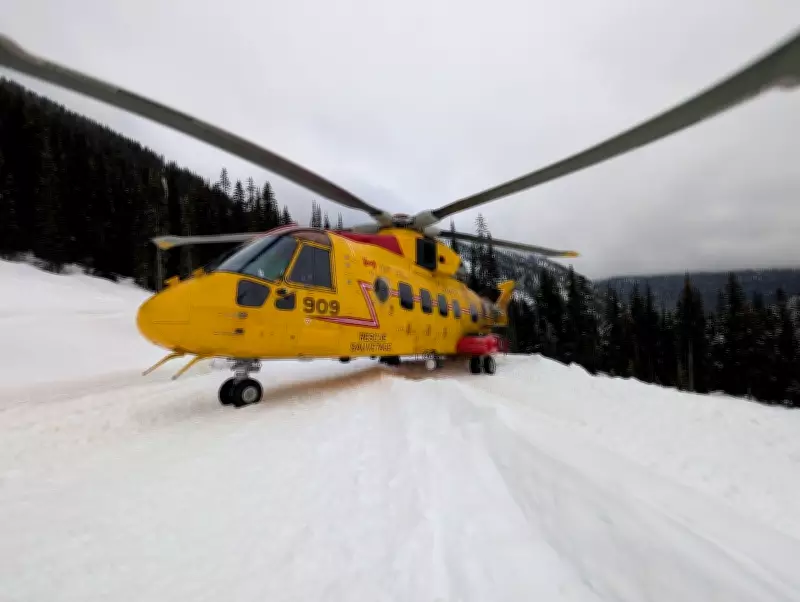
The crash site was located in an area accessible primarily by air, requiring specialized equipment and personnel. A CH-149 Cormorant helicopter from 19 Wing Comox was deployed to the scene, as captured in images released by the military unit. This aircraft, known for its search and rescue capabilities, played a crucial role in reaching the victims and transporting them to safety.
The remote location near Nelson, a city in the Selkirk Mountains, presented significant logistical hurdles for responders. Mountainous terrain, variable weather conditions, and limited ground access complicated the rescue efforts, yet teams managed to execute the operation efficiently.

Details of the Rescue Operation
Authorities have not released the identities of the two individuals involved, nor the specific cause of the crash, which remains under investigation. Both were reported to have sustained injuries but are in stable condition after being airlifted to medical facilities. The use of the Cormorant helicopter, equipped for long-range rescue missions, was instrumental in ensuring their prompt evacuation.
"The coordination between military and local emergency services was exemplary," noted a spokesperson from 19 Wing Comox. "Our priority was getting those individuals to safety as quickly as possible, given the challenging environment."
Broader Context of Aviation Safety
This incident underscores the inherent risks of helicopter travel in mountainous regions, where factors like weather, mechanical issues, and pilot experience can contribute to accidents. British Columbia, with its vast wilderness and popular tourist destinations, sees numerous helicopter flights annually for purposes ranging from transportation to sightseeing.
- Helicopter crashes in remote areas often require specialized rescue teams due to limited access.
- Emergency preparedness and rapid response are critical in minimizing harm in such scenarios.
- Investigations into crash causes typically focus on mechanical failures, weather conditions, and human error.
As the investigation progresses, authorities will likely release more details on the circumstances leading to the crash. For now, the successful rescue serves as a testament to the effectiveness of Canada's emergency response systems in handling crises in difficult terrains.