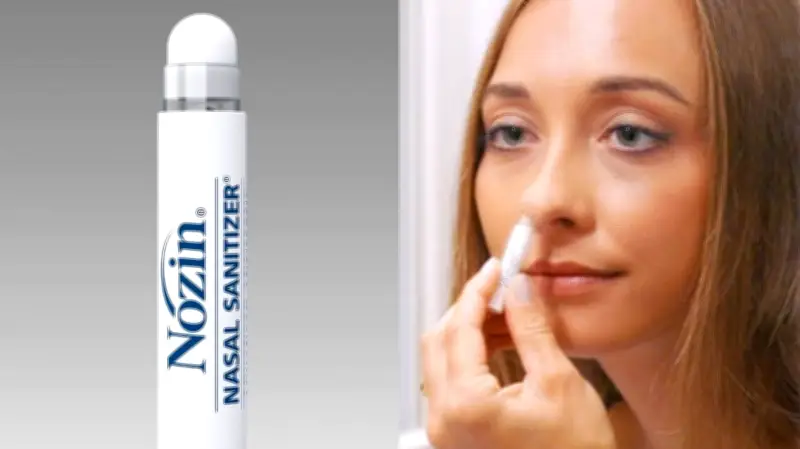
The Nozin Nasal Sanitizer, a compact tool pre-loaded with a 62% alcohol-based antiseptic, is gaining attention among travelers as a layer of defense against bacteria. However, medical experts caution that its effectiveness is limited to surface-level germs in the front nasal passages and should complement, not replace, primary preventive strategies.
How the Nozin Nasal Sanitizer Works
Dr. Geoffrey Trenkle, a board-certified otolaryngologist and founder of the Los Angeles Center for Ear, Nose, Throat and Allergy, explained that the nose is a primary entryway for respiratory bacteria and viruses. While nasal mucus captures particles, it also provides a surface for pathogens to attach and multiply. The Nozin formula uses antiseptic agents to lower microbial counts in the front section of the nose, but Trenkle noted that many respiratory viruses replicate deeper in the nasal passages and upper airway, limiting the sanitizer's reach.
The product contains hydrators like jojoba and vitamin E to counteract the drying effects of alcohol on the thin, sensitive nasal skin. It comes in single-use ampules that are shaken and cracked before applying the saturated tip inside both nostrils.

Traveler Reviews and Claims
Many Amazon reviewers who identify as frequent travelers attribute their illness-free trips to the Nozin Nasal Sanitizer. One shopper stated, "I just returned from a 12-day trip overseas. The trip included a riverboat cruise and multiple crowded bus tours. Lots of people around me were coughing and sneezing. I did not get sick at all." Another reviewer, Christine Luebbers, wrote, "Have used this product when traveling internationally every night after traveling all day on a group tour bus as well as planes. Did not get sick." A hospital worker commented, "I use this every time I go to work. I work in a hospital and I truly feel this has helped me not contract any airborne illness."
Expert Recommendations for Preventing Infections
For the most effective ways to reduce respiratory infections, Dr. Trenkle emphasized practicing good hand hygiene, staying away from others when symptomatic, receiving appropriate vaccinations, and maintaining optimal mucosal health. He stated, "Intranasal antiseptics might have a role in specific settings or for high-risk individuals, but they're best considered as complementary to primary preventive strategies."
Additional Doctor-Recommended Travel Health Products
Beyond nasal sanitizers, experts recommend other tools for staying healthy while traveling. A 20-pack of NIOSH-certified N95 masks, recommended by family practitioner Dr. Allison Edwards, can reduce the risk of catching highly contagious respiratory illnesses like COVID-19. These masks filter out at least 95% of airborne particles and are available for $18 at Amazon.
Vitamin supplements, such as Emergen-C travel sachets containing 1,000 milligrams of vitamin C and antioxidants, were recommended by multiple doctors. A box of 30 sachets in classic orange flavor costs $13 at Amazon, $16 at Target, and $13 at Walmart. Always consult a doctor before taking supplements.
Antibacterial soap sheets, lightweight and portable, are another essential. Dr. Sterling N. Ransone Jr., a full-time family physician, previously said he travels with camping soap sheets. A three-pack of 100-sheet antibacterial soap packs with nourishing plant extracts is available for $12 at Amazon.
The Nozin Nasal Sanitizer 10-pack is priced at $34 on Amazon, and the brand recommends daily use or before entering high-risk environments like hospitals, crowded venues, or during air travel.