A Republican member of the U.S. House of Representatives is set to introduce a bill that would trigger a formal trade investigation into Canadian provincial restrictions on American alcoholic beverages. The move comes amid ongoing tensions over market access for U.S. spirits in Canada, particularly in provinces where American whiskey and other products have been removed from government-run liquor store shelves.
Details of the Proposed Legislation
The bill, expected to be filed in the coming days, would direct the U.S. Trade Representative to investigate whether Canadian provincial alcohol bans violate existing trade agreements, including the United States-Mexico-Canada Agreement (USMCA). According to a statement from the lawmaker's office, the investigation would focus on Ontario, Quebec, and other provinces that have imposed restrictions on American booze in retaliation for U.S. tariffs on Canadian goods.
“American distillers and farmers are being unfairly locked out of the Canadian market,” the Republican representative said in a press release. “We cannot stand by while our workers and businesses suffer from discriminatory practices. This bill will ensure that Canada is held accountable under the rules of fair trade.”

Background on Canadian Alcohol Bans
In recent months, several Canadian provinces have removed U.S. alcohol products from government-controlled liquor stores or imposed other restrictions. For example, the Liquor Control Board of Ontario (LCBO) pulled American whiskey from its shelves in March 2025, citing a trade dispute over U.S. tariffs on Canadian steel and aluminum. Similar actions were taken by the Société des alcools du Québec (SAQ) and other provincial agencies.
The bans have had a significant impact on U.S. distillers. According to the Distilled Spirits Council of the United States, exports of American whiskey to Canada fell by nearly 30% in the first half of 2026 compared to the same period in 2025. Kentucky, Tennessee, and other whiskey-producing states have seen lost sales totaling an estimated $150 million.
Political and Trade Implications
The proposed bill is likely to further strain U.S.-Canada trade relations, which have been rocky since the imposition of tariffs. Canadian officials have defended the provincial bans as a legitimate response to U.S. trade actions. “Canada has the right to respond proportionately to unfair tariffs,” said a spokesperson for Global Affairs Canada. “We remain open to dialogue but will not back down from defending our interests.”
Trade experts say the investigation could lead to retaliatory tariffs or even a formal dispute resolution process under the USMCA. “If the U.S. Trade Representative finds that Canada has violated trade rules, the U.S. could impose tariffs on Canadian goods or seek compensation,” said Sarah Johnson, a trade policy analyst at the Peterson Institute for International Economics. “This could escalate into a broader trade war.”
Impact on Consumers and Industry
American distillers have urged the U.S. government to take action. “We need a level playing field,” said Mark Brown, CEO of a major Kentucky bourbon producer. “Canadian consumers want our products, but they can’t buy them because of political decisions. This bill is a step in the right direction.”
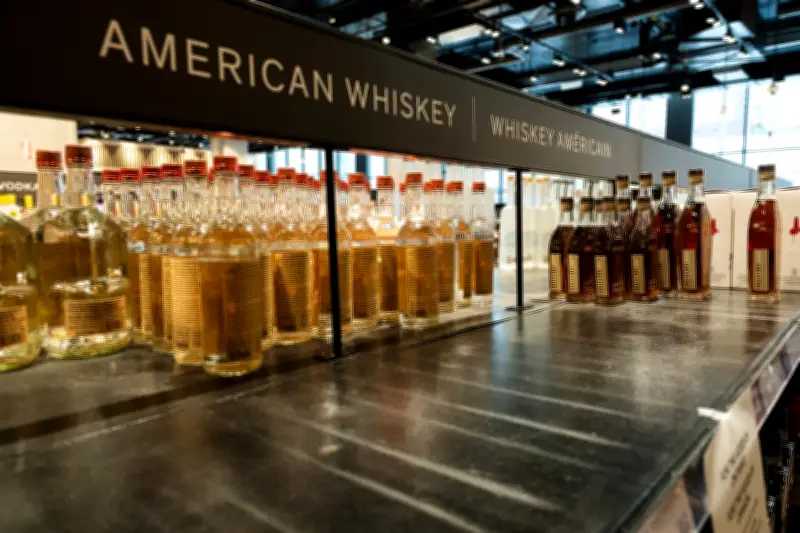
Meanwhile, Canadian consumers are feeling the effects. A half-empty shelf of American whiskey at an LCBO store in Toronto, as seen in a recent photo, symbolizes the reduced availability. Some Canadian bars and restaurants have reported switching to domestic or imported alternatives, affecting U.S. brand loyalty.
The bill’s introduction is expected to generate debate in Congress, with some lawmakers cautioning against escalating trade disputes with a key ally. “We need to resolve this through diplomacy, not threats,” said a Democratic senator from a border state. However, the Republican sponsor argues that the investigation is a necessary tool to enforce trade rules.
Next Steps
The bill will be referred to the House Ways and Means Committee, which has jurisdiction over trade. If passed, the U.S. Trade Representative would have 180 days to complete the investigation and report findings to Congress. The outcome could influence the Biden administration’s approach to Canadian trade issues ahead of the 2026 midterm elections.

As the situation develops, both U.S. and Canadian stakeholders are watching closely. The beer, wine, and spirits industries on both sides of the border have much at stake, with cross-border trade in alcoholic beverages valued at over $2 billion annually.