







Documentary Investigates Whether Immigrants Were Pushed Out of Quebec's French Schools
Were Immigrants Pushed Out of Quebec's French Schools?

Documentary Filmmaker Investigates Historical Exclusion from Quebec's French Schools

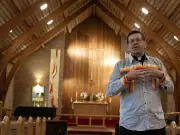
Documentary filmmaker Guy Rex Rodgers is delving into a long-debated historical mystery: Why did the proportion of Catholic immigrants attending French Catholic schools in Quebec decline dramatically between the 1940s and 1970s? His investigation challenges established narratives about immigrant language choices and raises questions about institutional practices during a transformative period in Quebec's history.

Uncovering Personal Accounts of Rejection

While presenting his 2022 film What We Choose to Remember to audiences across Quebec, Rodgers repeatedly encountered personal anecdotes from immigrant communities, particularly Italian-Canadians, who described being turned away from French Catholic schools. "The question is: Did they choose that or was that choice imposed upon them, or was it a mix of both?" Rodgers explained in an interview.

Many interviewees recounted specific instances of rejection. One woman described how her bilingual immigrant parents were told by a nun in the 1950s: "We don't accept immigrants here. There are other schools for you." These experiences became so common that word-of-mouth within immigrant communities led many Catholic families to stop attempting enrollment in French schools altogether.

Wide Pickt banner — collaborative shopping lists app for Telegram, phone mockup with grocery list

The Italian-Canadian Experience

The phenomenon appears particularly pronounced within Montreal's Italian community, which became the city's largest immigrant group following the Second World War. According to a 1988 study, the percentage of Italian-Canadians enrolled in Quebec French public schools dropped from just over 60% in 1930 to below half by 1950, plummeting to a mere 8% by 1975.

Father Gerald Westphal, a Catholic priest who worked in Montreal schools for decades, confirmed these patterns to Rodgers. Westphal noted that previously, the Catholic Church would bring Italian priests who spoke both Italian and French to assist with immigrant education in French schools. "After the Italians were sent to English schools, the Italian priests didn't speak English. So then the cardinal sent for American priests to help in the English schools," Westphal recounted.

Historical Context and Institutional Pressures

Rodgers places these events within the broader social upheaval of postwar Quebec. The 1960s brought rapid change: mass media exposure to international conflicts, tensions surrounding the church's role in society, modernization of Catholicism, the sexual revolution, baby boom pressures on schools, and large-scale immigration to Montreal.

"Quebec was in a state of upheaval," Rodgers observed. "Quebecers were being bombarded by these outside ideas, which were destabilizing to what was a very conservative society." He suggests these cultural pressures shaped institutional responses, particularly around education, language, and identity.

Rodgers theorizes that a grassroots response emerged, driven by principals and school directors rather than formal policy: "There appears to have been a fairly organic, grassroots response saying: We need to protect our kids and our culture. And the place to do that is the church and the school."

Complicating the Historical Record

The absence of formal documentation presents challenges for historical verification. Rodgers notes that if immigrant rejections occurred at the school level, they would have violated school board policies, giving officials little incentive to record their actions. This documentation gap has allowed competing interpretations to persist.

In 1997, Quebec historian Robert Gagnon argued in the academic journal Bulletin d'histoire politique that he found no historical evidence of French Catholic schools refusing immigrant students. Gagnon suggested immigrant families instead chose English schools because English was widely perceived as the language of economic opportunity.

Rodgers' research, funded by the provincial government's Secrétariat aux relations avec les Québécois d'expression anglaise, challenges this interpretation through firsthand accounts. His recently published second report shifts focus from what happened to why it happened, calling on former students, educators, and administrators to come forward with additional information.

Pickt after-article banner — collaborative shopping lists app with family illustration

Policy Implications and Contemporary Relevance

Rodgers argues that understanding this history is crucial for contemporary language policy debates. The perception that immigrants had "chosen" English influenced subsequent legislation, including the Liberal government's Bill 22 in 1974 and the Parti Québécois's Bill 101 in 1977, which significantly restricted access to English-language schooling for children of immigrant parents.

"There was a presumption that immigrants would not be attracted to the French language or the French culture or integrating within Quebec without pressure being applied and a form of indoctrination by schools," Rodgers explained. "Now, if that presumption was wrong, then that affects a lot of policies regarding education, language, immigration, etc."

The filmmaker emphasizes that many immigrants actually valued French and sought integration into Quebec society. "There is no rejection of French. It's the opposite. It's exactly the opposite. There's this desire to learn French and to be integrated in the larger society," he said, noting that immigrant families often wanted bilingualism for economic and social mobility.

Community Responses and Ongoing Dialogue

The issue remains emotionally and politically sensitive within immigrant communities. Last year, Montreal lawyer Ralph Mastromonaco initiated a National Assembly petition asking Quebec to acknowledge that "a significant number of children of Italian immigrants were unjustly denied access to Quebec's French Catholic public schools" and to express regret for that historical experience.

Education Minister Sonia LeBel responded that she was "aware of the sensitivity of the subject" but rejected the request because the issue predates Quebec's establishment of its Education Ministry in 1964.

Italian-language media continues to document these experiences. Il Cittadino Canadese, a Montreal Italian-language weekly, recently published an article titled "Quando le scuole francofone dicevano no agli italiani" (When French schools said no to Italians). Journalist Giulia Verticchio, who collected recollections from Italian Montrealers, explained her motivation: "I told their stories not to 'play the victim' or to live in the past, but to help shed light on a period of Quebec history."

Verticchio challenged what she called "a flawed narrative that Italians preferred English because it was the language of business and that they were a threat to the French language, responsible for the decline of French. That's not really how it was."

Rodgers' final report is due in November, potentially offering new insights into this contested chapter of Quebec's educational history and its implications for contemporary language policy debates.