UBC Panel on Palestinian Health Equity Criticized for Banning Debate and Anti-Israel Bias
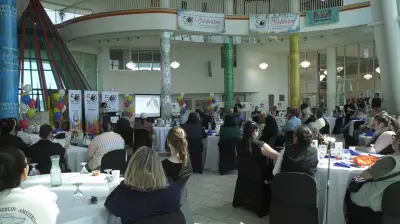
A recent panel discussion at the University of British Columbia (UBC) has ignited controversy over its approach to dialogue on the Israeli-Palestinian conflict. The event, titled "Taking collective liberatory action to promote health as a human right, and health equity for Palestinian people: An anti-oppressive dialogue within the health professions," was organized by the psychiatry department's equity, diversity and inclusion committee.
Restricted Dialogue and Lack of Debate
Critics argue that the panel demonstrated a poor understanding of genuine dialogue by explicitly banning debate or opposing views. Moderator Sarah Leavitt, a creative writing professor specializing in comics, informed attendees that no debate would be permitted during the session. Online comments were disabled, requiring participants to send questions directly to panelists via private messages that remained invisible to other attendees.
The event was originally scheduled for both in-person and online formats. However, two days prior, organizer Tal Jarus—a professor of occupational health who identifies as a "queer white cis woman Jewish settler"—emailed attendees claiming the shift to online-only was due to "simplicity sake and because of the small number of people who registered for the onsite option." This explanation was contradicted during the live event when panelist Annalee Yassi stated the move was "largely because of its so-called controversial nature."

Panel Composition and Funding Sources
The discussion was advertised as a collaboration between UBC's psychiatry and occupational therapy departments, with funding provided by the university's Equity & Inclusion Office and the Strategic Equity and Anti-racism Enhancement Fund. Panelists included individuals who had previously published papers condemning what they described as "silent complicity of health-care institutions in the face of genocide in Palestine, the state of apartheid in Israel and attempted ethnic cleansing of Palestinians."
Moussa Abu Mostafa, participating remotely from Gaza, expressed disappointment with the international community's response, particularly from healthcare professionals. "We think if we were in their positions, we would have done a lot for Palestinians," he stated, arguing that all healthcare professionals should speak out against what he characterized as Israeli genocide.
Contradictory Claims and Omissions
Ben Mortenson, head of UBC's occupational therapy department, made the contradictory assertion that "The university and its leadership does not take positions on geopolitical conflicts and classifications"—despite the panel's clear anti-Israel orientation. Notably, none of the panelists condemned Hamas or the October 7 terrorist attack that precipitated the Gaza conflict, raising questions about balanced discourse.
The event has sparked broader concerns about academic freedom and the role of universities in facilitating genuine dialogue on contentious geopolitical issues. Critics argue that restricting debate undermines the educational mission of institutions like UBC, while supporters maintain such spaces are necessary for marginalized perspectives.