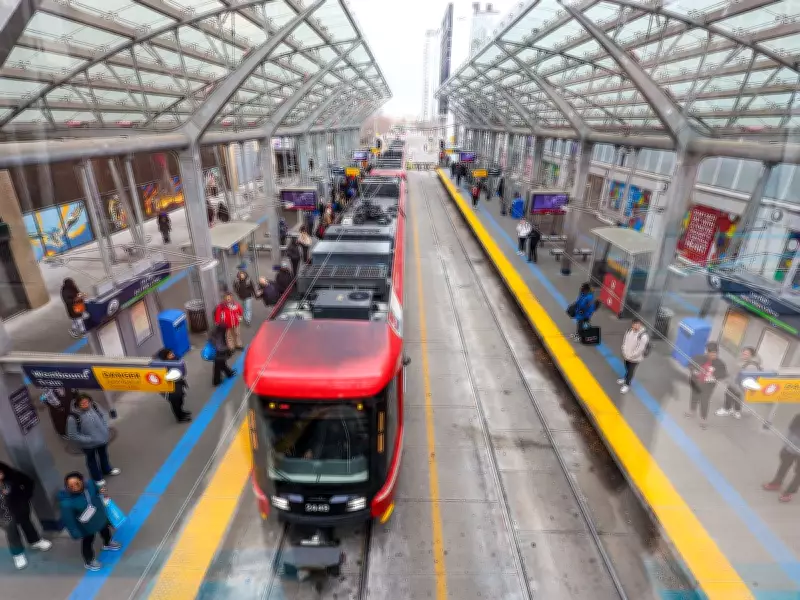
Calgary Transit is revolutionizing its approach to ridership measurement by integrating modern sensor technology across its CTrain fleet. This strategic implementation aims to deliver significantly more accurate passenger counts, moving beyond traditional estimation methods that have long been standard in the public transportation industry.
Advanced Technology for Enhanced Data Collection
The city's public transportation agency has successfully deployed automated passenger counting (APC) technology on seventy percent of its LRT vehicles. This percentage is expected to increase steadily as older trains are gradually phased out and replaced with newer models equipped with these sophisticated sensors. The technology represents a substantial leap forward from previous manual counting methods.
Strategic Benefits for Transit Planning
According to Laura Hoskins, Calgary Transit's leader of performance and analytics, the daily feedback provided by these automated systems is invaluable for operational adjustments and future planning. "To have this daily feedback on the number of customers using public transit, across the entire system, is important for adjusting our operations and future planning," Hoskins emphasized. "It's a big value-add piece, not just for us at Calgary Transit, but for being strategic on where we and council invest dollars to improve service and expand the network."

The information gathered from these automated sensors will position Calgary Transit to make truly data-driven decisions regarding service planning and delivery. This represents a fundamental shift from previous approaches that relied on periodic sampling and modeling assumptions.
From Buses to Trains: A Proven Technology
This industry-leading technology has already demonstrated its effectiveness on Calgary's bus fleet since 2023. The automated sensors are strategically installed at each vehicle door to accurately capture boarding activity, providing consistent daily data across the entire public transit system. This comprehensive data collection enables transit officials to identify ridership trends over weeks, months, and years, supporting fleet deployment that more closely aligns with actual passenger needs.
Addressing Seasonal Demand Fluctuations
One of the most significant advantages of this new data collection system is its ability to help transit planners respond to seasonal variations in ridership. "We know events throughout the year, and especially events in the summer, always attract more people using Calgary Transit," Hoskins explained. "This new data will help tell us when we should be scheduling more trains or fewer trains depending on the time of year."
The data will enable Calgary Transit to optimize train scheduling based on actual demand patterns rather than assumptions, potentially improving service efficiency and passenger satisfaction during peak periods while avoiding unnecessary service during slower times.
Moving Beyond Traditional Estimation Methods
Before adopting automated sensors, Calgary Transit relied on manual passenger counts and periodic sampling—an approach that remains industry-standard for many public transit agencies across North America. However, this traditional method comes with inherent limitations, as it depends heavily on modeling and assumptions to develop system-wide ridership estimates.
"As a result, year-to-year comparisons could sometimes reflect differences in sampling, rather than actual changes in customer behavior," the agency acknowledged in its announcement. The new automated system eliminates this uncertainty by providing consistent, comprehensive data collection across the entire transit network.
Future Integration with Payment Technologies
Looking ahead, Calgary Transit plans to integrate data from emerging payment technologies, such as tap-and-go systems, with information gathered from automated sensors. This combined data approach promises to further refine public transit service for Calgarians, creating an increasingly responsive and efficient transportation network that truly meets community needs.

The implementation of automated passenger counting technology represents a significant step forward in Calgary's commitment to data-informed public transportation management, setting a new standard for transit agencies seeking to optimize their services through precise, real-time ridership information.