Federal Appeals Court Upholds Texas Law Requiring Ten Commandments in Public Schools
A U.S. appeals court delivered a significant victory for conservative advocates on Tuesday, ruling that Texas can legally require the Ten Commandments to be displayed in public school classrooms. The 9-8 decision by the 5th U.S. Circuit Court of Appeals in New Orleans overturns a previous lower court ruling and strengthens similar legislative efforts in states like Arkansas and Louisiana.
Court Rejects Religious Indoctrination Arguments
In a detailed majority opinion, the conservative-leaning court dismissed claims that displaying the religious text constitutes government-led proselytization or violates the constitutional separation of church and state. The ruling emphasized that the mandate does not compel students to adopt or affirm the Commandments' religious teachings.
"No child is made to recite the Commandments, believe them, or affirm their divine origin," the court stated, addressing concerns about parental and student rights.

Immediate Legal and Political Reactions
The American Civil Liberties Union, which challenged the Texas law on behalf of parents, announced plans to appeal the decision to the U.S. Supreme Court. In a statement, the organization argued that the ruling undermines First Amendment protections and families' freedom to choose religious instruction.
"The First Amendment safeguards the separation of church and state, and the freedom of families to choose how, when and if to provide their children with religious instruction. This decision tramples those rights," the ACLU stated.
Texas Attorney General Ken Paxton, a Republican, celebrated the ruling as "a major victory for Texas and our moral values." He added, "The Ten Commandments have had a profound impact on our nation, and it's important that students learn from them every single day."
Broader Context of Religion in Texas Classrooms
This mandate is part of a larger push in Texas to incorporate religious elements into public education. In 2024, the state approved an optional Bible-infused curriculum for elementary schools, and a proposal scheduled for a June vote would add Bible stories to required reading lists.
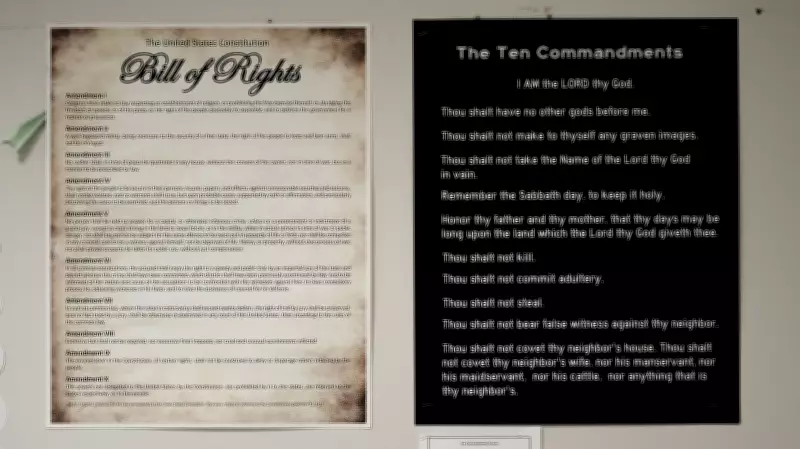
The law, signed by Republican Governor Greg Abbott and effective since September, represents the most extensive effort nationwide to display the Ten Commandments in public schools. It requires schools to hang donated posters in a conspicuous location, with specific size and visibility requirements: 16 inches wide by 20 inches tall, using typeface visible to students with average vision from anywhere in the classroom.
Implementation and Dissenting Voices
Since its enactment, the law has sparked mixed reactions across Texas, which educates approximately 5.5 million public school students. Implementation has involved:
- Animated school board meetings debating the displays
- Guidance for teachers on responding to student questions
- Nationwide donations of posters to school campuses
Although the law only mandates displays if posters are donated, one suburban Dallas district spent nearly $1,800 to print roughly 5,000 posters, highlighting the varied approaches to compliance.
Judge Stephen A. Higginson, in a dissenting opinion joined by four other judges, criticized the ruling, arguing that the Constitution's framers intended to prevent religious imposition through political power.
"Yet Texas, like Louisiana, seeks to do just that, legislating that specific, politically chosen scripture be installed in every public-school classroom," Higginson wrote.
National Implications and Similar Laws
The Texas decision follows the appeals court's earlier clearance for Louisiana to enforce its similar Ten Commandments display law in February. Louisiana Attorney General Liz Murrill stated that the Texas ruling "adopted our entire legal defense" of her state's law.
Additionally, Alabama Governor Kay Ivey signed a comparable law earlier this month, indicating a growing trend among Republican-led states. The Texas law passed easily through the GOP-controlled Legislature and has received support from prominent Republicans, including former President Donald Trump.

This ruling reverses a previous federal court block that had prevented about a dozen Texas school districts—including some of the state's largest—from displaying the posters, marking a pivotal moment in the ongoing national debate over religion in public education.