Democrat Analilia Mejía Triumphs in New Jersey Special Election for U.S. House Seat
In a significant political development, Democrat Analilia Mejía secured victory in a New Jersey special election for the U.S. House of Representatives on Thursday, overcoming Republican challenger Joe Hathaway. The Associated Press called the race for Mejía shortly after polls closed, marking a win for progressive forces and ensuring Democrats retain control of the 11th District seat.
A Progressive Victory with National Implications
Mejía, 48, a former head of the Working Families Alliance who garnered support from Vermont Senator Bernie Sanders, will fill the seat previously held by Democratic Governor Mikie Sherrill. Her term extends until January, adding to a series of Democratic successes as the midterm elections approach. This outcome strengthens the Democratic hold in a district that has shifted from a Republican stronghold to increasingly Democratic territory since Donald Trump's first term.
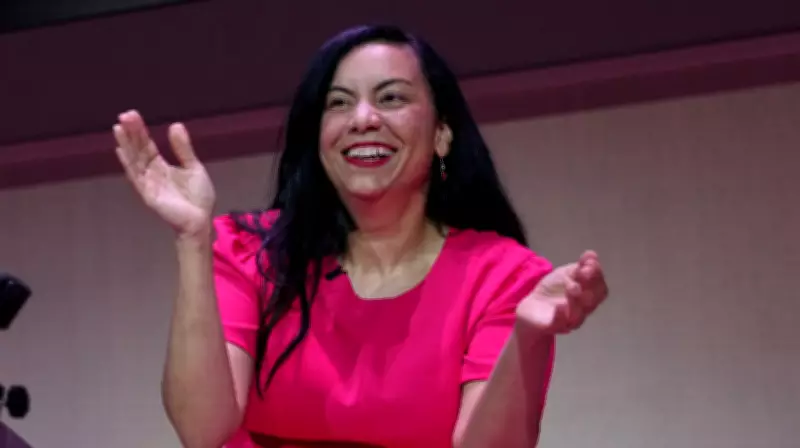
Addressing an enthusiastic crowd in Montclair, Mejía declared herself an "unbought, unbossed, sassy new member of Congress," drawing cheers from supporters. Her campaign centered on standing up to former President Trump and advocating for progressive policies, including improved healthcare and education, while criticizing billionaires for exerting a "stranglehold" on the economy.

Campaign Dynamics and Voter Perspectives
Throughout the campaign, Republicans labeled Mejía as too far left, a characterization she vigorously contested. "It is not radical to say that a worker who toils every day cannot make ends meet, that they deserve justice, that they deserve higher wages," Mejía asserted in her victory speech. "That is not radical, that is good conscience. That is a good economy."
Her message resonated with voters like Saran Cunningham, an 86-year-old retired special educator who initially hesitated to support Mejía due to concerns about her left-leaning views. "I think we've been tilting a little bit more to the right lately, which worries me," Cunningham explained. "I think that we need people in Congress who will fight for things that will help people as opposed to hurting them."
Conversely, Rob Berkowitz, 62, a conservative voter, cast his ballot for Hathaway, praising Trump's policies on immigration, the economy, and foreign affairs. "They want borders wide open. They don't want to enforce existing immigration laws," Berkowitz criticized of the Democratic Party.
Background and Endorsements
Mejía emerged from a crowded Democratic primary in February, framing the race as a referendum on Trump's leadership. She criticized his pardons related to January 6 crimes and his freezing of congressionally authorized funds. Her platform included populist economic policies and calls to abolish U.S. Immigration and Customs Enforcement, alongside criticism of the Israeli government and support for Palestinian communities.
Her progressive credentials were bolstered by endorsements from prominent figures, including Senator Bernie Sanders, who hailed her as a "great progressive addition" to Congress, as well as Representative Alexandria Ocasio-Cortez and Senator Elizabeth Warren. Mejía's background includes serving as Sanders' political director during his 2020 presidential campaign and as deputy director of the Labor Department's Women's Bureau under the Biden administration.
Republican Response and Future Outlook
Hathaway, 38, a former Yale University football player with experience in healthcare, finance, and politics as an aide to former GOP Governor Chris Christie, attempted to leverage Mejía's progressive stance to his advantage, with national Republicans portraying her as a socialist. Following his defeat, Hathaway congratulated Mejía and expressed hope for "balanced, pragmatic" leadership in the district, rather than "far-left policies."

The two candidates may face off again in November's election for a full two-year term, setting the stage for continued political competition. The 11th District, encompassing parts of Essex, Morris, and Passaic counties in northern New Jersey's affluent suburbs, has undergone a political transformation, with Sherrill initially winning the seat in 2018 and securing reelection in 2024 by a significant margin.
This special election victory underscores the ongoing ideological battles within American politics and highlights the growing influence of progressive voices in traditionally competitive districts.