

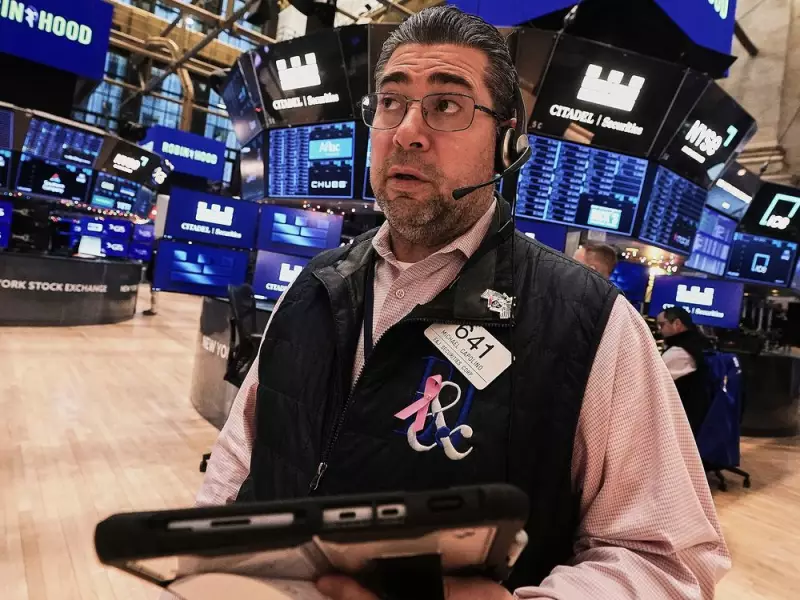
The first trading session of 2026 delivered a dose of caution to Wall Street, as a sharp pullback in major technology shares dragged broader U.S. stock indexes into negative territory on Friday, January 2.
A Volatile Session Reverses Gains
What began as a positive opening quickly soured. The Nasdaq 100, heavily weighted toward tech, turned lower after rising more than one percent earlier in the day. The broader S&P 500 Index also reversed course to close in the red, continuing a recent pattern. Notably, the S&P 500 has now declined on the first trading day for three consecutive years.
Leading the downturn were shares of industry titans. Tesla Inc. tumbled following a report that its fourth-quarter vehicle deliveries missed the average analyst estimate. Amazon Inc. and Microsoft Corp. also slid, contributing to a roughly one percent drop in a Bloomberg gauge tracking the so-called Magnificent Seven stocks.

AI Optimism Meets Valuation Concerns
This wary start stood in stark contrast to the optimistic tone struck by most technology and artificial intelligence strategists at the close of 2025. AI and tech had been central to powering the S&P 500 to a third straight year of double-digit gains.
However, specific sectors showed clear strain. Software stocks were among the session's biggest decliners, extending a trend from 2025 where investors retreated from the group amid fears of AI-driven disruption. "Market participants aren't necessarily cautious," observed Steve Sosnick, chief strategist at Interactive Brokers. "However, they may be fully invested going into the new year."
Despite the broad selloff, there were pockets of strength. Some semiconductor equipment makers and chip stocks rallied, with Nvidia Corp. and Micron Technology Inc. posting gains.
Broader Market Signals and Future Risks
The caution extended beyond equities. In the bond market, the 30-year Treasury yield hovered near its highest level since September, while the 10-year yield also rose. Precious metals gave up earlier advances, with gold prices moving lower. The U.S. dollar was flat, while Bitcoin rose two percent.
Analysts point to stretched valuations and concerns that massive capital expenditures in AI may not yield expected returns as key headwinds. "The scope for further gains driven purely by valuation expansion in 2026 may be limited," wrote Linh Tran, an analyst at XS.com. "Shocks related to interest rates, earnings, or policy could therefore trigger faster and more pronounced corrections."
Looking ahead, strategists at Deutsche Bank noted that several themes beyond AI will shape markets this year. These include developments in U.S. trade policy and a looming Supreme Court case on tariff legality. The Federal Reserve will also be a major focus, with President Donald Trump expected to name a successor to Chair Jerome Powell early in the year.






