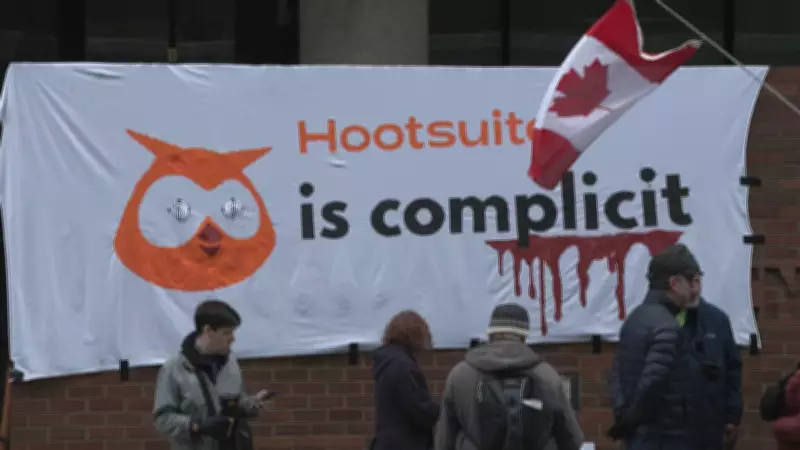
Vancouver witnessed a significant demonstration on Saturday, February 21, 2026, as activists assembled outside the headquarters of social media management company Hootsuite. The protest, dubbed 'De-ICE Vancouver,' targeted the company's alleged involvement with U.S. Immigration and Customs Enforcement (ICE), sparking a heated debate over corporate responsibility and immigration policies.
Protest Details and Demands
The rally, which drew a diverse crowd of local residents and advocacy groups, featured speakers calling for Hootsuite to sever any ties with ICE. Protesters held signs and chanted slogans emphasizing human rights concerns, arguing that such contracts contribute to controversial immigration enforcement practices. Organizers stated that the demonstration aimed to pressure Hootsuite into adopting more ethical business practices and aligning with community values.
Broader Context and Reactions
This protest occurs amid a national conversation in Canada about the role of corporations in social issues, particularly those related to immigration and enforcement. Similar movements have emerged in other cities, reflecting growing public scrutiny of companies engaged with government agencies involved in detention and deportation. Hootsuite has not issued an immediate public statement regarding the protest, leaving questions about its current or past contracts with ICE unanswered.

Local Impact and Community Response
Vancouver residents expressed mixed reactions to the protest, with some supporting the activists' stance on human rights, while others emphasized the importance of business operations and economic considerations. The event underscores the increasing intersection of technology, corporate ethics, and social justice in urban centers like Vancouver.
Looking Ahead
As protests against ICE and related agencies continue to gain momentum across North America, this demonstration highlights the ongoing challenges faced by tech companies in balancing profitability with social responsibility. The outcome of such actions may influence future corporate policies and public perceptions in Vancouver's vibrant tech scene.