

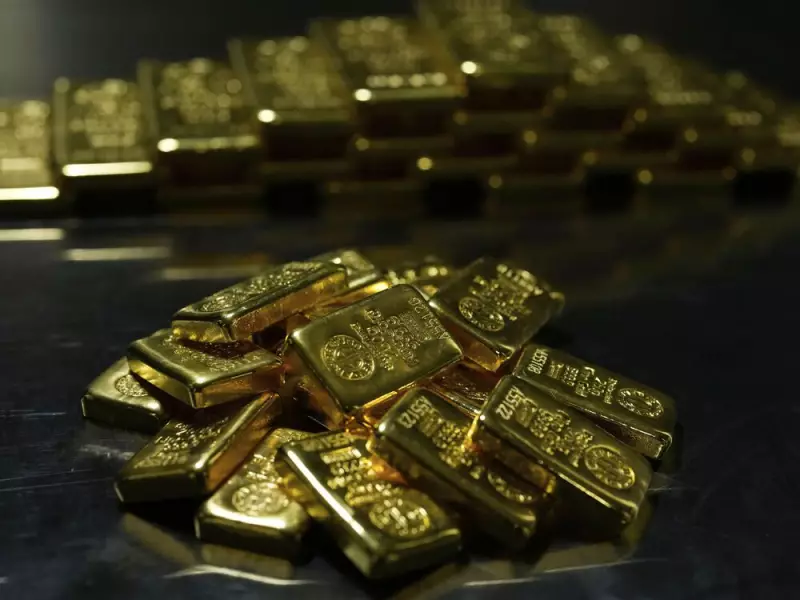
Precious metals markets opened the new year with a sharp rally, as escalating tensions in Venezuela and expectations for continued monetary easing from the U.S. Federal Reserve drove investors toward safe-haven assets.
Geopolitical Shock Drives Safe-Haven Demand
Spot gold surged as much as 2.3% on Monday, January 5, 2026, climbing above US$4,430 an ounce. Silver posted an even stronger gain, advancing nearly five percent. The immediate catalyst was heightened geopolitical uncertainty following the United States' capture of Venezuelan leader Nicolás Maduro over the weekend.
President Donald Trump stated that the U.S. plans to "run" Venezuela and demanded "total access" to the country, including its vast oil reserves. This move leaves the future governance of the South American nation in doubt, reinforcing a backdrop of global instability that benefits non-yielding assets like gold and silver.

Christopher Wong, an analyst at Oversea-Chinese Banking Corp. in Singapore, noted that the episode "reinforced a backdrop of geopolitical uncertainty." However, he suggested immediate risks might be limited, adding that "developments in Venezuela point to a relatively quick closure, rather than a prolonged military conflict."
Monetary Policy Fuels the Rally
The geopolitical flare-up added fuel to an already bullish market for precious metals. Gold is fresh off its best annual performance since 1979, having hit a series of record highs throughout 2025. This rally was underpinned by robust central-bank buying, significant inflows into bullion-backed exchange-traded funds (ETFs), and a supportive shift in U.S. monetary policy.
A key driver has been the three successive interest rate cuts implemented by the U.S. Federal Reserve in the previous year. Because gold and silver do not pay interest, they become more attractive to hold when the opportunity cost of holding them—represented by yields on assets like bonds—falls.
The outlook for further monetary easing continues to support prices. Many leading banks forecast additional gains for gold in 2026, especially with the Fed widely expected to deliver more interest-rate reductions. Furthermore, President Trump's ongoing reshaping of the U.S. central bank's leadership adds another layer of anticipation for market participants.
Analysts Project Continued Strength
Institutional forecasts remain optimistic. Goldman Sachs Group Inc. stated last month that its base case was for a rally to US$4,900 an ounce, with risks skewed to the upside. This bullish view is shared by other major financial institutions.
Adding a long-term macroeconomic perspective, a panel of prominent economists warned on Sunday that the U.S. economy faces risks from mounting federal debt. Former Treasury Secretary Janet Yellen highlighted that preconditions are strengthening for "fiscal dominance," a scenario where the sheer size of government debt pressures the central bank to keep interest rates low to manage servicing costs. This environment is historically positive for hard assets like gold.
Silver outperformed gold in 2025, breaking through levels that surprised many market observers. In addition to sharing gold's tailwinds, silver has benefited from sustained concerns that the U.S. administration could eventually impose import tariffs on the refined metal, potentially disrupting supply chains.
As of early Monday trading in London, specific prices were: gold rose 2.3% to US$4,431.64 an ounce, while silver climbed 4.2% to US$75.86. Platinum and palladium also traded higher. Notably, the Bloomberg Dollar Spot Index, a key gauge of the U.S. currency's strength, was up 0.2%, indicating that the metals' gains were not solely due to dollar weakness but strong independent demand.






