Ontario and Federal Governments Revise Housing Strategy Amid Supply Shortfall
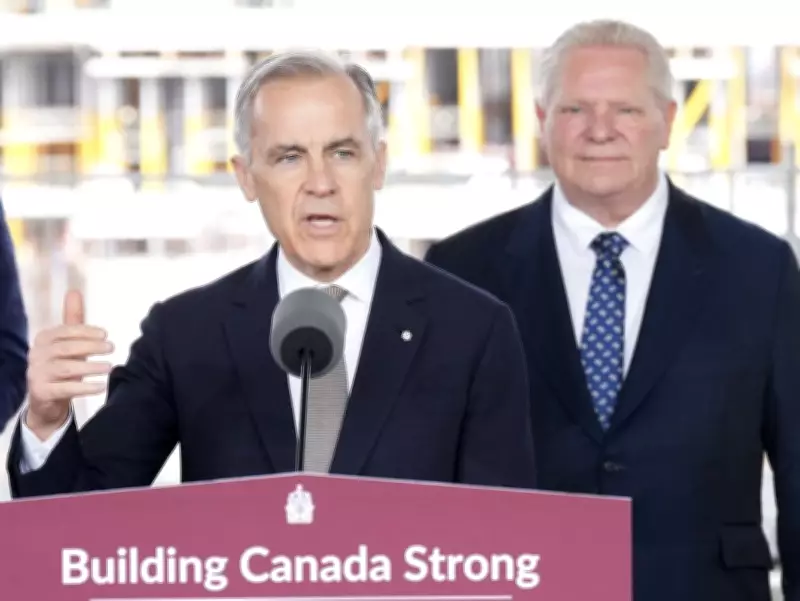
The governments of Ontario Premier Doug Ford and Prime Minister Mark Carney are returning to the drawing board to stimulate more housing activity, following previous policies that failed to meet expectations and left housing starts significantly below projections.
Extension of HST Rebates to All Homebuyers
Late last year, both governments introduced a rebate on the Harmonized Sales Tax (HST) for new homes valued up to $1 million, with partial rebates available for homes up to $1.5 million, but this was limited to first-time homebuyers. The major issue was that most homebuyers, who are not first-time purchasers, did not qualify for this financial relief.
Getting individuals who are not first-time homebuyers into newly constructed homes should remain a priority. After all, these buyers will be vacating other properties, which can then enter the market and potentially be sold to first-time buyers. Extending the HST rebate to all homebuyers is expected to boost housing demand at a time when the market clearly requires it.

Acknowledging this reality, Ford announced last week that the federal and provincial governments plan to extend the HST rebate on newly built homes to all homebuyers for a one-year period, starting April 1, 2026.
Challenges with Short-Term Policies
While this extension is a positive development, a longer-term approach would have been more beneficial. Limiting the rebate to just one year may stimulate demand in the short term but could create uncertainty in the long run, potentially leading to a decline in demand if the policy is not renewed. Both governments should aim to provide the housing sector with as much certainty as possible, as short-term plans often fall short of addressing persistent issues.
Complexities of Multi-Level Government Involvement
One reason the housing crisis is so difficult to resolve is the involvement of multiple levels of government, including municipalities. For instance, municipal development charges—fees levied by local governments to fund new infrastructure and services—play a significant role. In Toronto, the average new home includes approximately $180,000 in municipal development charges, a staggering amount that contributes to rising housing costs in Canada's largest urban center.
Some municipalities have demonstrated that progress is possible when there is a will. For example, Vaughan, under Mayor Steven Del Duca, reduced development charges by nearly half in the fall of 2024. This is a model other municipalities may need to follow to make housing more affordable for potential buyers.
In response to many municipalities, particularly in Ontario, increasing development charges and making new housing unaffordable, the Ford and Carney governments announced plans on March 31 to offer provincial and federal funding to help cut municipal development charges by up to 50%, another measure aimed at reducing costs.
Urgent Need for Zoning Reform
A final critical issue is zoning reform. Red tape from all three levels of government often forces developers to wait years for rezoning approvals. In Toronto, approvals for multi-residential buildings, which are desperately needed to increase housing supply, can take as long as 25 months. This delay of over two years before construction can begin is a major factor why Canada's housing supply numbers are lagging behind governmental goals.
Fees associated with zoning reform also pose a significant problem. In the Greater Toronto Area, for example, fees average $116,000 per low-rise unit and $79,000 per high-rise unit. Thus, zoning issues not only slow down the construction process but also add substantial costs.
Conclusion: A Step Forward, But More Work Needed
Extending the HST rebate on newly built homes to all homebuyers is a commendable step. Similarly, providing funding to reduce development charges is a positive move. However, zoning reform must still be addressed comprehensively.
To genuinely resolve the housing crisis, all three levels of government must collaborate to tackle problems that have accumulated over decades but now demand immediate solutions. Recent announcements represent a promising start, but significant additional efforts are required to achieve sustainable progress.