

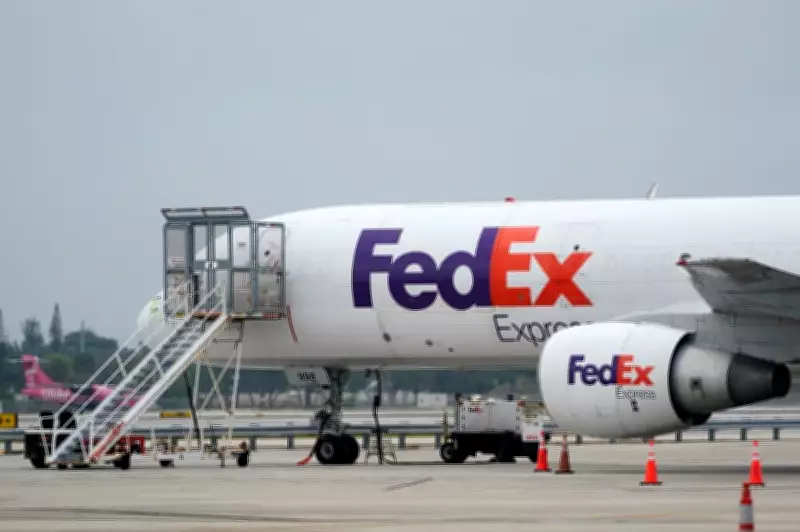
FedEx has become the latest major corporation to file a lawsuit seeking refunds for tariffs paid under policies enacted by former U.S. President Donald Trump, following a landmark Supreme Court decision that declared those tariffs unconstitutional. The legal action comes as part of a broader wave of over 1,000 companies, including retail giants like Costco and cosmetics firm Revlon, pursuing similar claims in the U.S. Court of International Trade.
Supreme Court Strikes Down Trump's Tariff Policies
The U.S. Supreme Court ruled on Friday that tariffs imposed by Trump under an emergency powers law were unconstitutional, including the extensive "reciprocal" tariffs applied to nearly every other country. In a 6-3 decision, the court found that these measures exceeded presidential authority, prompting immediate backlash from Trump, who expressed outrage at the ruling.
Trump's Reaction and Legal Fallout
Former President Trump condemned the Supreme Court justices involved in the majority decision, labeling them "lapdogs" and accusing them of being "disloyal to our Constitution." He suggested that foreign influence might have played a role in the verdict, stating he was "absolutely ashamed" of the outcome. Despite this setback, Trump has vowed to explore alternative avenues to impose tariffs, citing Section 122 of the Trade Act of 1974, which allows for temporary tariffs of up to 15% for 150 days without congressional approval.

Financial Implications and Corporate Lawsuits
According to U.S. Treasury data, more than $133 billion had been collected from these tariffs as of December, funds that are now potentially subject to refunds following the court's decision. FedEx, in its lawsuit, claims it has "suffered injury" from the tariff payments and is seeking financial redress. The company's move highlights the significant economic impact on businesses forced to comply with the now-invalidated policies.
Expert Analysis on Refund Process
Duke University law professor Tim Meyer provided insight into the complex legal landscape ahead, noting that if the government fails to establish a streamlined refund process, each case may need to be adjudicated individually. "We're going to have to wait and see how the government decides to handle the refund claims," Meyer explained. "And then if the government chooses not to set up a process for the refunds, ultimately the Court of International Trade is going to have to adjudicate over a thousand cases." This scenario could lead to prolonged legal battles and uncertainty for affected companies.
Political and Economic Context
The Supreme Court's ruling arrives amid heightened political tensions, with Trump indicating he would seek congressional approval to extend tariffs beyond the 150-day limit, though such a motion is likely to face opposition before the upcoming midterm elections. The decision underscores ongoing debates over executive power, trade policy, and the separation of powers in the U.S. government, with far-reaching implications for international commerce and corporate operations.






