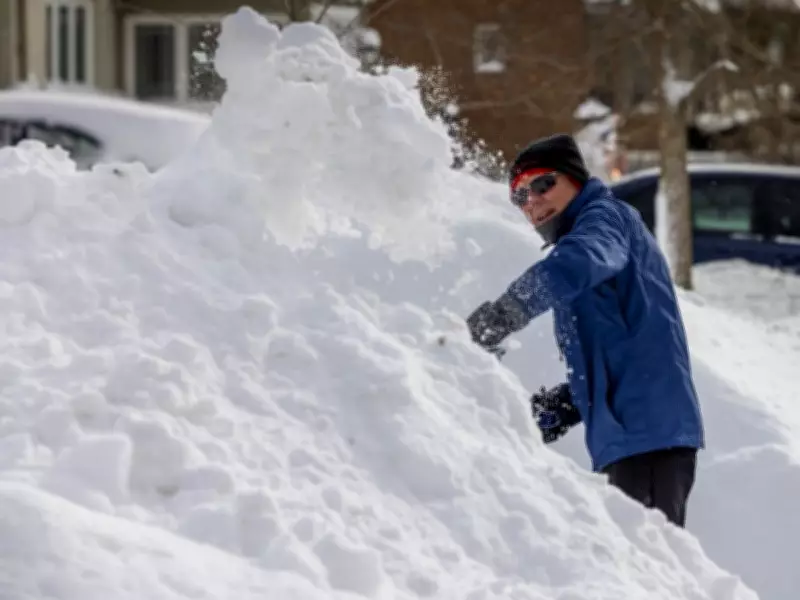
Winter is far from over in the Greater Toronto and Hamilton Area, as residents are urged to keep their shovels handy. A fresh Alberta Clipper storm is set to deliver another significant snowfall, with Environment Canada issuing warnings for deteriorating conditions across southern Ontario.
Snowfall Forecast for the GTHA
According to Environment Canada, the Alberta Clipper will sweep across the region overnight, bringing 5 to 10 centimeters of snow to key urban centers. Cities including Toronto, Mississauga, Brampton, Burlington, Oakville, Hamilton, Milton, Pickering, Oshawa, Richmond Hill, Vaughan, Markham, Newmarket, and Barrie are all expected to be impacted. The highest accumulations are projected along the Oak Ridges Moraine, stretching north from Caledon to Peterborough.
Roads and walkways are likely to become difficult to navigate due to the accumulating snow, posing challenges for commuters and pedestrians alike. Authorities advise caution as visibility may drop significantly during the peak of the storm.

Additional Snowfall in Dufferin County
Areas north and west of the GTHA are bracing for even heavier snowfall. Orangeville, Grand Valley, and southern Dufferin County could see an additional 5 to 15 centimeters of snow on Wednesday, accompanied by wind gusts reaching up to 60 kilometers per hour. Snow squall watches have been issued, warning of potential road closures and near-zero visibility at times.
Travel may be hazardous, and road closures are possible, according to the warning. This double dose of bad weather follows Tuesday night's storm, exacerbating conditions in these regions.
Broader Impact Across Ontario
The storm's effects extend beyond the GTHA, with some areas between Tobermory and Kitchener also preparing for significant snowfall. In northern Ontario, the Ontario Provincial Police have already closed long stretches of highways northeast of Thunder Bay due to the storm. The north shore of Lake Superior is expected to receive about 15 to 25 centimeters or more of snow, highlighting the widespread nature of this winter event.
This latest snowfall adds to an already record-breaking season for Toronto, which has seen over 110 centimeters of snow since the start of the year. January alone accounted for 89.4 centimeters, much of it from a historic storm in late January that dumped 40 to 60 centimeters across various neighborhoods.
Preparedness and Safety Measures
Residents are encouraged to stay updated on weather alerts and adjust travel plans accordingly. Environment Canada emphasizes that frigid temperatures are likely to persist, with plenty of winter left in February. As the storm progresses, it's crucial to prioritize safety by avoiding unnecessary travel and ensuring homes and vehicles are prepared for the cold and snow.
With more snow on the horizon, southern Ontario remains firmly in winter's grip, reminding everyone that spring is still a distant hope.