

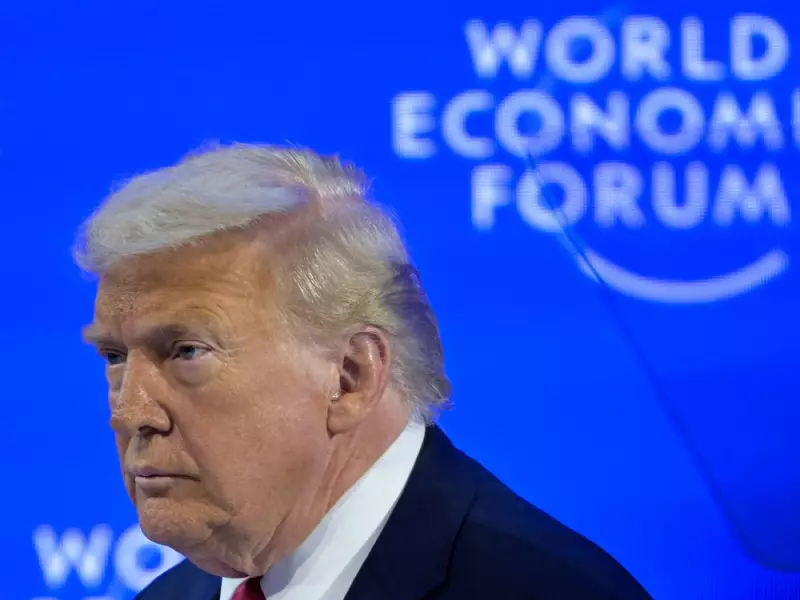
European Parliament Suspends U.S. Trade Agreement Approval Over Greenland Sovereignty Crisis
The European Union has taken a decisive stand against escalating tensions with the United States by freezing the ratification process for a major trade agreement. This dramatic move comes in direct response to President Donald Trump's repeated threats to acquire Greenland, a Danish territory that holds significant strategic importance in the Arctic region.
Trade Committee Postpones Vote Indefinitely
On Wednesday, the European Parliament's influential trade committee made the consequential decision to postpone indefinitely a crucial ratification vote on the EU-U.S. trade pact. This action effectively places the entire agreement in jeopardy, raising serious questions about whether the deal will ever reach completion.
The trade agreement, originally negotiated and partially implemented last July, established a framework where most EU goods would face a 15 percent tariff while the United States would eliminate tariffs on European industrial goods and certain agricultural products. This arrangement was initially viewed as a strategic compromise to prevent a full-scale trade war and maintain vital U.S. security commitments to Europe during Russia's ongoing conflict in Ukraine.

Greenland Ultimatum Sparks European Backlash
The situation escalated dramatically over the weekend when President Trump issued an ultimatum threatening to impose tariffs on eight European countries unless he secured what he termed a "purchase of Greenland" agreement. Specifically, Trump warned that a 10 percent tariff would take effect on February 1, potentially rising to 25 percent by June if his demands remained unmet.
"By threatening the territorial integrity and sovereignty of an EU member state and by using tariffs as a coercive instrument, the U.S. is undermining the stability and predictability of EU-U.S. trade relations," declared Bernd Lange, chair of the Parliament's trade committee, in an official statement.
Lange further emphasized that European lawmakers had been "left with no alternative but to suspend work" on the trade agreement until the United States demonstrates a willingness to "reengage on a path of cooperation rather than confrontation."
Growing European Consensus Against Concessions
The Greenland controversy has amplified long-standing European concerns that the trade agreement conceded too much to American interests. Even traditional proponents of the pact now acknowledge that final approval should be withheld under current circumstances.
Manfred Weber, leader of Parliament's largest political group, the centre-right European People's Party, articulated this growing consensus: "For us as EPP, and I think for all parliamentarians, it's clear there will be no ratification, no zero percentage tariffs access to the EU for U.S. products until we have clarified the question of reliability."
This parliamentary action follows a proposal from senior lawmakers across major political groups on Saturday, demonstrating broad institutional alignment in response to what European officials perceive as unacceptable pressure tactics.
Broader Implications for Transatlantic Relations
The Greenland dispute has plunged EU-U.S. relations into what many describe as their most serious crisis in recent memory, bringing the transatlantic alliance to what observers characterize as the brink of rupture. The trade agreement's suspension represents more than a commercial setback—it symbolizes deepening diplomatic fractures between traditional allies.
European officials have emphasized their preference for diplomatic solutions while simultaneously demonstrating their readiness to take unified action when necessary. As one European representative noted, "Europe prefers dialogue and solutions, but we are fully prepared to act, if necessary, with unity, urgency and determination."
The indefinite postponement of this significant trade agreement underscores how geopolitical tensions can dramatically reshape economic relationships, with potentially lasting consequences for international commerce and diplomatic cooperation.






