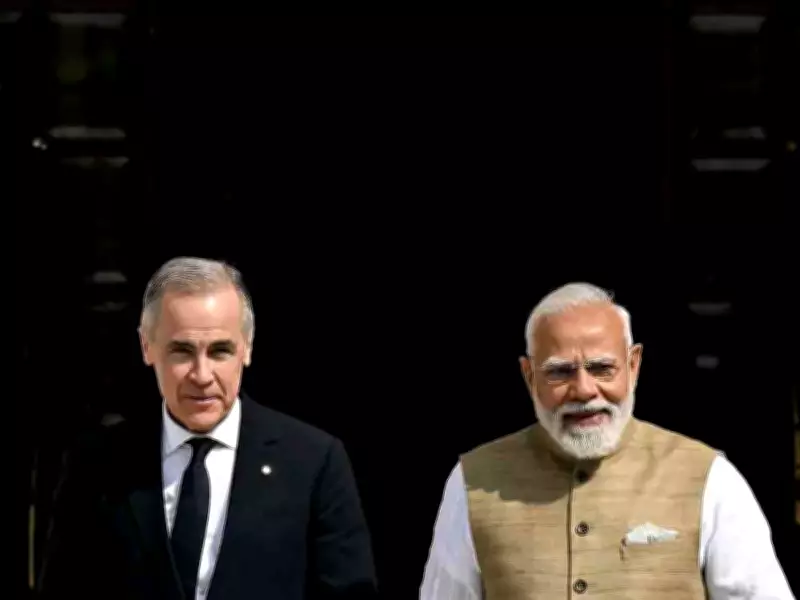
Canadian Prime Minister Mark Carney and Indian Prime Minister Narendra Modi have initiated a significant reset in bilateral relations, pledging to strengthen cooperation in trade and supply chains during Carney's first official visit to India. This meeting at Hyderabad House in New Delhi on March 2, 2026, marks a pivotal moment as both nations seek to move beyond years of diplomatic tension and forge a renewed partnership.
A New Chapter in Diplomatic Engagement
Carney's four-day visit represents the first by a Canadian prime minister to India in eight years, signaling a deliberate effort to rebuild a relationship that had deteriorated sharply. Starting in 2023, former Prime Minister Justin Trudeau accused India of involvement in the killing of a Sikh activist and other alleged activities against Canadian citizens, which India denied. In contrast, Carney emphasized a forward-looking approach, declaring "a new era of partnership" that promises "generational opportunities" for workers and businesses in both countries.
Substantial Economic Agreements Announced
The leaders unveiled concrete initiatives to bolster economic ties. A landmark $2.6 billion agreement was announced, expanding Canada's uranium shipments to India for nuclear energy generation. Under this deal, Saskatoon-based Cameco Corp. will supply nearly 22 million pounds of uranium through 2035, enhancing India's energy security and Canada's export portfolio.

Additionally, the two sides finalized the terms of reference for a comprehensive trade deal, aiming to diversify their trade partnership and reduce dependency on the United States. They projected that this agreement could double two-way trade to approximately $50 billion by 2030, reflecting ambitious economic goals.
Broadening Cooperation Across Sectors
Beyond trade and energy, Carney and Modi discussed expanding collaboration in critical minerals, technology, innovation, and education. Modi highlighted that "India and Canada are natural partners in technology and innovation," underscoring the potential for joint ventures in these high-growth areas. Carney also extended an invitation for Modi to visit Canada, which was accepted, though no specific timing was provided.
Behind-the-Scenes Efforts Pay Off
In his prepared remarks, Carney noted that the past year has seen more engagement between the Canadian and Indian governments than in the previous two decades combined. This behind-the-scenes work has focused on increasing cooperation and information exchange on security issues, laying the groundwork for the current diplomatic thaw.
The meeting occurred against a backdrop of global tensions, including heightened conflicts in the Middle East following U.S.-Israeli strikes on Iran. Despite these external challenges, the leaders prioritized bilateral progress, with Carney stating, "This is not merely the renewal of a relationship. It is the expansion of a valued partnership with new ambition, focus, and foresight."
Future Prospects and Strategic Implications
Carney's itinerary included meetings with business and education leaders in Mumbai, and he is scheduled to address the India-Canada CEO's forum after his talks with Modi. These engagements highlight the multifaceted nature of the renewed relationship, spanning economic, educational, and technological spheres.
The reset in Canada-India relations not only addresses past strains but also positions both nations to capitalize on emerging opportunities in a shifting global landscape. By focusing on trade diversification, energy security, and innovation, Carney and Modi have set a course for a more robust and collaborative future, potentially serving as a model for diplomatic reconciliation and strategic partnership in an era of geopolitical uncertainty.