Poilievre Commits to Binding LNG Supply Agreements with European Allies
Conservative Leader Pierre Poilievre has made significant energy policy promises during his inaugural international mission as party leader, vowing that a future Conservative government would establish binding supply agreements with European allies for liquefied natural gas (LNG) exports. Speaking in Berlin, Poilievre emphasized that Canada must rapidly develop its natural gas sector to meet European demand while committing to override bureaucratic and governmental obstacles that hinder such projects.
First International Mission as Conservative Leader
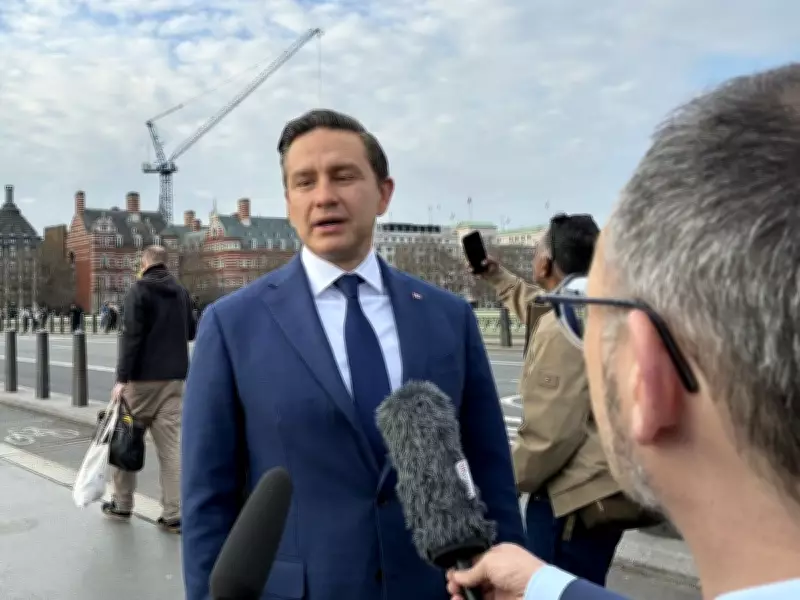
Poilievre is currently undertaking his first international trip as Conservative leader since assuming the position in 2022. The Berlin event, hosted by the Konrad Adenauer Foundation, attracted approximately fifty attendees, including German Secretary of State for Energy and Economic Affairs Stefan Rouenhoff. During his address, Poilievre positioned Canada as a stable, rule-of-law-abiding ally that Germany should turn to for natural gas and critical mineral imports, contrasting this with European reliance on Russian energy sources.
"Override" Powers for Energy Project Approval
The Conservative leader made a bold commitment to utilize constitutional and legal authorities to expedite energy infrastructure development. "My government will use the constitutional and legal powers necessary to pre-permit right of ways for pipelines and LNG liquefaction terminals," Poilievre declared. He further stated, "We will override bureaucracies and other levels of government if needed to get projects approved and under construction." This stance is anticipated to generate controversy among provincial and Indigenous leaders who have historically opposed such developments within their territories.

Six-Month Permitting Cap and Supply Agreements
Poilievre reiterated his previous pledge to implement a six-month maximum permitting timeline for major projects if elected prime minister. He argued that accelerated natural gas production and export capabilities would enable Canada to secure binding supply agreements with allies like Germany. "A supply agreement for natural gas that will require our government rapidly approve liquefaction facilities and pipelines to supply you with a predictable, low cost source of natural gas in the future," he explained to attendees. Such long-term agreements are common in the industry, with countries including Japan and Germany increasingly seeking them amid energy security concerns following Russia's invasion of Ukraine.
Criticism of European Energy Dependence
During his speech, Poilievre offered mild criticism of European nations, particularly Germany, for their prolonged dependence on inexpensive Russian gas. He suggested this reliance created vulnerability when Russia became an adversary after invading Ukraine in 2022. The Conservative leader's comments reflect a broader strategy to position Canadian energy as a secure alternative for allies grappling with energy security challenges.
Previous Clashes with Provincial Leaders
Poilievre's promise to override governmental opposition echoes previous statements, including his assertion that "one man can't block a project" following concerns raised by British Columbia Premier David Eby regarding a potential pipeline from Alberta to the northern B.C. coast. This approach signals a potential shift in federal-provincial dynamics concerning energy infrastructure, emphasizing expedited development over localized objections.
The Berlin address represents a significant foreign policy and energy platform unveiling for Poilievre, blending promotion of Canadian LNG and critical mineral exports with campaign-style commitments. As energy security remains a pressing global issue, these proposals will likely feature prominently in future political debates and international discussions about Canada's role in the global energy market.