Economists Call for Reactivation of Dormant Pipeline to Strengthen Canada's Energy Future
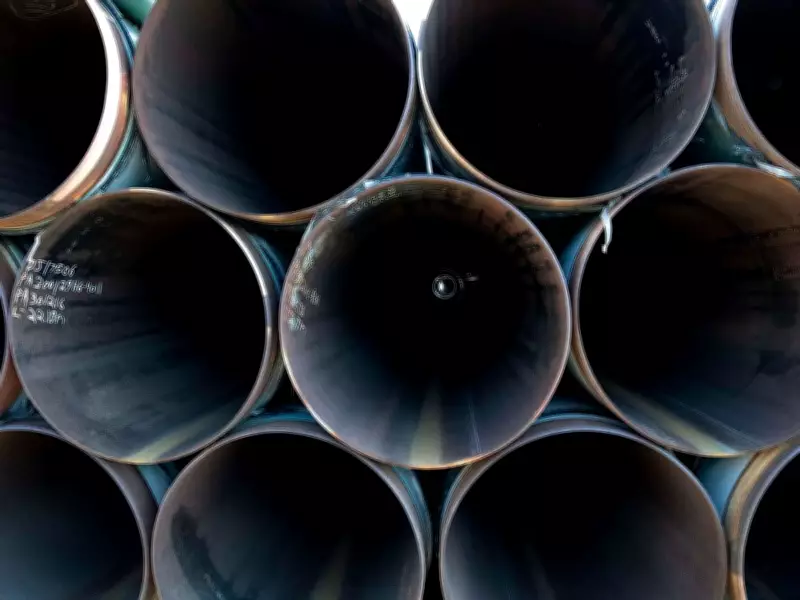
Economists from the National Bank of Canada are advocating for the reopening of a natural gas pipeline that has been inactive since 2013, citing significant benefits for national security and economic resilience. In a recent report, they emphasize that restarting TC Energy Corp.'s Line 2 could address multiple critical issues facing the country.
Enhancing National Security and Industrial Resilience
The pipeline, which runs through Ontario and Quebec as part of the Canadian Mainline, has been dormant for over a decade. However, economists Pat Kenny, Dan Payne, and Stefane Marion argue that current geopolitical instability and Ottawa's defence industrial strategy make its reactivation essential. They note that a stronger East-West energy corridor would anchor industrial partnerships between Alberta, Ontario, and Quebec, reducing reliance on foreign energy supplies and ensuring Canadian resources drive domestic prosperity.
"A revitalized pipeline would serve as a pillar of industrial resilience and national security," the economists stated in their analysis. This move aligns with broader efforts to optimize existing North American energy infrastructure, which they describe as capital-efficient and less likely to face social and environmental hurdles compared to new projects.

Addressing Rising Electricity Demands
One of the key reasons for restarting Line 2 is the projected surge in electricity demand in Ontario. By 2050, demand is expected to increase by 75% from 2025 levels, driven by industrial expansion, electric-vehicle manufacturing, data centre growth, and population increases. The economists estimate that the additional natural gas from a reopened pipeline could generate electricity equivalent to 20% of Ontario's peak demand, acting as a reliable stopgap until new nuclear facilities are operational.
Ontario is currently developing four small modular nuclear reactors, with the first scheduled to start by the end of the decade, along with two larger-scale nuclear projects. In the interim, gas-fired plants powered by Line 2 could provide essential energy stability.
Economic and Strategic Advantages
The expiration of the Mainline tolling agreement at year-end presents a timely opportunity for TC Energy to reconsider Line 2's operation. Since the company's last deal with shippers in 2021, natural gas demand has doubled, highlighting the pipeline's potential value. The economists also point to the evolving energy "trilemma," where policymakers must balance affordability, reliability, and decarbonization. Reactivating underutilized assets like Line 2 supports this balance without the costs and delays of new infrastructure.
Furthermore, the Major Projects Office has identified several natural gas initiatives, including the expansion of LNG Canada and a floating liquefied natural gas terminal off British Columbia's coast. Restarting Line 2 could complement these projects by enhancing domestic energy consumption and strengthening East-West unity, fulfilling Canada's nation-building ambitions.
In summary, the economists' report underscores that reopening this dormant pipeline is not just an economic decision but a strategic move to bolster Canada's energy independence and industrial future.