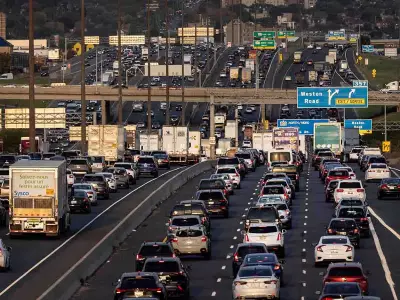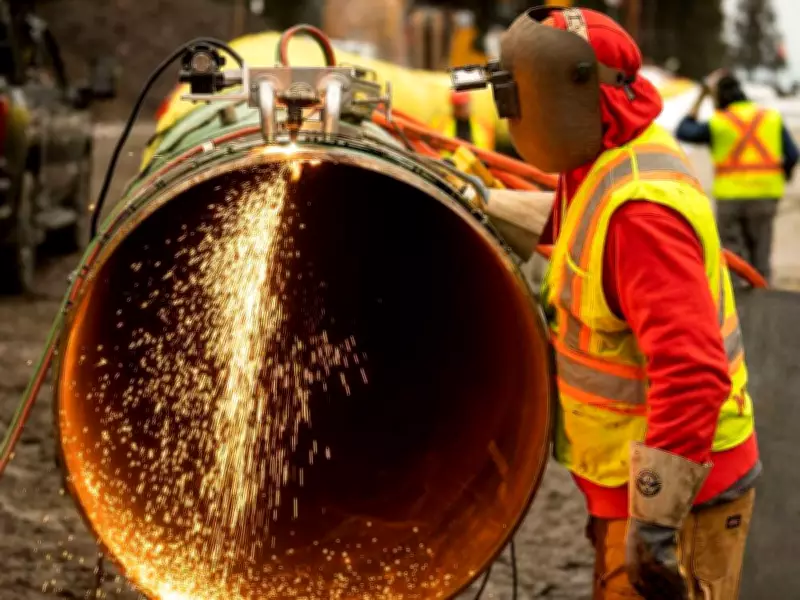
Alberta is evaluating three potential routes for a new oil pipeline through northern British Columbia, designed to transport up to 1 million barrels per day, according to sources familiar with the matter. This initiative aligns with Canadian officials' plans to significantly boost energy exports to Asian markets.
Strategic importance for Canada's energy future
The proposed pipeline is central to Prime Minister Mark Carney's vision of transforming Canada into an energy superpower with a stronger global presence. Carney, who has been in office for a year, has built his economic strategy around reducing Canada's dependence on the United States following President Donald Trump's tariffs that disrupted the longstanding free-trade agreement.
While the pipeline would take years to construct and won't address the immediate energy supply crunch from the Middle East standoff, Carney and Alberta Premier Danielle Smith see long-term potential to increase energy sales to China, South Korea, and other Asian buyers. Currently, about 90% of Canada's oil exports still go to the U.S., despite increased shipments to Asia following the Trans Mountain pipeline expansion.

Political and technical hurdles
Significant political and technical obstacles exist within Canada for a northwest oil pipeline. The British Columbia government, environmental groups, and some Indigenous communities oppose the idea. Additionally, Carney's government would need to relax a ban on oil tankers to facilitate the project.
Some experts advocate for an alternative approach: shipping more oil through the Vancouver region along a route similar to Trans Mountain, Canada's only oil-export pipeline reaching an ocean port. A recent Globe and Mail report suggested Carney's government favors this concept.
Northern routes considered
However, Premier Smith's government, which is spending millions on early-stage planning, sees major advantages in a northern route. The three options include the port city of Prince Rupert and two other locations further north along the coast. While Smith hasn't ruled out a southern route, Alberta officials believe it would be significantly more expensive.
The Trans Mountain project, which opened in 2024 and roughly tripled capacity to around 900,000 barrels per day, experienced massive budget overruns, ultimately costing well over $30 billion. A tolling dispute over cost allocation to oil shippers remains unresolved in court.
According to one source familiar with the deliberations, large stretches along the Trans Mountain route lack sufficient space for another large pipeline, particularly through the challenging terrain of the Coquihalla region in interior B.C.
Industrial carbon pricing agreement
The Alberta and federal governments are also nearing an agreement on industrial carbon pricing, with a deal expected within the next two weeks, according to sources who spoke on condition of anonymity due to the private nature of the negotiations.