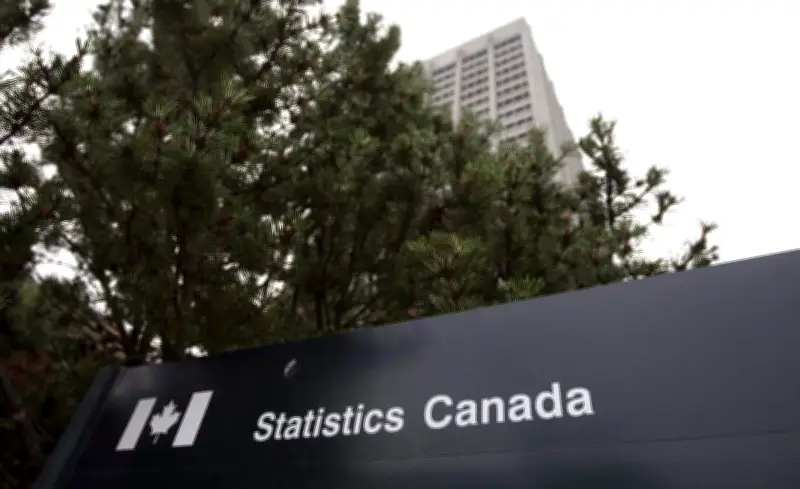
Economists are increasingly concerned that Canada's data infrastructure is failing to keep pace with the needs of modern policymaking and economic analysis, according to experts who spoke with The Canadian Press. The issue centers on gaps, delays, and inconsistencies in data collected by Statistics Canada and other agencies, which they say undermine the accuracy of economic forecasts and government decisions.
Growing Concerns Over Data Reliability
Several prominent economists have voiced worries that Canada's data quality is deteriorating at a time when precise information is critical for navigating challenges like inflation, housing affordability, and climate change. They point to delayed releases of key indicators, such as gross domestic product and employment figures, as well as discrepancies between surveys and administrative data.
"We're seeing a situation where the data we rely on for policy decisions is becoming less reliable," said one economist who spoke on condition of anonymity. "This isn't just an academic concern; it has real-world consequences for interest rates, government spending, and business investment."

Statistics Canada Under Scrutiny
Statistics Canada, the national statistical agency, has faced budget cuts and staffing challenges in recent years, which critics say have hampered its ability to collect and process data efficiently. The agency has also struggled with declining survey response rates, leading to greater reliance on alternative sources like tax records and digital transactions.
"Statistics Canada does excellent work, but it's being asked to do more with less," said a former senior official. "The result is that some datasets are less timely and less granular than what policymakers need."
Impact on Economic Policy
The data quality problem has direct implications for economic policy. The Bank of Canada relies on timely and accurate data to set interest rates, while federal and provincial governments use it to design budgets and social programs. Flawed data can lead to missteps, such as underestimating inflation or overestimating job growth.
"If we're making decisions based on bad data, we risk making bad decisions," said a macroeconomist at a Canadian university. "This is especially concerning right now, when the economy is facing so much uncertainty."
Calls for Investment and Reform
Economists are calling for increased investment in Canada's statistical infrastructure, including more funding for Statistics Canada and better integration of data across government agencies. Some also advocate for greater use of real-time data sources, such as credit card transactions and online job postings, to supplement traditional surveys.
"We need a modern data system that can keep up with the speed of the economy," said a policy analyst. "That means investing in technology, people, and partnerships."
The issue is expected to be a topic of discussion at upcoming meetings of the Canadian Economics Association and in parliamentary committees focused on economic policy.