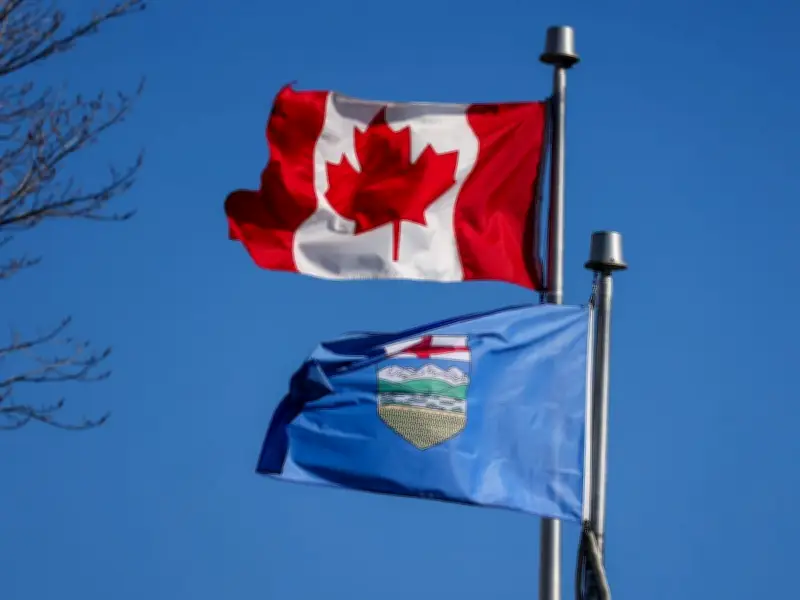
A new report from the Fraser Institute reveals that Canadian income taxpayers would need to pay an average of $1,000 more each year to sustain current federal spending levels without Alberta's financial contribution. The study, released Monday, highlights Alberta's outsized role in supporting federal revenues and national programs.
Alberta's Net Contribution
From 2007-2008 to 2026-2027, Alberta's net contribution to federal finances is projected to reach $321.9 billion. This amount is nearly four times that of British Columbia ($87.8 billion) and more than five times Ontario's ($59.6 billion). The other seven provinces are net recipients, receiving more from Ottawa than they contribute.
The report attributes Alberta's large contribution to its higher employment rates, above-average incomes, and younger population. These factors result in the province paying more into federal programs than it receives in transfers and spending.

Impact on Taxpayers
Without Alberta's net fiscal contribution, maintaining federal spending levels would force taxpayers in other provinces to pay an additional $1,007 per year on average. Tegan Hill, director of Alberta policy at the Fraser Institute and co-author of the study, emphasized that many Canadians are unaware of Alberta's significant financial role.
"Many Canadians don’t realize what a sizeable contribution Albertans make to federal finances and how taxpayers in other provinces benefit from it," Hill said. "As Canadian federalism increasingly takes centre stage in important policy discussions, it is crucial that all Canadians and policymakers understand this contribution."
Broader Context
The study follows previous Fraser Institute research showing that combined federal and provincial net debt, adjusted for inflation, has nearly doubled from $1.24 trillion in 2007-08 to a projected $2.44 trillion this fiscal year—a growth of 97.7 percent.
Recent data also indicates Alberta's popularity as a destination for interprovincial migration. Over the past 30 years, Alberta gained 538,824 more people than it lost, the largest net gain in Canada and more than double British Columbia's 214,883. While the study did not explore reasons, past research points to jobs, wages, and taxes.
Despite this, a Postmedia-Leger survey found fewer than half of Albertans would stay in an independent province if Alberta separated. Another Leger survey from June 5 showed 73 percent of Albertans want to remain part of Canada, while an Angus Reid poll from May 27 indicated three-in-five would vote to stay in October.