United States President Donald Trump has announced that he will not reauthorize the United States-Mexico-Canada Agreement (CUSMA), setting the stage for prolonged negotiations over key industries such as automobiles. The decision means the trade pact will enter a series of annual reviews instead of a planned 16-year extension.
Trump's Stance on the Trade Deal
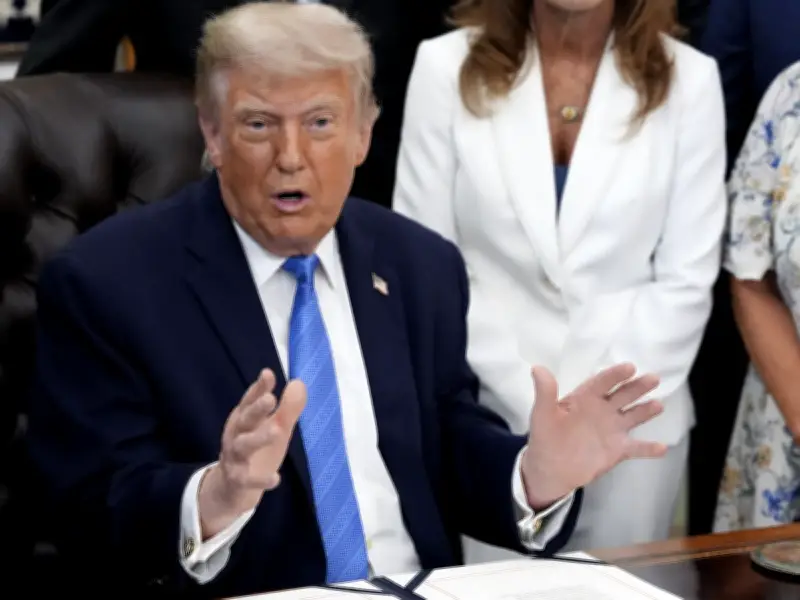
Speaking to reporters at the White House on Wednesday, Trump declared, "I'm not looking to renew it. Because to be honest with you, the United States does much better. We don't need anything that Canada has, we don't need anything that Mexico has, but they need everything that we have, and they have to treat us better." The countries face a July 1 milestone to extend the pact, which Trump negotiated during his first term. Without an extension, the deal will remain in force for up to a decade through annual reviews, barring a full exit by any party.
Impact on Trade Relations
Mexico and Canada are two of the largest U.S. trading partners, with nearly US$2 trillion in annual trade. Goods compliant with CUSMA have largely been exempt from Trump's tariffs, helping keep prices lower for U.S. consumers. Trump's refusal to renew signals heightened trade tensions with America's neighbors since his return to office.

Trump did not specify whether he is considering a full exit from the deal, which requires six months' notice. He has privately mused about exiting but has not publicly threatened to do so in his second term, unlike during his first term negotiations.
Negotiations and Tariffs
The next round of U.S.-Mexico talks is scheduled for this month, followed by a third in July. Formal negotiations between the U.S. and Canada have not yet begun. Talks have focused on bilateral side-deals where Canada and Mexico could offer concessions in exchange for tariff relief, particularly on Trump's Section 232 tariffs on automobiles and steel.
Mexico argues that the current tariff regime disadvantages its auto sector compared to countries like Japan and Korea, which secured top-line trade pacts with the U.S. reducing auto tariffs to 15 percent. Meanwhile, Mexican and Canadian auto exports to the U.S. face a 25 percent tariff on non-U.S. portions of vehicles. Auto parts exports are currently exempt, but the U.S. has threatened similar levies.
Administration's Approach
The Trump administration has given preferential treatment to CUSMA by exempting most compliant goods from across-the-board tariffs, yet undercut the agreement with sectoral levies on vehicles, a key industry the deal was designed to protect. The Office of the U.S. Trade Representative has declined to specify whether the U.S. will reopen the text of the agreement, which would likely require a congressional vote.
Mexican and Canadian governments did not immediately respond to requests for comment. With assistance from Josh Wingrove, Brian Platt, and Carolina Millán.