
Quebec Budget 2026: Financial Relief Measures
The Quebec budget for 2026 introduces several initiatives aimed at easing financial pressures for residents, including tax credits and support programs.


The Quebec budget for 2026 introduces several initiatives aimed at easing financial pressures for residents, including tax credits and support programs.

Gasoline prices have surged over $1 per gallon in less than a month, driven by U.S.-Iran tensions, impacting delivery drivers and commuters nationwide with ripple effects on the economy.

Canada's population has fallen annually for the first time since Confederation, with a 100,000 drop driven by reduced immigration and negative birth rates, impacting economic forecasts.

Fox Business host Taylor Riggs expressed deep concern over February's inflation data, which rose 0.7% versus the expected 0.3%, warning that March is likely to be even worse.

Shared lists with real-time sync. No signup needed — just open and shop together.
Recommended
Lethbridge residents are bracing for wider inflation impacts as escalating gas prices, driven by the Iran war, strain household budgets and local projects.

Quebec's latest budget forecasts a brief fuel price increase, with Finance Minister Eric Girard emphasizing economic stability measures amid global uncertainties.

Quebec's 2026-27 budget allocates billions to businesses, hospitals, and transit while reducing the deficit. Finance Minister Eric Girard projects balanced budgets by 2029-30 amid economic optimism.

The Saskatchewan government forecasts a $819.4 million deficit for 2026-27, shifting from a surplus, with key figures on revenue, expenses, and sector allocations.
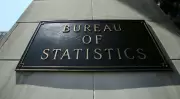
Statistics Canada reports a 0.2% population decrease in the fourth quarter of 2026, driven by a significant drop in non-permanent residents, marking a notable demographic shift.
Shared lists with real-time sync. No signup needed — just open and shop together.
Recommended
U.S. producer prices rose by a surprisingly strong 3.4% last month, the largest annual increase in a year, signaling persistent inflationary pressures.

The Saskatchewan government forecasts a $1.3 billion deficit for the 2026-27 fiscal year, driven by lower resource revenues and increased spending on healthcare and education.

Edmonton economist Dr. Subhadip Ghosh explains why current oil price spikes are more damaging to Canadian consumers than historical highs, despite benefits to Alberta's energy sector.

A major blackout in Cuba underscores the nation's deepening economic turmoil, with U.S. Senator Marco Rubio urging for new leadership amid ongoing power struggles and infrastructure failures.

A new Angus Reid Institute poll shows residents of Alberta, Saskatchewan, and Manitoba report the greatest financial impact from elevated gas prices despite paying less at the pump than other provinces.
Shared lists with real-time sync. No signup needed — just open and shop together.
Recommended
Analysis explores Ontario's persistent budget deficits and Premier Doug Ford's opportunity to break the cycle with a balanced budget in 2026-27, requiring modest spending adjustments.

Canada's food inflation eased to 5.4% in February 2026, yet it remains the highest among G7 countries. Key drivers include beef, pork, and poultry price hikes, while wage growth lags behind grocery costs.

Canada's food inflation eased to 5.4% in February 2026, down from 7.3%, yet it remains the highest among G7 nations, with beef and chicken prices surging and wages lagging behind grocery costs.

Sri Lanka announces a shift to a four-day work week as the government addresses economic and social strains from ongoing conflict, aiming to boost productivity and morale.

Canada's inflation rate slowed in February, but economists warn a spike is imminent due to the Iran conflict disrupting global energy markets and supply chains.
Shared lists with real-time sync. No signup needed — just open and shop together.
Recommended
Canada's annual inflation rate decelerated in February, offering temporary relief. However, economists warn the conflict in Iran could trigger a sharp resurgence in price pressures, impacting energy and global supply chains.

Canada's inflation rate dipped to 1.8% in February, but underlying pressures from global events and domestic policies suggest tougher times ahead, with food prices up 30.1% since 2021.
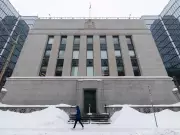
Economists caution that rising gas prices from the Iran war could reverse Canada's inflation drop, pushing it to 3% or higher, challenging a weak labor market.

Economists caution that rising gasoline prices could reverse recent gains in controlling inflation, as February CPI data shows persistent economic pressures.

Annual inflation in Canada eased to 1.8% in February, according to Statistics Canada. Deputy chief economist Randall Bartlett discusses the latest CPI data and its economic implications.
Shared lists with real-time sync. No signup needed — just open and shop together.
Recommended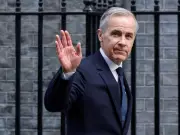
Despite overall inflation dropping, food prices in Canada surged 4.1% in February, with a 30.1% increase over five years. Prime Minister Mark Carney's attempts to blame external factors like war fail to address this uniquely Canadian economic issue.

Statistics Canada reports a drop in inflation to 1.8% in February, down from 2.3% in January, largely due to the end of a temporary sales tax exemption affecting year-over-year comparisons.

Canada's annual inflation rate decreased to 1.8 percent in February, aligning with economist predictions and indicating potential economic stabilization amid global uncertainties.
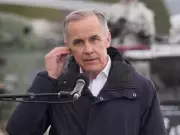
One year into Prime Minister Mark Carney's leadership, Canada's economy shows worsening job losses, stagnant productivity, and declining trade position, contradicting his central promise of economic improvement.

Statistics Canada is preparing to publish its latest inflation data for February 2026, offering crucial insights into the nation's economic health and price stability trends.
Shared lists with real-time sync. No signup needed — just open and shop together.
Recommended
Democratic-led states like Washington, Illinois, and Massachusetts are implementing high taxes on millionaires, which critics argue drives out wealth and harms low-income residents by reducing jobs and economic growth.
