Tesla Inc. shareholders are betting that Elon Musk's ultimate endgame involves merging his two most prominent companies, Tesla and SpaceX, following the latter's record-breaking initial public offering. The IPO, the largest ever, has provided a narrative catalyst for Tesla shares, which have remained relatively firm despite a challenging year that saw a 14% loss and SpaceX's valuation soar past Tesla's.
SpaceX IPO fuels merger speculation
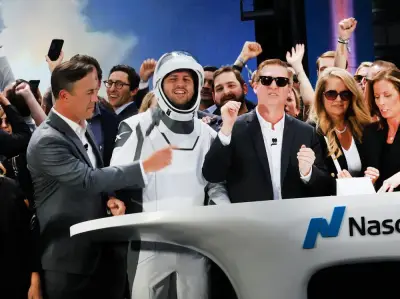
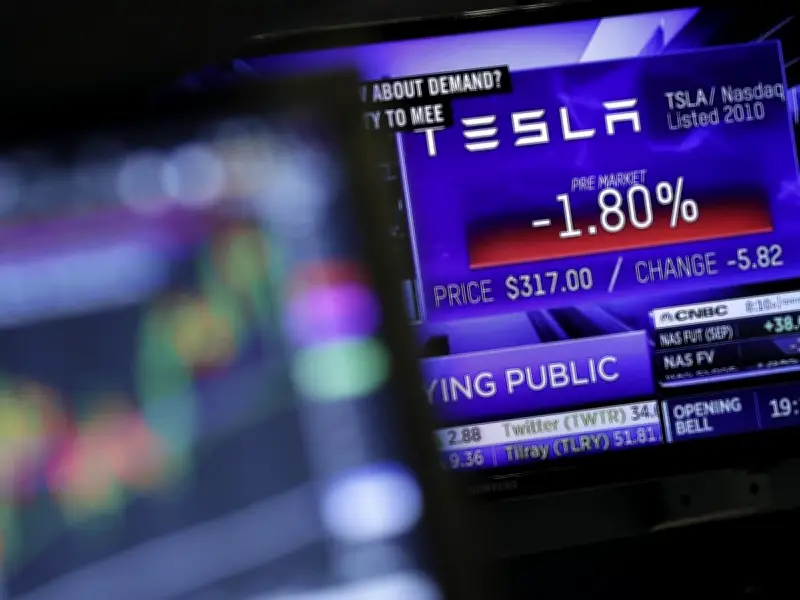
Space Exploration Technologies Corp. went public last week in an IPO that raised $75 billion, immediately becoming the most valuable entity in Musk's portfolio. However, the stock has since slumped, with its market capitalization falling from $2.6 trillion to around $2 trillion. Analysts suggest this decline could make Tesla shareholders more agreeable to a merger, as they see an acquisition premium building into Tesla's stock price. Tesla shares climbed back over $400 on Monday, even as SpaceX's post-IPO euphoria faded.
Ivan Feinseth, chief investment officer at Tigress Financial Partners, views the IPO as a “narrative catalyst” for Tesla. Dave Mazza, CEO of Roundhill Financial, which owns Tesla shares, is more convinced of a potential merger now than before SpaceX went public. “For years, Tesla was the only public way to own the Musk premium, and now it is not, with SpaceX as the cleaner expression of the AI and space story,” Mazza said. “What is holding Tesla above US$400 is an acquisition premium building in.”

AI and capital needs drive potential merger
Although Tesla and SpaceX operate in different sectors—Tesla in electric vehicles and autonomous driving, SpaceX in rockets and satellites—they converge in artificial intelligence. SpaceX absorbed xAI, parent of the Grok chatbot and the social media site formerly known as Twitter, in February. Now, it is embarking on a semiconductor manufacturing joint venture with Tesla dubbed the Terafab. Further endeavors are likely to require more capital than either company has on its own, making a merger financially attractive.
The valuation gap poses a challenge. Tesla's market capitalization is roughly $1.5 trillion, while SpaceX was around $2 trillion as of Monday's close. However, SpaceX's valuation was closer to $400 billion a year ago, and the February xAI deal priced it at around $1 trillion with the AI business valued at around $250 billion, according to Morningstar analyst Seth Goldstein in a research note on July 9, before the IPO.
Analyst sees deal within a year
Goldstein wrote that Tesla shareholders would likely be reluctant to buy SpaceX while its valuation multiples are far higher than theirs. Meanwhile, SpaceX shareholders are unlikely to accept a steep discount but would be more amenable if the stock retreated closer to Morningstar's fair value estimate of $63. The shares went public at $135 and opened at $151.06 Tuesday. Despite the valuation hurdles, Goldstein added that “we wouldn’t be surprised to see a deal occur within a year” since Musk's companies tend to move quickly.
A combined entity would create a massive technology conglomerate that could eventually join Nvidia Corp., Alphabet Inc., and Apple Inc. as one of the world's biggest companies, providing a long-term vision for investors.