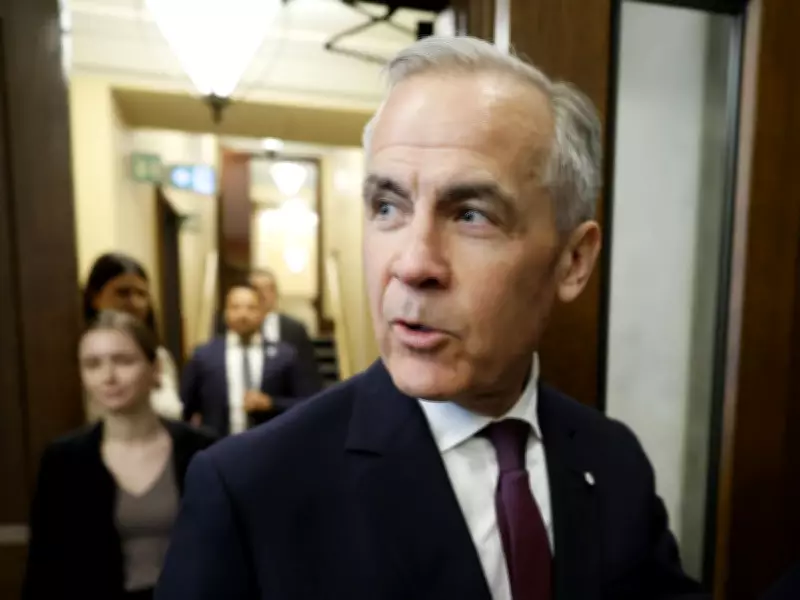
Rather than paying down the federal government’s debt, Prime Minister Mark Carney has announced a $25-billion sovereign wealth fund (SWF), the Canada Strong Fund, which will join with private interests to invest in nation-building projects. It could grow even larger by selling a “retail investment product” to any Canadians who for some reason want to hold shares in politically-directed projects like high-speed rail, mining critical minerals and expanding the Port of Churchill.
A History of Failed Public-Private Funds
Governments and private investors usually make strange bedfellows. Governments pursue political objectives that compromise the profitability investors want. To assuage investor concerns, subsidies boost the return to nation-building of the sort promised in the past fall’s budget. The big losers are taxpayers.
This is not the first Liberal government to create a fund to invest in private-sector business as a “partner.” Back in 1971, Pierre Trudeau created the Canada Development Corporation (58 per cent government-owned with 31,000 private investors) to widen investment opportunities for Canadians and maintain Canadian control of corporations. (Anti-Americanism was popular then, too.) Promising to operate profitably, the CDC and other mixed public-private enterprises became heavily leveraged, earning sub-par returns. By 1986, the Mulroney government did the smart thing and privatized CDC and its investments.

But no bad idea ever truly dies in Ottawa. CDC’s successor company is CDEV, created by the Liberals in 1982 to provide asset management and financial advisory services for government projects. With $75 billion in federal investments, including the Trans Mountain pipeline and Ottawa’s minority interest in Hibernia, it’s also involved with another slush fund — the Canada Growth Fund, which got $15 billion in federal funding when the Justin Trudeau Liberals created it in 2022. We’ve also got the Canada Infrastructure Fund. Just how many such funds do we need?
Carney's Inspiration from Trump
Carney is channelling U.S. President Donald Trump, who created a U.S. sovereign wealth fund by executive order early last year. Its aims are exemplary bafflegab: “… promote fiscal sustainability, lessen the burden of taxes on American families and small businesses, establish economic security for future generations, and promote U.S. economic and strategic leadership internationally.” Sounds great, but will it make money? Congress hasn’t approved it, so Trump is using limited agency funds to invest in companies like Intel, U.S. Steel and Lithium America.
Global Context of Sovereign Wealth Funds
Around the world, SWFs currently manage US$15.8 trillion in assets. (Public pension funds hold another US$27.8 trillion and central banks US$17.3 trillion). Kuwait created the first SWF in 1953 to manage its oil revenues so future generations could benefit from the wealth created by non-renewable resources. (It now has US$1 trillion in assets). The largest SWF, worth US$2.1 trillion, is Norges Bank Investment Management, which invests Norwegian oil and gas royalties primarily in marketable global assets outside Norway.
Rather than spend $25 billion to fund yet another Liberal slush fund, most taxpayers would probably prefer if Mark Carney were to retire federal debt.