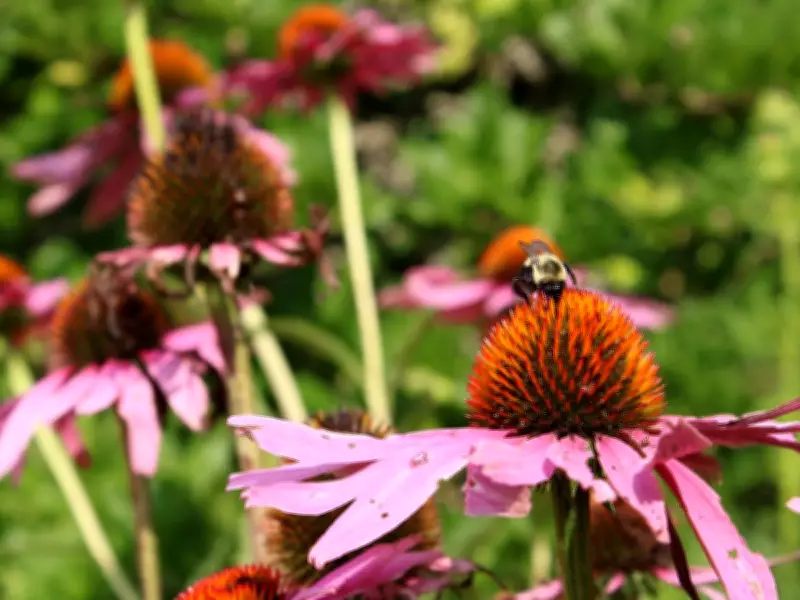
Pollinators may be small, but their importance to our gardens and our food supply is immense. Bees, butterflies, and other insects are responsible for pollinating a large portion of the plants we depend on. Yet their populations continue to decline due to habitat loss, pesticide use, and climate stress. For Edmonton gardeners, planting pollinator-friendly gardens is one of the simplest and most rewarding ways to help.
Providing a Steady Supply of Nectar and Pollen
The key to supporting pollinators is providing a steady supply of nectar and pollen from early spring until fall. This means choosing a range of plants with overlapping bloom times. Early spring bulbs such as crocus and grape hyacinth are critical for bees emerging from winter. As the season progresses, perennials take centre stage, offering both beauty and sustenance through the heart of summer.
Top Perennials for Pollinators
Coneflowers are a standout in any pollinator garden. Their bold, daisy-like blooms are magnets for bees and butterflies, and their sturdy stems hold up well in wind and rain. Coneflowers are also drought-tolerant once established, making them a practical choice for sunny Edmonton gardens. Leave the seed heads standing in fall and winter, and you will also be feeding birds.

Salvia is another pollinator favourite that earns its keep. With spires of purple, blue, pink, or red flowers, salvia provides abundant nectar and blooms for a long period, especially if deadheaded. Bees are particularly fond of its tubular flowers, and gardeners appreciate its tidy growth habit and resistance to pests. Salvia works equally well in perennial borders and mixed containers.
Bee balm lives up to its name. Its firework-like flowers are irresistible to bees, butterflies, and hummingbirds. Bee balm thrives in full sun to light shade and adds a splash of bold colour in mid-summer when many gardens begin to fade. To keep plants healthy, provide good air circulation and divide clumps every few years.
The Importance of Native Plants
Native plants deserve special consideration in pollinator gardens. Species that evolved on the prairies are well adapted to our climate and often provide superior food for local insects. Alongside coneflowers and bee balm, plants such as goldenrod, milkweed, and yarrow create a resilient, low-maintenance planting that supports pollinators through the season.
Annuals for Continuous Bloom
Annuals can also play a valuable role, especially in new gardens. Cosmos, zinnias, sunflowers, and alyssum are easy to grow from seed and bloom continuously until frost. When buying plants, look for those labelled pesticide-free or pollinator-friendly, as some treatments can harm insects long after planting.
Designing a Pollinator-Friendly Garden
Design your garden with pollinators in mind by planting flowers in groups rather than single specimens. Clumps of the same plant are easier for insects to find and feed from. Leave some bare soil for ground-nesting bees, add a shallow water source with stones for landing, and resist the urge to over-tidy in fall. Hollow stems and leaf litter provide vital winter shelter.
By planting coneflowers, salvia, bee balm, and other pollinator-friendly plants you can create spaces that are vibrant, productive, and alive with movement. One garden may seem small, but together they form a network of habitat that truly makes a difference.