







Trump-Era Tariff Refunds Begin Next Week: $127 Billion Eligible for Return
Trump Tariff Refunds Start: $127B Eligible for Return

Refund Process Opens for Businesses Impacted by Overturned Trump Tariffs

Starting next Monday, American businesses that were subjected to illegal tariffs imposed during the Trump administration will finally have the opportunity to reclaim their money through a newly established electronic refund system. This development follows a landmark Supreme Court decision that declared these tariffs unconstitutional, paving the way for what could amount to a massive financial restitution program.

Supreme Court Ruling Triggers Refund Eligibility

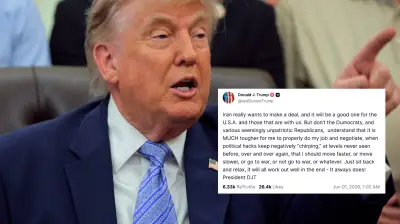
On February 20, the United States Supreme Court delivered a decisive verdict, ruling that former President Donald Trump had exceeded his executive authority by invoking the International Emergency Economic Powers Act (IEEPA) to justify imposing tariffs on Canada and numerous other nations. This legal determination has now activated a comprehensive refund mechanism for affected companies.

According to official filings with the U.S. Court of International Trade, U.S. Customs and Border Protection (CBP) had collected approximately $166 billion in IEEPA tariffs from 330,000 importers across 53 million customs entries as of March 4. The agency has now confirmed that up to 82 percent of these customs entries—representing a staggering $127 billion in duty payments—qualify for electronic refunds.

Wide Pickt banner — collaborative shopping lists app for Telegram, phone mockup with grocery list

New CAPE Portal Streamlines Refund Applications

To facilitate this unprecedented refund process, CBP is launching the Consolidated Administration and Processing of Entries (CAPE) portal. This specialized system will allow importers of record and customs brokers to submit refund requests electronically rather than through traditional entry-by-entry processing.

"CAPE is designed to consolidate refunds of IEEPA duties, including interest, rather than processing refunds on an entry-by-entry basis," CBP explained in an official statement. "The agency plans to implement CAPE through a phased development approach, adding more functionality in subsequent phases for more complicated scenarios."

The initial phase will accept refund requests for two categories: liquidated customs entries that have been finalized within the previous 80 days, and unliquidated entries that remain open and under review. As of April 9, more than 56,400 importers had already registered to receive refunds through the forthcoming system.

Canadian Companies Face Additional Hurdles

While the refund process appears relatively straightforward for U.S.-based businesses, Canadian companies may encounter additional complications. Jesse Mitchell, director of business development for customs brokerage Strader-Ferris International, estimates that at least 200 of his firm's Canadian client companies will be filing for IEEPA tariff refunds.

"Canadian companies often act as the importer of record on U.S.-bound shipments and pay all customs and duties to make it easier for American customers to buy their products," Mitchell explained. Many work with U.S. customs brokerages to manage the clearance process on their behalf, which can include handling the payment of U.S. duties, tariffs, and taxes.

However, Mitchell noted that the requirement for a U.S. bank account to receive refunds through CAPE presents a particular challenge for Canadian businesses. "Canadian companies will need to either establish a U.S. bank account or work closely with their customs brokerage to facilitate their refund," he said. The process becomes even more complex for businesses that utilize multiple brokerages to handle different types of shipments.

Broader Implications for International Trade

This refund initiative represents a significant development in U.S. trade policy and its implementation will be closely monitored by international business communities. The substantial financial amounts involved—potentially reaching $127 billion—underscore the widespread impact of the overturned tariffs on global commerce.

As businesses prepare to navigate the new CAPE system, industry experts recommend that affected companies gather all relevant documentation and consult with customs specialists to ensure they maximize their refund eligibility. The phased implementation approach suggests that CBP anticipates ongoing refinements to the system as more complex cases emerge.

Pickt after-article banner — collaborative shopping lists app with family illustration

The opening of this refund window next week marks a critical juncture for thousands of businesses that have been awaiting financial relief since the Supreme Court's February ruling. While the process may present challenges, particularly for international companies, the potential recovery of substantial tariff payments represents a significant opportunity for affected enterprises to recoup funds that were improperly collected under the now-invalidated trade policy.