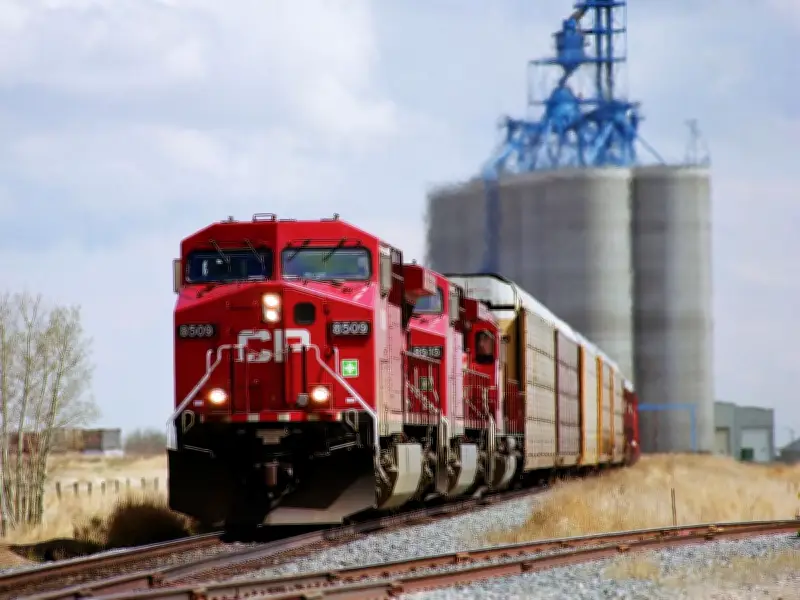
Last fall, the cost of moving 550 rail cars of Saskatchewan wheat to Vancouver jumped by more than $1 million. According to the Grain Monitor, which tracks grain movement and rail logistics across Canada, the posted rail cost of $3.4 million in August increased to nearly $4.4 million in October. Nothing about the shipment changed; only the rail rate.
Peak season rate hikes create uncertainty
The increase came at a critical point in the calendar. October marks the start of Canada’s peak export season, when global buyers are competing for Prairie crops and grain companies are fulfilling sales negotiated months earlier. By then a good percentage of the harvest has already been contracted, even though it has yet to move through the system. So changes in the cost of moving product will eventually be felt directly in farmers’ bottom lines.
Half of Canada’s crop moves in a compressed post-harvest period, when rail corridors are congested because of strained capacity, as well as pinch points at Vancouver’s port. Freight increases at this time land directly on grain companies, which must absorb the higher costs, giving up profit already priced into the deal.

Gap between pricing and shipping
The problem is the gap between when prices are set and when freight moves. Railways say rate adjustments reflect peak-season demand. But they can adjust their rates with only 30 days’ notice, while grain companies lock in sales months in advance. That can leave exporters exposed to freight increases that arrive after contracts are signed, turning predictable shipping costs into sudden hits to margins.
Grain trader and risk adviser John DePape argues that the uncertainty created by the freight rate is highly damaging. “When farmers sell grain for delivery at harvest, grain companies must manage the risk that transportation costs will change between the time they set the price to the farmer and the time the grain is shipped,” DePape said. “To do this, they generally assume higher freight costs than they may ultimately experience. That inefficiency lowers prices to producers.”
Railways raise rates by 36%
Last October and November, Canada’s two main railways, Canadian National and Canadian Pacific Kansas City, each raised freight rates by roughly 36 per cent. The federally appointed Grain Monitor has warned that these mid-season increases amount to a “major commercial penalty” for grain handlers, particularly on export sales priced under earlier freight assumptions.
For grain exporters, rail access is not an ordinary service but essential infrastructure. That reality was recognized in 2000 when Ottawa introduced the Maximum Revenue Entitlement (MRE), a policy intended to prevent railways from using their dominant position in Prairie grain transportation to impose excessive transportation costs on farmers and grain handlers.
MRE cap allows rate shifting
The MRE limits the total revenue CN and CPKC can earn from moving western grain, but it does not control when they earn it. Railways can shift freight rates across the crop year, provided their total revenue remains within the cap.
Mark Hemmes, president of Quorum Corporation, which operates the Grain Monitor, says both railways have increasingly used that discretion to front-load rate increases. Historically, harvest freight rates tended to rise gradually, in line with annual railway cost adjustments. But since the 2021 harvest season CN and CPKC have imposed substantial increases immediately after harvest and then reduced rates later in the year. That’s allowed under the MRE, but it has created new pricing uncertainty for grain exporters, particularly those who commit to export sales months before grain is moved.