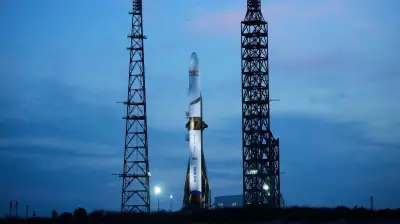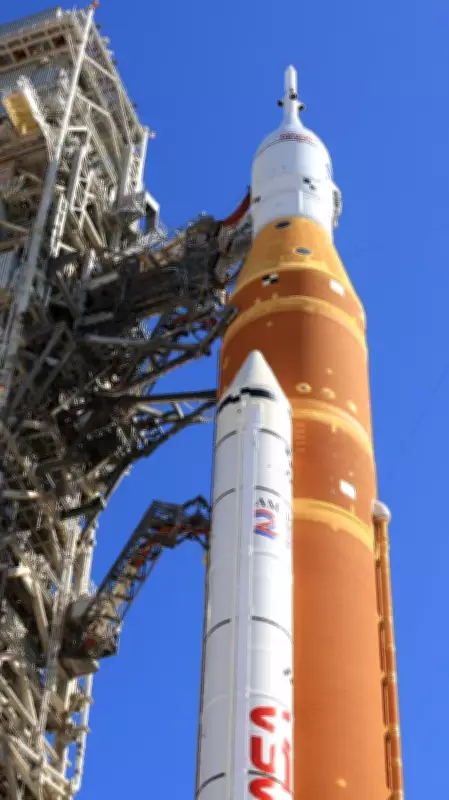
NASA has achieved a significant milestone in its ambitious lunar exploration program, successfully conducting a crucial fueling test for its powerful moon rocket. This achievement sets the stage for the first crewed Artemis mission to launch toward the moon, with a target window now established for March 2026.
Critical Test Paves Way for Lunar Return
The space agency completed its second comprehensive fueling test of the Space Launch System (SLS) rocket at Kennedy Space Center in Florida. This extensive procedure involved loading super-cooled liquid hydrogen and liquid oxygen propellants into the rocket's massive core stage and upper stage, simulating the complex countdown sequence that will precede an actual launch.
Overcoming Technical Hurdles
Previous attempts to prepare the Artemis rocket for flight have encountered various technical challenges, including hydrogen leaks and valve issues. The successful completion of this latest test represents a major step forward in resolving these persistent problems. NASA engineers meticulously monitored the entire fueling process, which lasted several hours, confirming that all systems performed as expected under cryogenic conditions.

The Artemis I mission, an uncrewed test flight that orbited the moon in late 2024, demonstrated the rocket's basic capabilities. However, preparing the vehicle for human passengers requires additional rigorous testing and validation. This successful fueling operation provides crucial data that gives NASA confidence to proceed with crewed missions.
March Launch Window Established
With the fueling test completed successfully, NASA officials have announced they are now targeting March 2026 for the launch of Artemis II, the program's first mission with astronauts aboard. This mission will carry four crew members on a journey around the moon without landing, testing life support systems and spacecraft performance in deep space.
Historic Mission Profile
The planned Artemis II flight represents the first time humans will travel to lunar vicinity since the Apollo 17 mission in 1972. The crew will orbit the moon at a distance closer than any human spacecraft since the Apollo era, providing unprecedented views and valuable operational experience for future lunar surface missions.
NASA's moon rocket, standing taller than the Statue of Liberty, represents the most powerful launch vehicle ever built. Its successful operation is essential not only for returning astronauts to the lunar surface but also for establishing a sustainable presence on the moon as a stepping stone for eventual missions to Mars.
Broader Artemis Program Context
The Artemis program represents NASA's flagship effort to establish a long-term human presence on the moon. Following Artemis II, the Artemis III mission is planned to land the first woman and first person of color on the lunar surface, potentially as early as 2027.
International and commercial partners are collaborating with NASA on various aspects of the Artemis program, including developing lunar landers, habitat modules, and rovers. The program aims to create a sustainable lunar exploration architecture that will enable scientific discovery and prepare humanity for journeys to more distant destinations in the solar system.
As NASA analyzes data from the successful fueling test, engineers will continue preparing the SLS rocket and Orion spacecraft for the historic crewed mission. The March target represents the current planning timeline, though NASA maintains flexibility to adjust based on further testing requirements or technical considerations that may arise during final preparations.