NASA Targets March 6 Launch Date for Historic Artemis II Moon Mission
NASA has officially set March 6 as the launch date for the highly anticipated Artemis II mission, marking a significant milestone in humanity's return to the moon. The announcement comes as the four-person crew, which includes a Canadian astronaut from London, Ontario, prepares to enter a mandatory quarantine period to ensure their health and readiness for the groundbreaking journey.
Crew Enters Quarantine Ahead of Lunar Journey
The Artemis II astronauts will begin their quarantine in the coming days, a standard protocol for space missions designed to minimize the risk of illness before launch. This period of isolation is critical for maintaining crew health as they finalize preparations for their voyage around the moon, which will be the first crewed lunar mission since the Apollo program ended over five decades ago.
The crew's quarantine signifies the final phase of pre-launch activities, with NASA officials expressing confidence in the March 6 target date following successful fueling tests of the Space Launch System (SLS) rocket. "She's calling us, and we're ready," mission managers stated, referring to the moon's gravitational pull and the team's preparedness for this historic endeavor.

Canadian Representation on International Crew
The inclusion of a Canadian astronaut from London, Ontario, on the Artemis II crew highlights the international collaboration essential to modern space exploration. Canada's contribution to the mission extends beyond crew participation, with the Canadian Space Agency providing advanced robotics and other technological support for lunar operations.
This mission represents a pivotal moment for Canada's space program, demonstrating the nation's growing role in deep space exploration. The Canadian astronaut's presence on Artemis II continues a legacy of Canadian contributions to human spaceflight, building on decades of involvement with the International Space Station and other collaborative ventures.
Technical Preparations and Launch Readiness
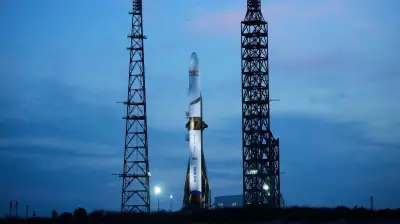
NASA's Kennedy Space Center in Florida has been the focal point of intense activity, with the Space Launch System rocket and Orion spacecraft undergoing final checks at Launch Complex 39B. Recent fueling tests have validated critical systems, giving mission controllers the green light to proceed toward the March launch window.
The Artemis II mission will test all systems required for human deep space travel, including life support, communication, and navigation capabilities. While this mission will not land on the lunar surface, it will pave the way for Artemis III, which aims to return humans to the moon's surface by the end of the decade.
NASA administrators have emphasized the importance of this mission as a proving ground for technologies that will eventually support sustainable lunar exploration and future missions to Mars. The successful launch and completion of Artemis II will mark a crucial step toward establishing a permanent human presence beyond Earth orbit.