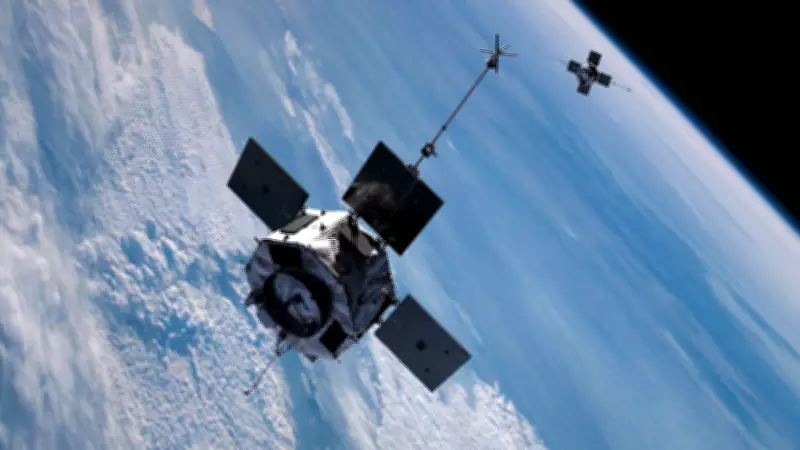
NASA's Van Allen Probes, a pair of spacecraft launched over a decade ago, are now on a trajectory for an uncontrolled descent back to Earth, sparking discussions about the potential hazards of space debris and the complexities of managing end-of-life satellite operations. Originally deployed in 2012, these probes were instrumental in studying the Van Allen radiation belts, two dynamic zones of high-energy particles encircling our planet, trapped by Earth's magnetic field.
Mission Legacy and Scientific Contributions
The Van Allen Probes mission, named after the physicist James Van Allen, provided groundbreaking insights into the radiation environment surrounding Earth. Over their operational lifespan, the spacecraft collected data on particle acceleration, space weather phenomena, and the interactions between solar winds and our magnetosphere. This research has been crucial for understanding how to protect satellites and astronauts from harmful radiation, contributing to advancements in space exploration safety protocols.
Risks Associated with Uncontrolled Reentry
As the probes approach their final descent, experts are assessing the risks tied to an uncontrolled reentry. While most of the spacecraft are expected to burn up upon atmospheric entry, there is a possibility that some fragments could survive and reach the Earth's surface. This scenario underscores broader concerns about space debris accumulation and the need for improved mitigation strategies in satellite design and disposal.

Key factors influencing the reentry include:
- Atmospheric drag, which can unpredictably alter the descent path.
- The probes' construction materials, which may not fully disintegrate.
- Potential impact zones, though the likelihood of harm to populated areas remains low.
Broader Implications for Space Policy
This event highlights ongoing challenges in space sustainability and debris management. With thousands of defunct satellites and other objects orbiting Earth, uncontrolled reentries pose environmental and safety risks. NASA and other space agencies are increasingly focusing on developing technologies for controlled deorbiting and active debris removal to minimize such hazards in the future.
The Van Allen Probes' reentry serves as a reminder of the importance of international cooperation in space governance. As commercial and governmental space activities expand, establishing robust frameworks for end-of-life satellite handling becomes essential to ensure the long-term viability of orbital environments.