Manitoba's Historic Rocket Range and the Unlikely Path to Orbit
Winnipeg, Manitoba has a storied history with rocket launches, but the prospect of orbital missions lifting off from the province remains distant, according to academic analysis. While the Churchill Rocket Research Range was a hub for suborbital atmospheric studies for decades, fundamental geographical and logistical challenges make orbital launches from Manitoba improbable.
The Legacy of Churchill's Rocket Research
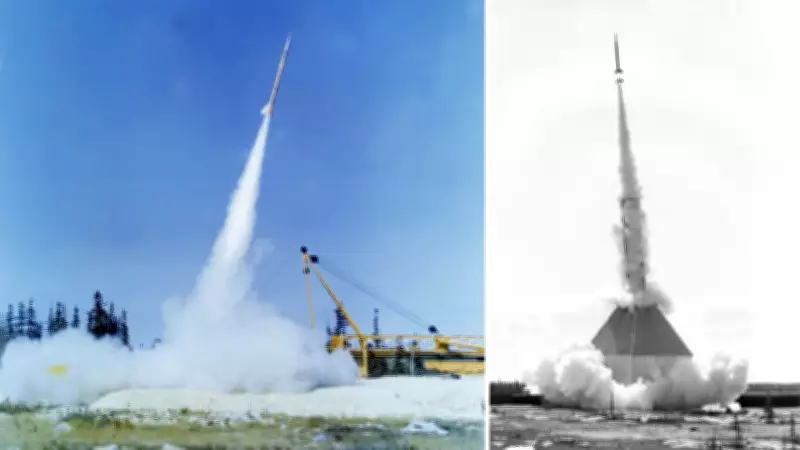
From the 1960s onward, the Churchill Rocket Research Range served as a critical site for launching suborbital rockets eastward over Hudson Bay. These missions, often conducted by the Canadian Space Agency and international partners, focused on upper atmosphere research, auroral studies, and space physics. The remote location provided ideal conditions for scientific experiments without endangering populated areas.
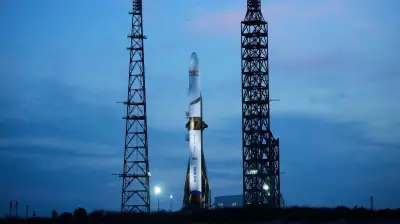
However, a key distinction exists between these historic suborbital flights and modern orbital launches. Suborbital rockets reach space but do not achieve the velocity or trajectory to enter a stable orbit around Earth. Orbital launches require significantly more powerful rockets, precise launch angles, and often coastal locations for safety and efficiency.

Geographical and Economic Hurdles
The professor highlighted several factors working against Manitoba as a future orbital launch site. Firstly, Manitoba's inland location poses a major obstacle. Most orbital launch facilities are situated near coastlines, allowing rockets to jettison stages over water and avoid overflying populated landmasses during ascent. Churchill's proximity to Hudson Bay offers some advantage, but not to the extent of coastal sites in other provinces.
Secondly, the infrastructure required for orbital launches—such as large launch pads, tracking stations, and fuel storage—is immense and costly. While Churchill has historical infrastructure, it would need substantial modernization and expansion to support orbital-class rockets. The economic investment needed is currently not justified given existing facilities elsewhere in Canada and internationally.
Thirdly, orbital launch trajectories from Manitoba would likely require overflight of populated areas or neighboring territories, raising safety and regulatory concerns. The optimal launch paths for reaching common orbits are less accessible from Manitoba's latitude compared to more southern or coastal locations.
Canada's Broader Space Ambitions
This analysis comes as Canada moves towards developing homegrown rocket launch capabilities. The federal government and private companies are investing in new spaceports and launch technologies, with sites in Nova Scotia, Newfoundland, and Quebec showing more promise for orbital missions due to their coastal positions and favorable trajectories.
Despite the unlikelihood of orbital launches, Manitoba's role in space research remains significant. The Churchill range continues to support scientific experiments, and the province contributes to aerospace through manufacturing, research institutions, and educational programs. The historical knowledge gained from decades of rocket launches provides valuable data for current space studies.
In conclusion, while Manitoba boasts a proud rocket launch heritage, the transition to orbital missions faces substantial geographical, economic, and technical barriers. The province's space future likely lies in research, development, and supporting roles rather than as a primary launch site for satellites or spacecraft destined for orbit.