The Unconventional Daily Life of Astronauts on NASA's Orion Capsule
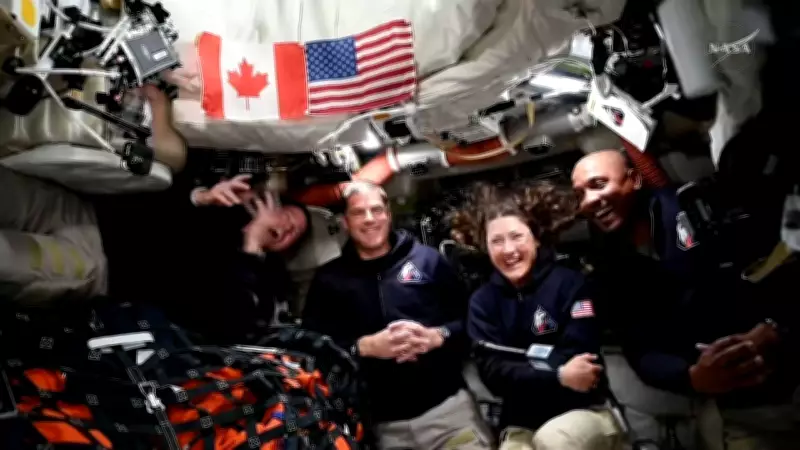
Life aboard NASA's Orion spacecraft during the historic Artemis II mission is far from ordinary. Astronauts are navigating a microgravity environment filled with peculiar routines and unexpected challenges that define their daily existence beyond Earth's atmosphere.
Malfunctioning Facilities and Creative Solutions
One of the most immediate challenges has been dealing with equipment malfunctions in the confined space of the capsule. The onboard toilet system experienced technical issues, forcing crew members to adapt with temporary solutions while engineers worked on remote diagnostics and repair protocols. This highlights the reality that even the most advanced spacecraft face operational hurdles during extended missions.
Astronauts have also employed improvised methods for managing their living environment. With limited storage and specific lighting conditions affecting sleep cycles, crew members have used personal T-shirts as makeshift window coverings to regulate sunlight exposure during rest periods. This simple yet effective approach demonstrates the resourcefulness required for long-duration space travel.

Scientific Protocols and Bodily Functions
The mission includes rigorous scientific data collection that extends to seemingly mundane activities. Crew members regularly collect saliva samples as part of ongoing research into how spaceflight affects human physiology at the molecular level. These biological samples provide valuable insights into stress responses, immune system changes, and other health markers that could inform future missions.
"Every aspect of daily life becomes part of the scientific record," explained mission specialists. "From sleep patterns to nutritional intake, we're constantly monitoring how the space environment impacts human performance and well-being."
Psychological Adaptation in Confined Spaces
Beyond physical challenges, astronauts must contend with the psychological dimensions of living in extremely close quarters for extended periods. The Orion capsule, while technologically advanced, offers limited personal space, requiring crew members to develop strategies for maintaining privacy, managing interpersonal dynamics, and coping with isolation from Earth.
- Structured daily routines help maintain normalcy
- Regular communication with ground control provides psychological support
- Shared responsibilities foster team cohesion
- Personal items and photographs connect astronauts to life on Earth
Looking Toward Future Missions
These experiences aboard Orion are providing NASA with crucial data for planning even more ambitious missions. Each unusual aspect of daily life—from equipment repairs to scientific sampling—contributes to a growing understanding of what will be required for sustained human presence in deep space, including potential missions to Mars and beyond.
The Artemis II mission represents not just a technological achievement but a human one, demonstrating how astronauts adapt to the strange realities of life in space while advancing our collective knowledge of extraterrestrial habitation.