Artemis II Mission Aims to Eclipse Apollo 13's Distance Milestone
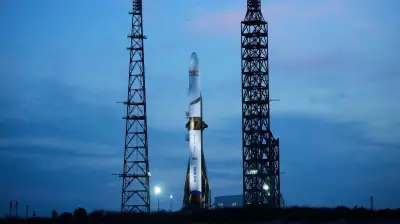
NASA's Artemis II mission is on a trajectory to break a significant space exploration record, surpassing the distance from Earth achieved by Apollo 13 over five decades ago. This historic lunar flyby represents a pivotal step in humanity's return to the moon and beyond.
Crew Prepares for Unprecedented Journey
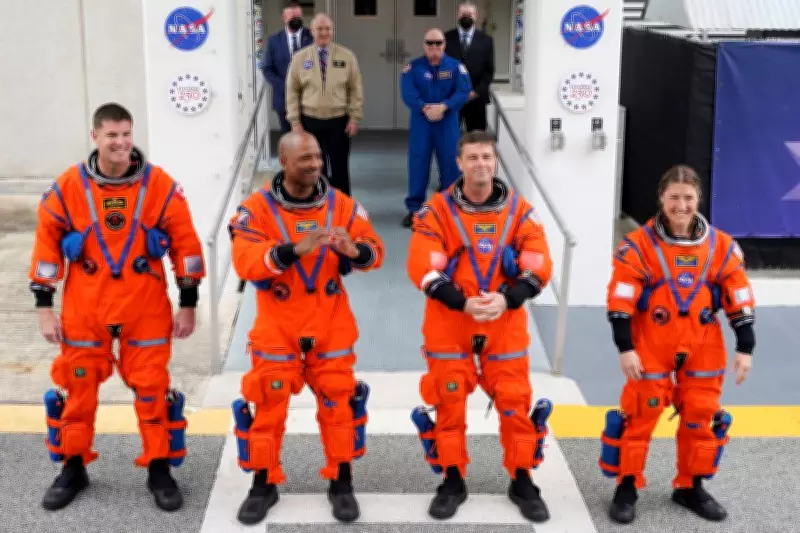
The Artemis II crew, consisting of commander Reid Wiseman, pilot Victor Glover, mission specialist Christina Koch, and Canadian Space Agency astronaut Jeremy Hansen, embarked from Kennedy Space Center in Cape Canaveral, Florida. Their mission marks the first crewed flight of NASA's ambitious Artemis program, which aims to establish a sustainable human presence on the lunar surface.
The spacecraft is expected to travel farther from Earth than any previous human-rated vehicle, exceeding the approximately 248,655 miles (400,171 kilometers) record set by Apollo 13 in 1970. This milestone will occur during the mission's lunar flyby, where the Orion spacecraft will utilize the moon's gravity to slingshot into a distant retrograde orbit before returning to Earth.

Technical Challenges and Innovations
While the mission progresses toward its record-breaking objective, NASA engineers continue to monitor and address technical issues, including recurring problems with the spacecraft's toilet system. These challenges highlight the complexities of extended space travel as humanity ventures farther into the solar system.
The Artemis II astronauts have reportedly been passing time during their journey by reading Andy Weir's science fiction novel "Project Hail Mary," which explores themes of space exploration and survival that resonate with their current mission. This cultural aspect underscores the human element of space travel amidst the technical achievements.
Broader Implications for Space Exploration
This record-breaking endeavor serves as a crucial test for the Orion spacecraft's systems and provides valuable data for future Artemis missions, including planned lunar landings. The successful completion of Artemis II will demonstrate NASA's capability to transport astronauts beyond low-Earth orbit for the first time since the Apollo era.
The mission represents an international collaboration, with Canada contributing through astronaut Jeremy Hansen and the Canadarm3 robotic system for the Lunar Gateway. This partnership exemplifies the global nature of contemporary space exploration efforts.
As Artemis II continues its journey, space enthusiasts worldwide await confirmation that the spacecraft has officially broken Apollo 13's distance record, marking a new chapter in human space exploration and paving the way for future missions to the moon, Mars, and beyond.