Social Media Moon Videos Deceive Millions with Mislabeled Earth-Based Imagery
As humanity celebrated the historic return to the moon with NASA's Artemis 2 mission on Monday, a wave of photos and videos depicting Earth's only natural satellite spread rapidly across social media platforms. However, many of these stunning visuals were not captured from the Orion spacecraft as claimed, but rather by astrophotographers using telescopes and high-end equipment from our own planet.
Viral Deception Captures Global Attention
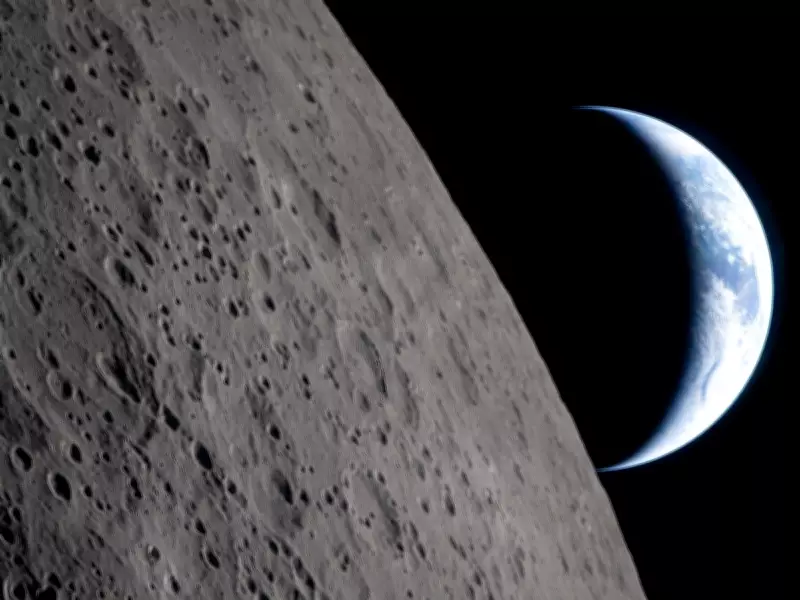
The official NASA handouts from the mission show the moon in its familiar grey, colorless appearance, but circulating online are images presenting a dramatically different celestial body. One particularly viral example displays a lunar surface peppered with vibrant hues of red, brown, orange, and dark blue across vast swathes and craters—a visual feast that has captured the imagination of millions.
"The highest quality video of the moon was just released... this is so beautiful," wrote Physics & Astronomy Zone, a verified account with over 250,000 followers, while sharing a close-up video panning across the moon's battered surface. This post, along with similar content, has fooled countless users, including high-profile figures like Elon Musk.

Uncovering the True Origins
Keen-eyed observers have traced the source of these deceptive images to their actual creators. The colorful mineral image that gained particular traction originated from Ukrainian photographer Ildar Ibatullin, who used an old DSLR camera to capture tens of thousands of individual frames.
"To achieve this level of detail, I processed tens of thousands of frames captured with a 150mm telescope and Canon 550D DSLR camera," Ibatullin explained in his original post. "Nearly 50 GB of raw data were meticulously stitched together to produce this final 50-megapixel image, which reveals the chemical composition of the lunar regolith."
Despite the photographer's clear attribution, his work has been shared across Facebook and other platforms with suggestions that it was captured during this week's historic lunar mission.
Multiple Sources of Misinformation
Another compelling video making global rounds originated from Texas-based astrophotographer Adam Jackson's backyard observations. This footage has frequently been presented as if recorded approximately 380,000 kilometers away in space rather than from Earth's surface.
"This might be the most detailed Moon image ever captured," wrote one user who appropriated Jackson's work, adding technical details about the equipment used: "1,000 frames stacked using a Nikon Z8 and Takahashi TSA-120 telescope, producing a stunning 40MP masterpiece." These specifications mirror what Jackson originally posted on Instagram, yet the context has been completely altered in subsequent shares.
The Broader Implications
This phenomenon highlights how easily authentic scientific imagery can be misrepresented in the digital age, particularly during moments of heightened public interest. While the Artemis 2 mission represents a genuine milestone in space exploration—the first human return to the moon in over fifty years—the parallel circulation of mislabeled content demonstrates how quickly misinformation can spread alongside legitimate achievements.
The situation serves as a reminder of the importance of verifying sources and context, especially when extraordinary claims accompany extraordinary images. As space exploration continues to capture public imagination, distinguishing between Earth-based observations and actual space mission footage becomes increasingly crucial for maintaining scientific accuracy in public discourse.