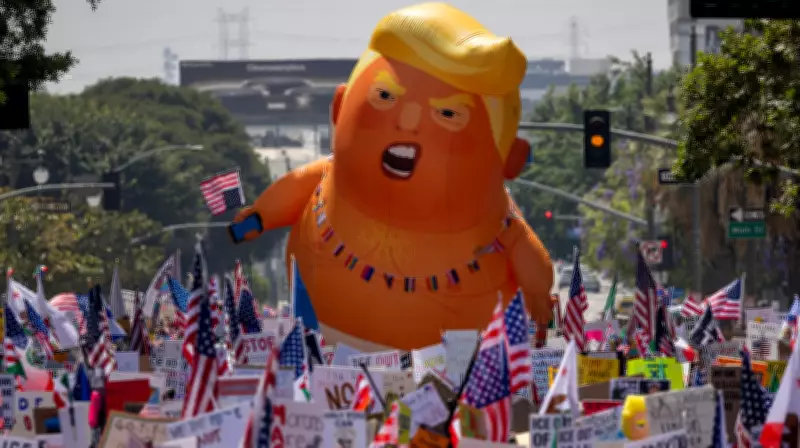
Massive 'No Kings' Demonstrations Raise Digital Safety Concerns
This weekend, millions of Americans are expected to participate in over 3,100 planned "No Kings" demonstrations across U.S. cities, marching against authoritarianism and Donald Trump's presidency. While these protests promise memorable sights—from creative costumes to powerful signs—participants documenting events face significant digital safety risks that extend beyond personal security.
Your Legal Rights to Document Protests
"The No. 1 thing that people should know is that they have the right to record," emphasized Maribel Hernández Rivera, national director of immigrant community strategies at the American Civil Liberties Union. "They have the right to photograph as long as they are in a public space, as long as they're not obstructing or interfering with law enforcement."
Hernández Rivera, who has facilitated de-escalation trainings for "No Kings" participants, clarified that police cannot demand photos or videos without a warrant. However, she cautioned that rights don't eliminate risks, particularly for vulnerable populations.

Hidden Dangers in Digital Documentation
Despite the peaceful nature of "No Kings" demonstrations, Bill Budington, senior staff technologist at the Electronic Frontier Foundation, noted concerning attempts to frame the protests as controversial. "There are attempts to kind of make it into this controversial thing because of the crackdowns on freedom of expression," Budington explained, citing baseless terrorism links.
Petra Molnar, lawyer and author of "The Walls Have Eyes: Surviving Migration in the Age of Artificial Intelligence," highlighted how seemingly harmless documentation can have severe consequences. "Even seemingly harmless posts can be cross-referenced with government databases or facial-recognition tools," Molnar warned, noting agencies like Immigration and Customs Enforcement already use such technology.
Key risks include:
- Facial recognition identifying participants
- Location data revealing protest attendance
- Social connections being mapped through photos
- Content being taken out of context for enforcement actions
Real-World Consequences of Protest Documentation
The case of Salvadoran journalist Mario Guevara illustrates these dangers vividly. While livestreaming a "No Kings" protest in Atlanta last June, Guevara was arrested on charges later dropped, then transferred to ICE. Despite having a work permit and pending green card application, ICE detained him for over 100 days before deporting him in October.
"If you're not a U.S. citizen, you don't have the same rights like other journalists. I ignored that and I paid the price," Guevara reflected in an interview about his deportation. The Department of Homeland Security stated ICE detained Guevara because he was "in our country illegally," while Guevara believes he was targeted for identifying as a journalist.
Practical Safety Strategies for Protest Documentation
Experts recommend several approaches to minimize risks while still documenting important events:
Before capturing content:
- Talk to people before photographing them to ensure consent
- Choose angles that focus on posters or crowd shots rather than individual faces
- Consider your social media reach—larger audiences increase risks
- Secure your device by disabling biometrics and using strong passcodes
When processing content:
- Use blurring tools in apps like Signal or iPhone's Clean Up feature
- Consider pixelating faces or covering them with emojis
- Avoid automatic cloud uploading, as cloud servers can be subpoenaed
- Store sensitive photos securely rather than on connected devices
Thorin Klosowski, security and privacy activist for the Electronic Frontier Foundation, emphasized community responsibility: "It's worth remembering that it's not just you who you are putting at risk by sharing photos and videos." He suggested documenting "a blob of people" rather than specific faces.

The Bigger Picture: Surveillance and Immigration
Molnar noted that immigrants without secure status face particular vulnerability, as law enforcement actively monitors social media. "Once online, this data is nearly impossible to remove and can be taken out of context to justify enforcement actions, including detention and deportation in this extremely hostile climate," she explained.
Livestreaming presents additional challenges, as anyone can enter the frame unexpectedly. Klosowski noted that in small towns without other news coverage, "someone else is more easily identifiable" and might face consequences with family or employers.
Until stronger legal protections exist against surveillance and data-sharing between tech platforms and immigration authorities, Molnar advocates for digital minimalism: "Share less, anonymize more, and prioritize community safety over visibility."
As "No Kings" demonstrations continue to draw massive crowds, balancing documentation with digital safety remains crucial for protecting vulnerable participants while exercising constitutional rights.