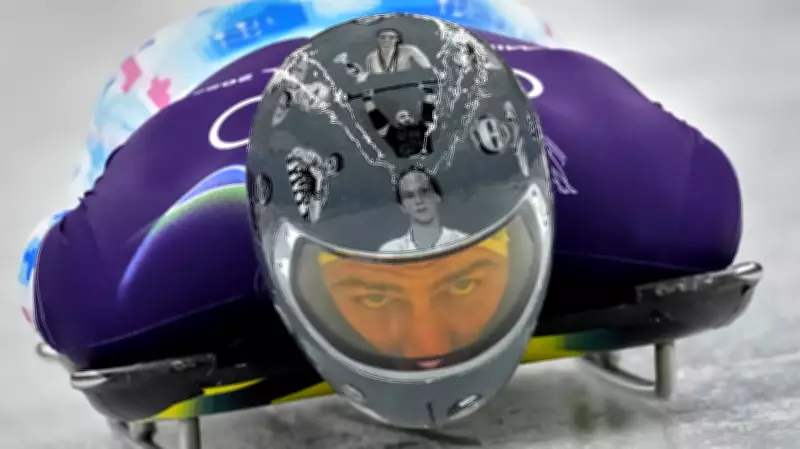
Ukrainian Artist's Banned Olympic Helmet Sparks Standoff Over War Remembrance
In the rare moments when power flickers on in her Kyiv apartment, Ukrainian artist Iryna Prots watches the Winter Olympics with a profound sense of detachment. The 52-year-old creator of skeleton racer Vladyslav Heraskevych’s controversial helmet, which depicts portraits of two dozen Ukrainian athletes killed in Russia’s war, finds the global sporting event surreal amidst the ongoing conflict.
“Honestly, the entire Olympics somehow seem surreal to me,” Prots said during an interview at her home. “Because the Olympics were always about peace ... when the entire world united.” Her words resonate deeply as months of Russian air strikes have battered the capital’s energy grid, plunging residents into cold and darkness, while Russian forces grind out slow gains along a frontline stretching over 1,200 kilometers.
Helmet Design Confronts Reality of War
Prots, who has known Heraskevych since he was a child, was asked by the athlete to decorate his helmet. She described her design as “a challenge” aimed at forcing the world to confront the brutal reality of a war that has killed tens of thousands of Ukrainian troops and civilians, ravaged landscapes, and left indelible psychological scars.

“The world simply doesn’t want to see the truth that is happening here,” Prots asserted. “They don’t understand why we haven’t capitulated, why we aren’t surrendering.” Her sentiment comes as Kyiv faces pressure from the U.S. administration to agree to a peace deal quickly, adding to the complex geopolitical backdrop.
IOC Ban Draws Widespread Anger
The International Olympic Committee banned the helmet on Tuesday, citing violations of rules against political statements at the Games. This ruling has ignited widespread anger among Ukrainians, who see the helmet as a poignant tribute to their fallen compatriots. The IOC pleaded with Heraskevych on Wednesday to compete without it, but the 27-year-old athlete, whose friends are among the dead, has refused to comply.
When asked by Reuters if it was his helmet or nothing, Heraskevych responded unequivocally: “Yes.” His defiance sets him up for potential disqualification when the skeleton competition begins on Thursday, despite his impressive fourth-place finish in last year’s World Championships.
Ukrainians Rally Behind Heraskevych
Prots, whose birthday coincides with the February 24 anniversary of Moscow’s invasion, views each athlete depicted on the helmet as a lost asset for Ukraine. “Each pair of eyes ... could be seeing this world right now, that could be fighting for their own medals, who could be standing on their own pedestals,” she lamented.
Moscow, whose athletes are barred from competing under the national flag, argues that sport should remain separate from international conflicts. However, Heraskevych has received an outpouring of support from Ukrainians, including President Volodymyr Zelenskiy. Kyiv resident Svitlana Shevchenko, 37, described Heraskevych as a symbol of resilience. “We want to live, we want to reach new heights, and we want everyone to know about this.”
The standoff highlights the tension between Olympic ideals of unity and the harsh realities of war, as Ukrainians strive for recognition and remembrance on the global stage.