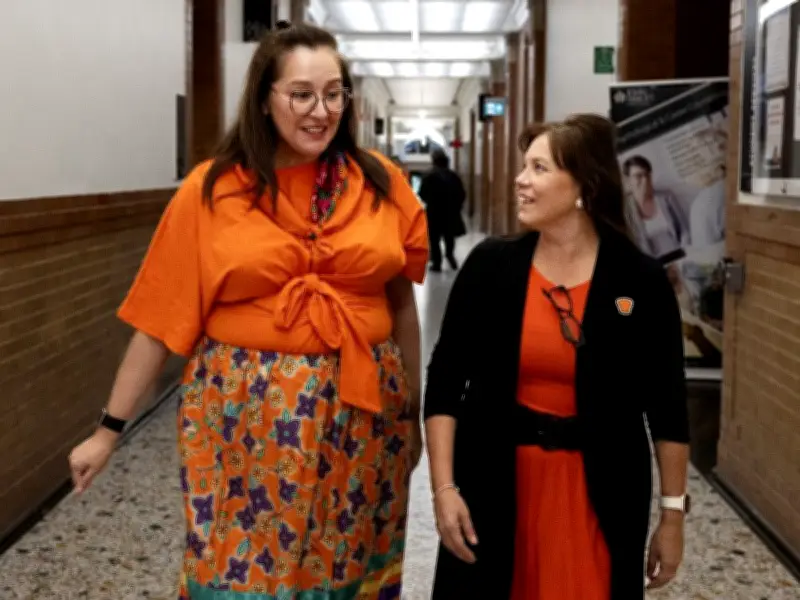
Federal Indigenous Services Minister Mandy Gull-Masty announced $4.6 billion in new funding to eliminate all long-term unsafe drinking water advisories on reserves but refused to set a deadline. “The deadline goal is not part of my narrative,” she told the Globe and Mail.
No Deadlines, No Accountability
Since 2015, the Trudeau government has more than doubled annual Indigenous services spending to $35.8 billion, from $15.5 billion in inflation-adjusted 2015 dollars. Yet the federal community well-being index shows the standard of living for Indigenous people remains well below the general population, with shorter life spans, higher unemployment, poverty, suicide, drug addiction, and incarceration rates.
The Liberals originally pledged $1.83 billion in 2016 to end all long-term drinking water advisories by March 2021. That commitment grew to $5.6 billion by 2022, and now an additional $4.6 billion—without the 2021 target being met. The government claims 156 advisories have been lifted, but 38 remain on 36 reserves.

Auditor General Criticizes Fudged Numbers
Auditor General Karen Hogan examined the government’s progress in 2021 and concluded it was failing, citing examples of fudged numbers. In a 2023 follow-up, she said “Indigenous Services Canada has made unsatisfactory progress in addressing long-standing issues related to drinking water, emergency services, and a range of other programs.”
Federal employees working on Indigenous issues doubled from 4,684 in 2015 to 9,429 in 2026. The number of federal bureaucracies also doubled when the old Indigenous and Northern Affairs Canada was split into two ministries—both exempted from the 15% budget cut, facing only a 2% reduction.
Transparency Eroded
Upon taking office in 2015, Prime Minister Justin Trudeau stopped enforcing the First Nations Financial Transparency Act, which required First Nations to publish audited financial statements and salaries for chiefs and councillors. Since 2015, the Liberals say they have spent more than $60 billion on programs for Indigenous people, including compensation for residential schools, child care, and tainted water.
The federal budget for contingent liabilities—money set aside for pending lawsuits—is dominated by Indigenous land claims, currently sitting at $54.7 billion. In 2024, then-parliamentary budget officer Yves Giroux warned that these liabilities are growing by about 30% annually with a lack of transparency.
Auditors-General: Failures “Unacceptable”
Three auditors-general since 2005 have described government failures to improve Indigenous lives as “unacceptable” (Sheila Fraser), “incomprehensible” (the late Michael Ferguson), and “honestly disheartening” (Karen Hogan). Ferguson said the federal government managed Indigenous programs “to accommodate the people running them, rather than the people receiving the services.”
In a 2022 report, Giroux stated that while financial resources allocated to Indigenous services increased significantly from 2015-16 to 2022-23, this “did not result in a commensurate increase in the ability of the organizations to achieve the targets they had set for themselves”—in fact, “the ability … declined.”