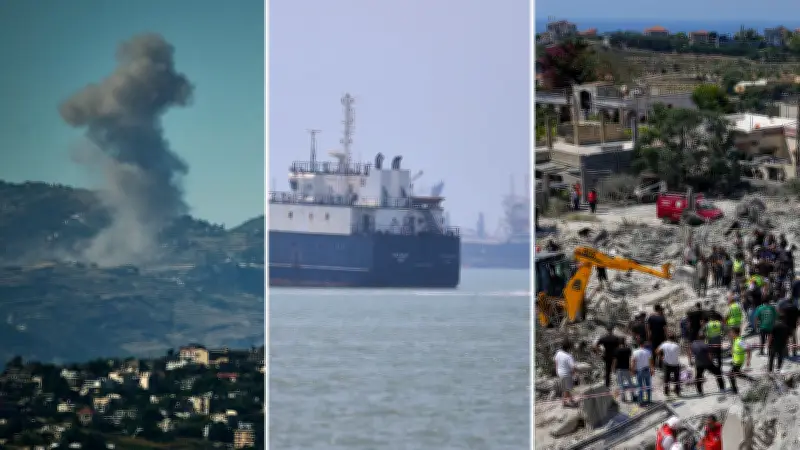
The United States and Iran are scheduled to hold talks on Sunday in Switzerland, following Iran's announcement that it has once again closed the strategically vital Strait of Hormuz. The move escalates tensions in the region amid Israel's ongoing military operations in Lebanon.
Background of the Closure
Iran's decision to close the Strait of Hormuz comes in response to what Tehran describes as Israel's continued attacks in Lebanon. The strait, a narrow waterway between the Persian Gulf and the Gulf of Oman, is a critical chokepoint for global oil shipments, with about 20% of the world's petroleum passing through it daily.
Iran has previously threatened to close the strait during periods of heightened tension, but this marks the first actual closure since 2019. The move has already caused oil prices to spike by over 5% in early trading, according to market analysts.

US-Iran Diplomatic Engagement
The upcoming talks in Switzerland represent a rare direct diplomatic engagement between the two adversaries. A senior US State Department official, speaking on condition of anonymity, confirmed the meeting but declined to provide details on the agenda. "We are committed to de-escalation and ensuring the free flow of commerce through international waters," the official said.
Iran's Foreign Ministry spokesperson Nasser Kanaani stated that the talks would focus on "regional security and mutual concerns," according to state-run IRNA news agency. The talks are expected to be led by US Special Envoy for Iran Robert Malley and Iranian Deputy Foreign Minister Ali Bagheri Kani.
Impact on Global Markets
The closure of the Strait of Hormuz has immediate repercussions for global energy markets. Brent crude futures jumped to $89.72 per barrel, up $4.53 from the previous close, while West Texas Intermediate rose to $85.91. The US Energy Information Administration warned that a prolonged closure could lead to supply shortages and further price increases.
Shipping companies have begun rerouting vessels around the Cape of Good Hope, adding up to two weeks to transit times and significantly increasing costs. The US Navy's Fifth Fleet, based in Bahrain, has increased patrols in the region but has not yet attempted to force the strait open.
International Reactions
The United Nations Security Council held an emergency session on Saturday, where US Ambassador Linda Thomas-Greenfield called the closure "an unacceptable act of aggression against the international community." Russia and China, however, urged restraint and called for a diplomatic solution.
European Union foreign policy chief Josep Borrell expressed concern over the escalation and urged all parties to return to negotiations. "The freedom of navigation is a fundamental principle of international law, and any disruption threatens global stability," Borrell said in a statement.
Regional Dynamics
Israel's continued attacks in Lebanon, which Iran cites as the reason for the closure, have drawn widespread condemnation from Arab nations. The Israeli military has conducted airstrikes against what it describes as Hezbollah targets in southern Lebanon, resulting in dozens of civilian casualties according to Lebanese officials.
Iran's closure of the strait is seen as an attempt to pressure the international community to intervene and halt Israeli operations. Analysts warn that the situation could spiral into a broader regional conflict involving multiple state and non-state actors.