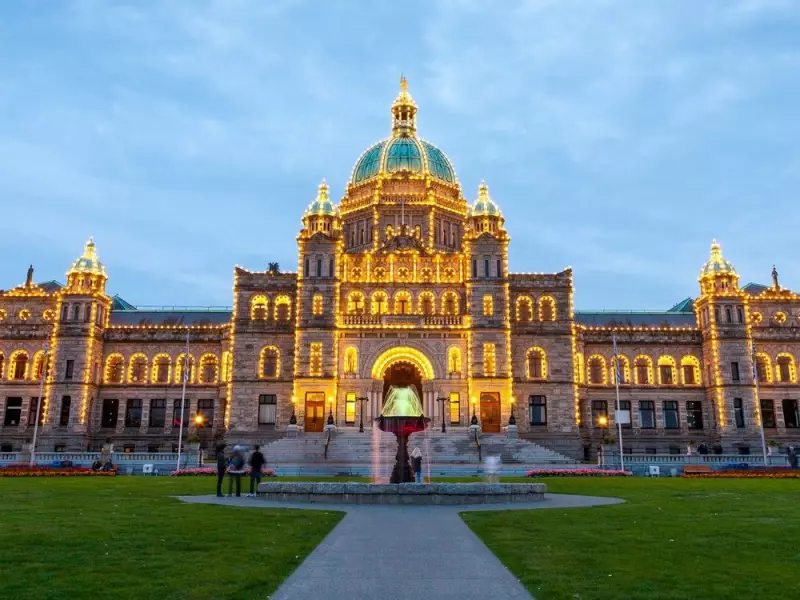
In a quiet legislature building in Victoria, the festive break offers a moment of respite for British Columbia's political leaders after a year of significant turmoil and transformation. For Premier and NDP leader David Eby, Conservative interim leader Trevor Halford, and Green party leader Emily Lowan, the holiday season represents a crucial time to reset and strategize.
A Tumultuous Political Year in Review
The past twelve months have been bruising for the province's political landscape. The governing NDP, under Premier David Eby, faced intense scrutiny and pressure on multiple fronts. Meanwhile, the official opposition underwent a major shift as the BC Conservative party dismissed its leader, elevating Trevor Halford to the interim leadership role. The Green Party, in contrast, welcomed a new leader, Emily Lowan, bringing fresh energy to its caucus.
The political drama extended beyond the established parties. The OneBC party, co-founded and recently led by Dallas Brodie, experienced a rapid and controversial six-month arc. The party used caucus funds to produce a documentary questioning the evidence of unmarked graves and the extent of abuse claims at residential schools, a move that sparked widespread condemnation and contributed to the party's subsequent disintegration.

Eby's Potential Advantage and Election Speculation
The relative collapse and internal struggles of the two main opposition parties to his right have likely been viewed as an unexpected political gift for Premier Eby. His government has navigated its own complex challenges, including Alberta's persistent push for a pipeline to B.C.'s north coast and a significant B.C. Supreme Court decision granting the Cowichan Tribes title to a large portion of south Richmond.
This landscape has fueled speculation that Eby's second wish, following the disarray of his opponents, could be for an early election in the spring of 2026. Such a move would aim to convert the NDP's current razor-thin one-seat majority into a more stable and commanding mandate, allowing the government to pursue its agenda with greater confidence.
Expert Caution Against Complacency
However, political observers warn against overconfidence. David Black, a political science professor at Royal Roads University, cautioned the NDP against letting a weakened opposition lull them into inaction. He emphasized that the party must remain sharply focused on the core issues that defined its initial rise to power.
"Don't let what is objectively a weak opposition be a kind of permission structure to not get on with doing difficult things," Black advised. He pointed to the well-known suite of challenges—affordability, public safety, housing, healthcare, the environment, and the growing provincial deficit—that continue to demand urgent attention. Black noted that losing focus on these issues nearly cost the NDP the government in the last election.
Echoing this sentiment, Mike McKinnon, western Canada director for Enterprise Canada and former deputy communications director to ex-premier John Horgan, provided insight into Eby's likely calculus. While he suggested Eby is not inherently inclined to call a snap election, the premier might be compelled to do so if he feels his government's plans are being systematically stymied or obstructed in the legislature.
As the mace rests in the quiet chamber and the leaders retreat to their ridings, the political visions for the new year are clear. For Eby, the goal is consolidation and a stronger mandate. For Halford and Lowan, the task is to rebuild, redefine, and present a credible alternative to voters. The winter's nap may be brief, as the stirrings of a potentially pivotal election year loom on the horizon.