The federal government's mandatory firearm buyback program continues to meet significant resistance from gun owners in Saskatchewan, according to local reports and business observations. The initiative, designed to compensate owners for now-prohibited firearms, has failed to gain traction in the province, where firearm culture is deeply rooted.
Local Retailer Reflects Widespread Skepticism
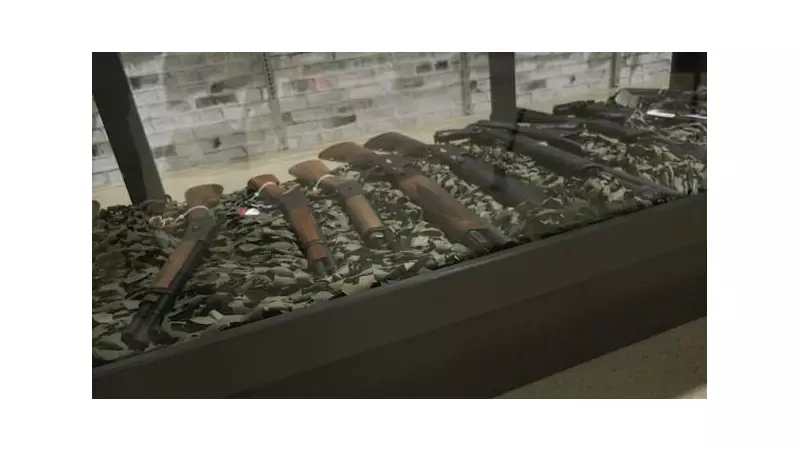
At Cache Tactical, a firearm retailer in Regina, the sentiment among customers is largely one of opposition and non-compliance. Store representatives and patrons frequently express concerns over the program's logistics, the valuation of surrendered firearms, and the fundamental principle of the buyback itself. Many view it as an ineffective measure that penalizes law-abiding citizens rather than addressing criminal gun use.
The program, announced years prior, aims to remove certain models of firearms from Canadian communities. However, participation rates in Saskatchewan are reported to be low, with many owners choosing to keep their firearms securely stored while legal challenges and discussions continue. This reluctance highlights a stark divide between federal policy and the practices of licensed gun owners in the Prairies.

Roots of Resistance in Prairie Culture
The resistance in Saskatchewan is not an isolated phenomenon but is connected to broader regional attitudes towards hunting, sport shooting, and property rights. Firearms are commonly used for agricultural purposes, predator control, and recreation across the province. The buyback is perceived by many as an urban-centric solution being imposed on rural communities without adequate consultation or understanding of local needs.
Furthermore, there is a pervasive belief that the program's substantial cost—funded by taxpayers—could be better directed towards enhancing border security, tackling illegal gun smuggling, and investing in mental health resources and policing. This perspective frames the buyback as a misallocation of resources that fails to target the root causes of gun violence.
Legal and Political Context
The ongoing unpopularity of the buyback program occurs within a complex legal and political landscape. Provincial governments, including Saskatchewan's, have expressed formal opposition to the federal firearm prohibition and buyback, arguing it infringes on provincial jurisdiction and unfairly targets lawful owners.
Several court challenges related to the firearm prohibition are still in process, creating an atmosphere of uncertainty. Many gun owners are adopting a 'wait-and-see' approach, hesitant to participate in a program that could be affected by future legal rulings. This legal limbo contributes significantly to the low participation rates observed on the ground.
The situation in Regina and across Saskatchewan underscores a significant policy implementation challenge for the federal government. Without the cooperation of a large segment of the intended participant base, the program's ultimate goal of removing a specific set of firearms from circulation becomes difficult to achieve. The standoff highlights the enduring tension between national regulatory ambitions and regional cultural realities.