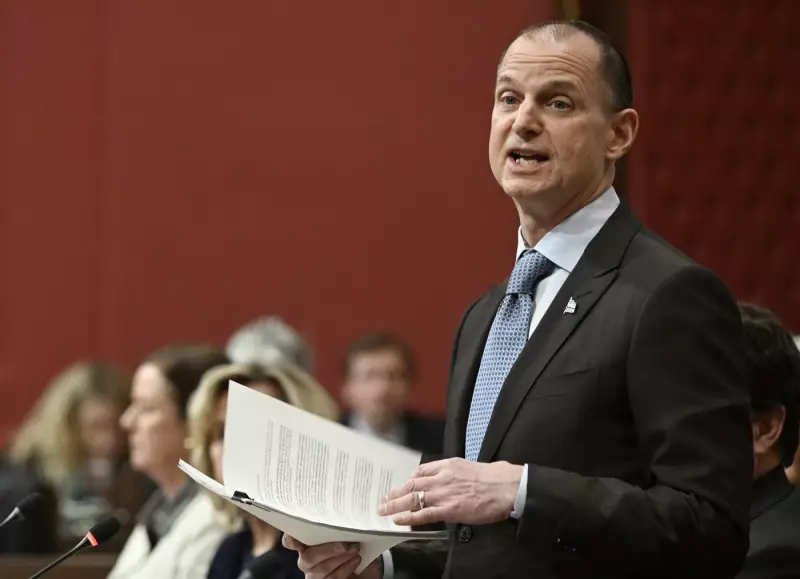
Quebec's Finance Minister, Eric Girard, has openly criticized a recent move by the Government of Ontario, labeling its decision to ban Crown Royal whisky as "misguided." The public rebuke highlights growing tensions over interprovincial trade policies, particularly within the lucrative alcoholic beverage sector.
A Clash of Provincial Policies
The controversy stems from Ontario's decision to prohibit the sale of Crown Royal, a popular Canadian whisky brand owned by Diageo. While the specific regulatory rationale from Ontario officials was not detailed in the initial report, Minister Girard's strong reaction underscores the economic implications for producers and distributors that operate across provincial lines. Girard, who tabled legislation at the National Assembly in Quebec City in December 2025, is known for his focus on economic growth and interprovincial cooperation.
Economic Impact and Trade Relations
In his criticism, Girard emphasized that such bans disrupt the free flow of goods within Canada and can harm businesses that rely on a unified national market. The whisky and spirits industry is a significant contributor to both provincial economies, involving agriculture, manufacturing, and retail. Girard argued that the math simply "doesn't work" for consumers or businesses when provinces erect barriers against specific products. This dispute echoes other recent interprovincial trade challenges, suggesting a need for clearer federal frameworks.

Broader Implications for Canadian Unity
This is not merely a debate about whisky. At its core, the disagreement touches on broader issues of interprovincial trade and economic unity. Restrictive policies in one province can lead to retaliatory measures, creating a patchwork of regulations that complicate commerce. Minister Girard's comments, made in January 2026, serve as a reminder of the ongoing negotiations and occasional friction between provinces as they seek to protect local interests while participating in the national economy. The outcome of this specific issue could set a precedent for how similar disputes over food, beverage, and other goods are handled in the future.
As the situation develops, stakeholders in the hospitality and distilling industries will be watching closely. The resolution may require dialogue between the two provinces' finance and economic development ministries to find a compromise that supports both local policy objectives and the health of the Canadian domestic market.