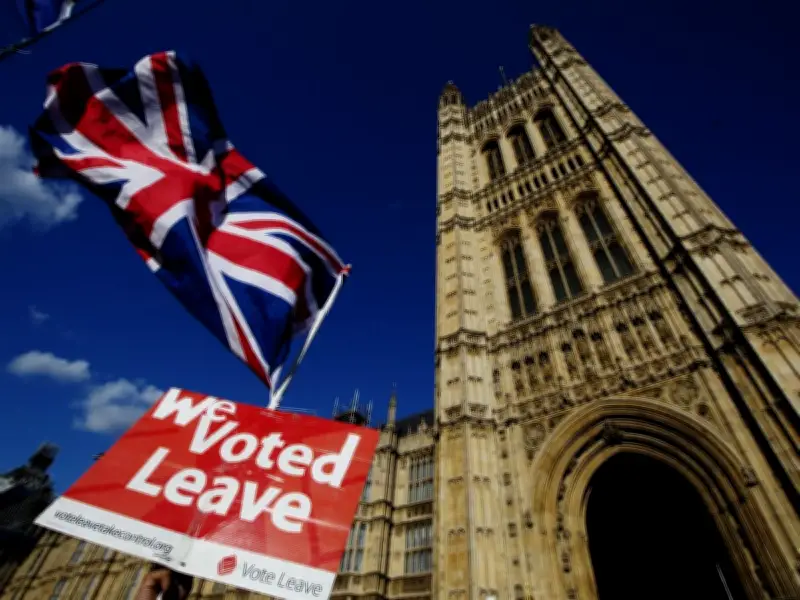
On Tuesday, the 10th anniversary of Britain's referendum vote to leave the European Union, CBC News published a Brexit analysis piece intended as an explicit warning to distant political battlegrounds, like Alberta. As a federalist Albertan, I instinctively pulled a face at this. The CBC has statutory responsibilities to promote national unity, and when it comes to Alberta, that cause would probably be best served by some kind of internal George Costanza policy that tells news reporters to do the opposite of whatever seems to them to be a good idea.
The Reality of Brexit Disillusionment
Chris Brown's piece does not disguise the real cause of the widespread disillusionment over Brexit that exists today in the U.K., as the mainstream British political parties shudder themselves to pieces. Brexit voters thought they were acting to increase the sovereignty of their own institutions, and to limit the scale and speed of immigration: and they were openly betrayed. As Brown observes, EU labour migration from places like Poland, which created minor social tensions, was immediately replaced after Brexit by a COVID-era wave of lower-skill non-EU immigrants that are much harder on the treasury and much slower to integrate.
Referendums in a Vacuum
Brexit per se didn't have much to do with this crisis, although it had marginal effects on Britain's ability to relocate asylum claimants to the first EU country they set foot on (which is usually not Britain). The problem, and it's a problem that is really worth contemplating for Alberta separatists, is that referendums happen in a vacuum. They're a single binary choice. Leave voters really did get what they asked for: Britain left the EU and was no longer obliged to follow EU directives or practices on immigration. Huzzah!

But the Conservative leaders who happened to be at the helm of immigration policy when the Brexit vote was held were just not on the same page of the playbook as the electorate. They saw an opportunity to use cheap labour to cut the fiscal costs of health and social care provision, and were naturally quick to bargain with business leaders who wanted to do the same with their own balance sheets. Their ruling elite's belief in diversity as a paramount and axiomatic goal of the state was genuine and deep, and it obscured some obvious logistical and social implications of the path they followed.
Lessons for Alberta Separatists
I'm somewhat sympathetic to the idea that Alberta's referendum on separation will, if followed through on, put the issue to bed for a while here. Brown's experts condemn the Brexit vote for worsening long-term political division because it was a vote, as if there would be no U.K. crisis of migration issues and no stagnating economy if there had never been a referendum on the EU. We cannot know the truth about the alternative universe where Remain won, or even about the other alternate universe where the Kingdom leaves the EU and tailors immigration more carefully in the immediate aftermath.
But surely a relevant fact about the Brexit vote is that it was very close to 50/50, fostering permanent appetites for revision on the losing side. Like absolutely every pollster who has tried to measure Alberta separatist sentiment, I remain truculently confident that Alberta's referendum won't have that problem.